
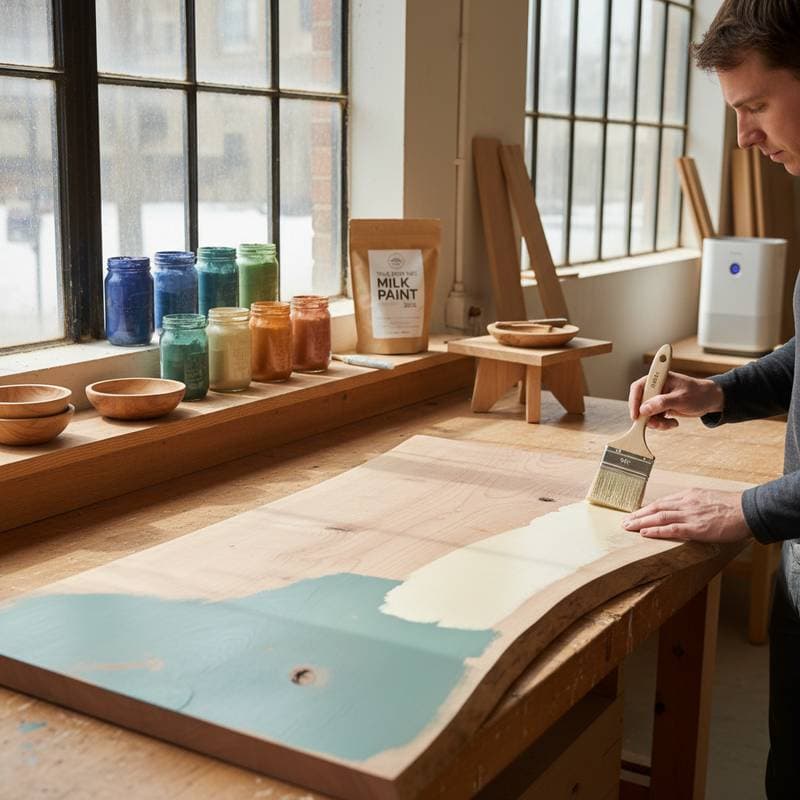
Milk Paint Revival: Zero-VOC Eco-Finish Set for 2026
Contemporary wood finishers increasingly revisit a time-honored material. Milk paint, long associated with rustic farmhouses, gains renewed popularity among cabinetmakers, furniture restorers, and environmentally aware builders. This resurgence stems from its ability to provide profound color depth, natural components, and a genuine zero-VOC profile that surpasses many contemporary alternatives.
The appeal extends beyond aesthetics. In an era prioritizing sustainability, milk paint aligns with demands for low-impact materials in woodworking. Professionals note its versatility for both new constructions and restorations, making it a staple in modern shops.
At a Glance
- Average cost: $45 to $60 per gallon
- Coverage: Approximately 150 square feet per gallon
- Dry time: 30 minutes to 1 hour between coats
- Finish options: Matte to soft satin
- Shelf life: Up to 2 weeks once mixed
- Application tools: Brush, roller, or spray for even distribution
What Makes Milk Paint Different
Traditional milk paint derives from milk protein, lime, and earth-based pigments. When combined with water, it creates a robust connection to untreated wood fibers. This composition avoids the moisture-trapping and harmful emissions common in synthetic alternatives.
The curing process involves carbonation, where the mixture interacts with atmospheric carbon dioxide to form a resilient shell. Woodworkers appreciate how this results in a permeable layer that allows wood to breathe. On species like pine, oak, or maple, the hues emerge with an organic translucency, free from the sheen of plastic additives.
This quality proves particularly valuable for artisanal or upcycled pieces. The finish evolves with the wood, developing a subtle patina that enhances rather than conceals the material's inherent character. For those seeking authenticity in their work, milk paint stands out as a living alternative to static coatings.
Why Zero-VOC Finishes Matter
Volatile organic compounds represent chemicals released into the air from conventional paints and varnishes. These substances compromise indoor environments, potentially causing discomfort such as headaches or breathing difficulties. A zero-VOC product removes these risks completely.
In confined areas like home workshops or garages, the benefits become evident right away. Application requires no elaborate exhaust systems, streamlining the workflow and minimizing post-application efforts. This practicality appeals to both hobbyists and full-time artisans.
Independent evaluations confirm the superiority of authentic milk paints, registering under 5 grams of VOCs per liter. Standard latex or oil-based finishes, by contrast, often exceed 200 grams per liter. Such metrics not only foster safer workspaces but also comply with certifications including LEED for sustainable construction and GREENGUARD for low-emission interiors.
As awareness of air quality grows, zero-VOC options like milk paint support broader wellness goals. Builders integrating these materials contribute to healthier homes and studios, reflecting a commitment to responsible practices.
Costs and Budget
Powdered milk paint typically ranges from $45 to $60 per gallon, sufficient for about 150 square feet. Larger projects, such as a dining table or kitchen cabinetry, may require two gallons to achieve full opacity. While initial outlay exceeds basic latex, it undercuts high-end oil-based varnishes.
Strategic approaches help control expenses. Prepare only the necessary volume, as unused portions lose viability within days. Procure pigments in larger quantities to experiment with bespoke shades, reducing per-project costs over time.
Consider a compatible water-based sealer to boost longevity without altering the visual effect. Time investment forms the primary commitment, with preparation, mixing, and multiple layers demanding 4 to 6 hours total. Budget-conscious users find value in its reusability for smaller tasks.
DIY or Professional Application
Milk paint accommodates novices while demanding attention to preparation. Start with a thoroughly cleaned and sanded substrate to promote strong bonding. For previously finished surfaces, employ a casein-based primer to facilitate adhesion.
Opt for DIY methods in scenarios such as:
- Small-scale furniture refurbishments
- Projects favoring a distressed or vintage look
- Custom color experimentation
Engage professionals for demands including:
- Uniform application across expansive built-ins
- Integration of satin sheens for refined aesthetics
- Precise replication of period-specific finishes in heritage work
Regardless of approach, consistent technique yields professional results. Test applications on scrap material to gauge color shifts and drying behavior.
Common Mistakes to Avoid
Excessive agitation during mixing introduces air bubbles, leading to patchy pigmentation. Stir methodically to achieve uniformity without aeration. This step preserves the intended vibrancy.
Neglecting a trial run on sample wood overlooks how colors lighten upon drying. Conduct preliminary tests to align expectations with outcomes. Such foresight prevents costly rework.
Overlook residues like wax or silicone from prior treatments, which hinder grip. Degrease surfaces using mineral spirits for optimal results. Thorough cleaning forms the foundation of success.
Additional pitfalls include applying coats too thickly, which prolongs drying, or neglecting environmental controls like humidity, which affect curing. Maintain moderate conditions for predictable performance.
Living with Your Finish
Maintenance of milk paint finishes remains straightforward. Wipe surfaces gently with a microfiber cloth to remove dust. Reapply a light layer of beeswax or linseed oil periodically to preserve luster and protect against wear.
Over years, the coating develops an appealing patina that enriches the piece's narrative. This natural aging process elevates handmade items, distinguishing them in collections or interiors. Homeowners value the low upkeep alongside the eco-conscious origins.
For high-traffic areas, a clear topcoat extends service life without compromising breathability. Regular care ensures the finish retains its charm, supporting long-term satisfaction in woodworking investments.
Resources and Visual Aids
*Figure: Sample color chart of traditional milk paint hues with matte and satin finishes.