
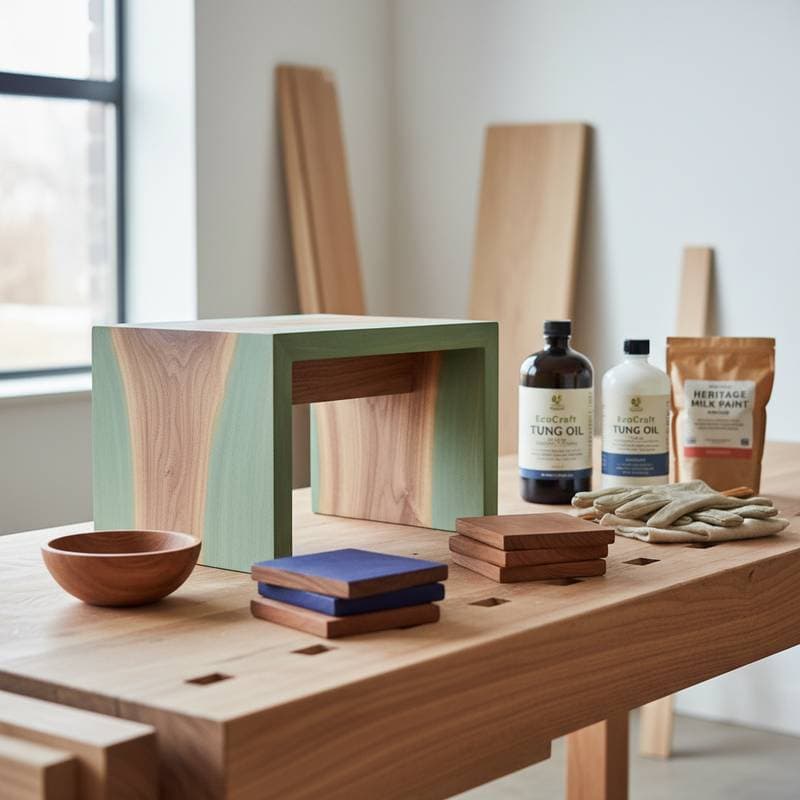
Tung Oil and Milk Paint: The Hybrid Finish Revolution
Wood finishing evolves through innovative pairings rather than isolated products. Artisans increasingly combine the penetrating durability of tung oil with the subtle, matte hues of milk paint. This hybrid creates an authentic, hand-rubbed appearance that withstands daily use while preserving the wood's natural texture.
The process emphasizes both technique and result. It redefines texture, maintenance, and the interplay of color and grain for contemporary makers.
At a Glance
Audience: Home woodworkers and small-batch furniture makers
Settings: Urban workshops and rural craft areas
Focus: Hybrid wood finishing techniques
Contributors: Independent artisans and finish experts testing natural coatings
Visuals: Contributor photos of test panels and completed works
The Value of the Hybrid Approach
Woodworkers traditionally selected between oil's warm depth and paint's color variety. The hybrid eliminates this compromise. Layering milk paint over tung oil-treated wood, or applying oil atop cured paint, produces a breathable surface that reveals grain beneath infused color.
This method aligns with preferences for natural materials and simple repairs. Finishes that mature over time appeal to those valuing sustainability. As a furniture designer notes, "I wanted color that still felt like wood. The hybrid lets me keep the grain alive instead of sealing it under plastic."
Traditional Challenges: Balancing Color and Grain
Oil finishes such as tung or linseed penetrate deeply to accentuate wood figure with a gentle sheen. Paints like milk paint provide matte tones but can mask surface details. Finding balance proved difficult; stains under varnish or tinted waxes often compromised tactility.
Maintenance posed further hurdles. Painted areas chipped easily, while oiled surfaces required frequent renewal. The hybrid integrates strengths from both, streamlining application and care.
Implementing the Hybrid Finish
The sequence and proportions of oil and paint dictate the outcome. Correct application forms a permeable layer that repels water, endures handling, and evolves into a subtle patina resembling seasoned wood.
Tung oil first darkens and enriches grain. Milk paint brushed over it creates tonal shifts where absorption varies. Reversing the order yields velvety translucency, with oil softening pigment without adding gloss. Both techniques produce a layered, authentic look from initial application.
Essential Materials and Tools
Materials:
- Polymerized tung oil for quicker drying
- Milk paint powder blended with warm water to cream-like thickness
- Optional natural wax for subtle enhancement
Tools:
- Bristle brush or lint-free rag
- 320-grit sandpaper or abrasive pad for smoothing
- Container for mixing custom shades
Step-by-Step Process:
- Coat wood thinly with tung oil; allow full absorption between applications.
- Sand lightly before milk paint layer.
- Apply paint in grain-aligned strokes for textured uniformity.
- Dry, then buff to highlight wood features.
- Seal with diluted tung oil for color vibrancy.
Curing takes one to two days per layer, influenced by environmental conditions. Maintenance involves occasional re-oiling or spot repairs without full refinishing.
Experimentation enhances results. Adjust pigment density or oil levels for varying opacity. Multiple paint layers, selectively distressed, evoke aged charm.
Interplay of Texture, Light, and Color
This finish diffuses light uniquely due to milk paint's porosity and tung oil's selective penetration. It avoids uniform reflection, yielding a dynamic matte that shifts with illumination.
Images capture gentle gradients in highlights and shadows, with close views showing brush marks and grain-edge pigment. One artisan describes it as "light emerging from within the wood" after testing on ash surfaces.
Touch reveals a dry silkiness, distinct from lacquer's gloss or urethane's hardness. This sensory link fosters appreciation in handcrafted items.
Practical Considerations for Storage and Workflow
Natural components demand careful handling. Store tung oil in full, sealed metal tins to minimize oxidation. Mixed milk paint remains workable for about one day.
Batch preparation suits production. Pre-measure dry pigments for reliable shades, or embrace minor variations as hallmarks of craftsmanship.
Cost and Time Efficiency
Costs remain accessible. One quart of tung oil covers 100 square feet in two coats; a milk paint packet handles 70 square feet. Repair ease offsets expenses compared to synthetics.
Polymerized oil accelerates drying, enabling same-day progress in ventilated spaces. Professionals assemble pieces shortly after final coats.
Sustainability and Health Advantages
Low volatile organic compounds define both materials, free of resins or toxic pigments. Cleanup uses soap and water alone.
A designer transitioning from varnishes reports, "My shop air feels different now. I can work longer without headaches." This supports finishing in homes or shared areas, promoting eco-conscious practice.
Adapting to Wood Types
Responses vary by species. Pine develops streaked softness akin to antique farm pieces. Oak's pores soak oil for bold contrast under paint. Maple appears chalky; walnut shifts to muted elegance.
Tinted oil bases under neutral paints fine-tune hues. Dark oil with sage milk paint crafts subdued vintage tones, complementing metal accents. Natural warmth persists across applications.
Field-Tested Application Advice
-
Test on Scraps: Match wood batches to predict interactions based on porosity.
-
Manage Absorption: Use thinned oil wash on soft woods; dry thoroughly before painting.
-
Apply Sparingly: Thin paint layers preserve grain; limit to two coats for most items.
-
Feather Repairs: Overlap into finished areas and buff for seamless integration.
-
Allow Full Curing: Patience prevents moisture issues and ensures optimal luster.
Weighing the Trade-Offs
Breathability invites minor spill absorption without top protection. Color inconsistencies challenge uniform expanses.
Enhance outdoor durability with extra oil or wax. Protect tabletops via barriers. These steps balance aesthetic rewards and simple maintenance.
Home Experimentation Guide
Basic Setup: Standard tung oil and milk paint kit on small items like trays; accept brush textures.
Intermediate Level: Polymerized oil with wax finish for cabinets; quicker results.
Advanced Approach: Custom pigments and layered sanding for heirlooms; refined depth.
All levels deliver tactile, natural durability.
Everyday Performance and Care
The finish integrates seamlessly into daily life. It withstands routine contact while inviting interaction with its warm, evolving surface. Regular light oiling sustains vitality, ensuring pieces endure as family treasures.
Core Benefits
-
Integrated Design: Unites color and grain for versatile, timeless aesthetics.
-
Simple Renewal: Spot fixes without disassembly.
-
Safe Materials: Minimal emissions support health and environment.
-
Style Flexibility: Suits rustic to sleek designs.
-
Enduring Appeal: Matures gracefully with use.