
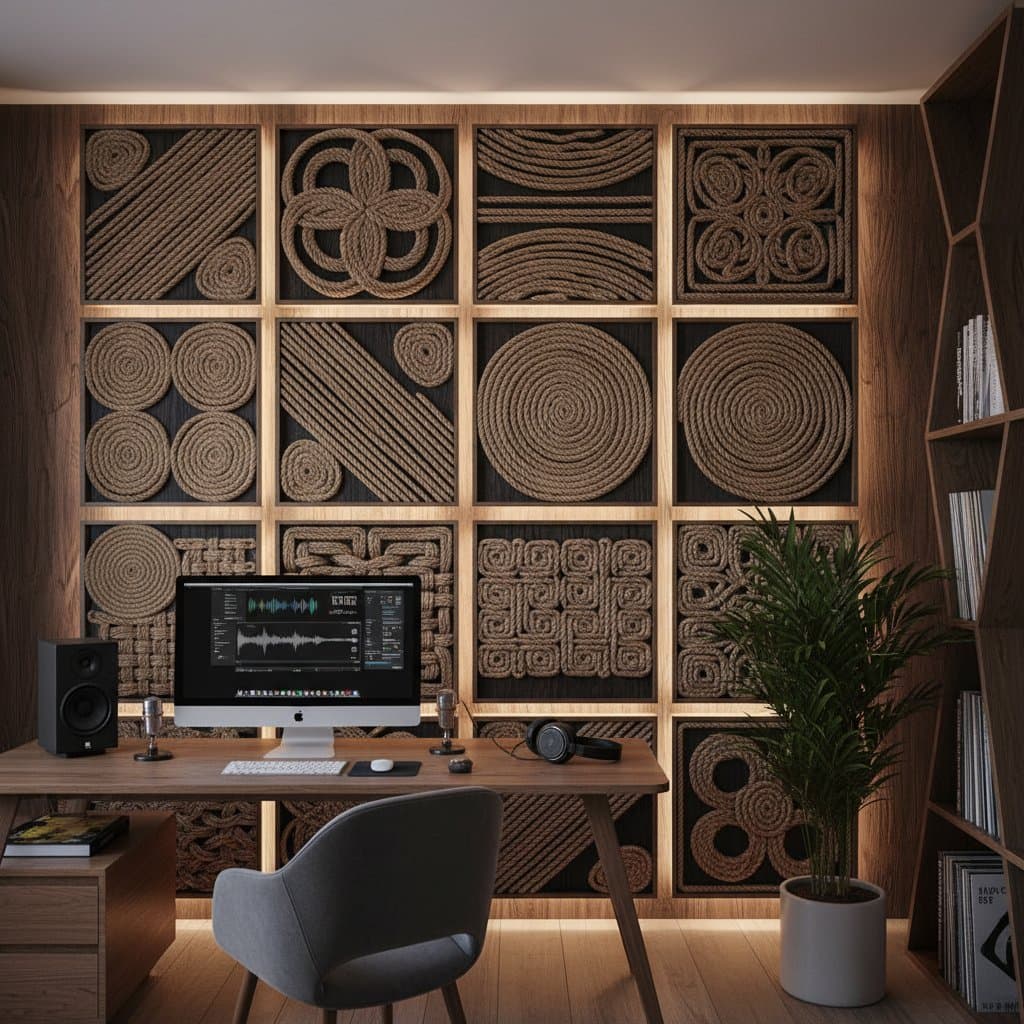
Why Rope Walls Slash Acoustic Costs by 90 Percent
Professional acoustic treatments often carry high price tags, with pre-fabricated panels ranging from $60 to $120 per square foot. Basic foam alternatives accumulate expenses quickly during large installations. Rope walls offer a compelling alternative. Home builders achieve comparable sound control for $4 to $8 per square foot through natural fibers and straightforward woodworking techniques.
These panels consist of rope strands arranged across a substrate to form a porous, irregular surface. Sound waves encounter the textured material, where portions dissipate as heat while others redirect to minimize harsh reflections. Initially popular as decorative elements, rope walls now serve as practical tools for enhancing room acoustics in studios, home theaters, and practice spaces.
The design excels in mid-to-high frequency absorption, complementing bass traps for comprehensive treatment. Users report warmer tonal balance and reduced reverb times, essential for recording or listening environments. With minimal tools, enthusiasts produce panels that integrate seamlessly into modern or rustic interiors.
Acoustic Principles Behind Rope Walls
Sound control relies on absorption and diffusion. Rope walls address both by trapping vibrations within their fibrous structure. Unlike rigid surfaces that bounce audio, the soft, uneven ropes scatter waves effectively.
Low frequencies challenge many DIY solutions, yet the air gap behind panels boosts bass response by up to 10 percent. This setup mimics Helmholtz resonators, allowing deeper tones to enter and dissipate. Testing with apps or microphones reveals improvements in clarity, particularly in rooms under 300 square feet.
Customization allows tailoring to specific needs. Thicker ropes enhance absorption for vocal booths, while thinner strands suit diffusion in listening rooms. Natural materials like jute or cotton avoid synthetic odors and promote sustainability.
Materials and Cost Breakdown
Selecting quality components ensures durability and performance. Plywood or medium-density fiberboard (MDF) forms the stable base, resisting warping in humid spaces. Natural ropes provide the absorbing layer, with jute offering affordability and hemp delivering longevity.
A standard 4-by-8-foot panel requires:
- One sheet of 1/2-inch plywood or MDF ($20 to $30)
- 120 to 150 feet of 1/4-inch rope ($15 to $40, based on material)
- Adhesive or staples ($5)
- Furring strips and screws ($10)
- Optional batting ($10 to $15)
Total investment stays under $80, yielding savings over commercial options. Bulk rope purchases reduce per-panel costs for multiple installations. Consider fire-rated variants for public areas, adding $10 to $20 per sheet.
Step-by-Step Construction Guide
Assemble panels methodically for optimal results. Preparation takes one hour, with assembly following in two to three hours for a full sheet.
1. Select and prepare the substrate
Choose smooth plywood or MDF, sanding edges to prevent splinters. Apply a base coat of paint or sealant if visibility matters. This step protects the wood and enhances contrast with the rope overlay.
2. Install mounting supports
Affix 1-inch furring strips to the back using screws. Space them every 16 inches to align with wall studs. The resulting air gap facilitates airflow, improving overall absorption without additional insulation.
3. Lay out the rope pattern
Decide on horizontal, vertical, or grid arrangements based on aesthetic goals. Begin at one edge, securing the rope with adhesive dots or staples every 6 inches. Maintain consistent tension by pulling gently; a finger test confirms flexibility without excessive bounce.
4. Secure and refine
Overlap strands slightly for density, ensuring no gaps exceed 1/4 inch. Trim excess at edges and seal ends with glue. For advanced designs, incorporate weaves or varying thicknesses to target specific frequencies.
5. Test and adjust
Mount a sample section and play test tones. Adjust spacing if highs remain bright or lows muddled. Minor tweaks, like adding batting, refine performance post-installation.
Installation Options: DIY Versus Expert Help
Rope walls suit various skill levels, from novice woodworkers to seasoned installers. The process mirrors common home projects, requiring only standard tools like a drill, saw, and level.
Pursue DIY installation if:
- Coverage spans less than 100 square feet.
- Patterns remain linear without complex curves.
- Basic safety measures, such as eye protection, are in place.
This approach saves labor costs and allows personalization. Secure panels to studs for stability, using a level to prevent misalignment.
Engage professionals for:
- Extensive coverage, including ceilings or irregular walls.
- Intricate patterns or integrated features like hidden wiring.
- Compliance with building codes in commercial settings.
Experts charge $10 to $18 per square foot, covering materials and labor. They often incorporate enhancements, such as LED backlighting or enhanced insulation, elevating functionality.
Verification tip: Request material samples and a portfolio of similar work. Confirm insurance coverage to protect against installation mishaps.
Maintenance and Expansion Strategies
Rope walls endure with proper care. Dust periodically using a soft brush or vacuum with a brush attachment. Avoid direct sunlight to prevent fading; natural fibers hold color well under indirect light.
Monitor acoustic performance over time. Re-tension loose strands annually, especially in high-humidity areas. If expansion appeals, add corner bass traps or ceiling clouds using the same techniques.
Begin with a single feature wall to assess impact. Capture audio samples pre- and post-installation for objective comparison. This data guides further refinements, ensuring the space evolves with user needs.
Successful implementations transform ordinary rooms into professional-grade environments. The combination of cost savings, visual appeal, and sound quality positions rope walls as a staple in modern DIY acoustics.