
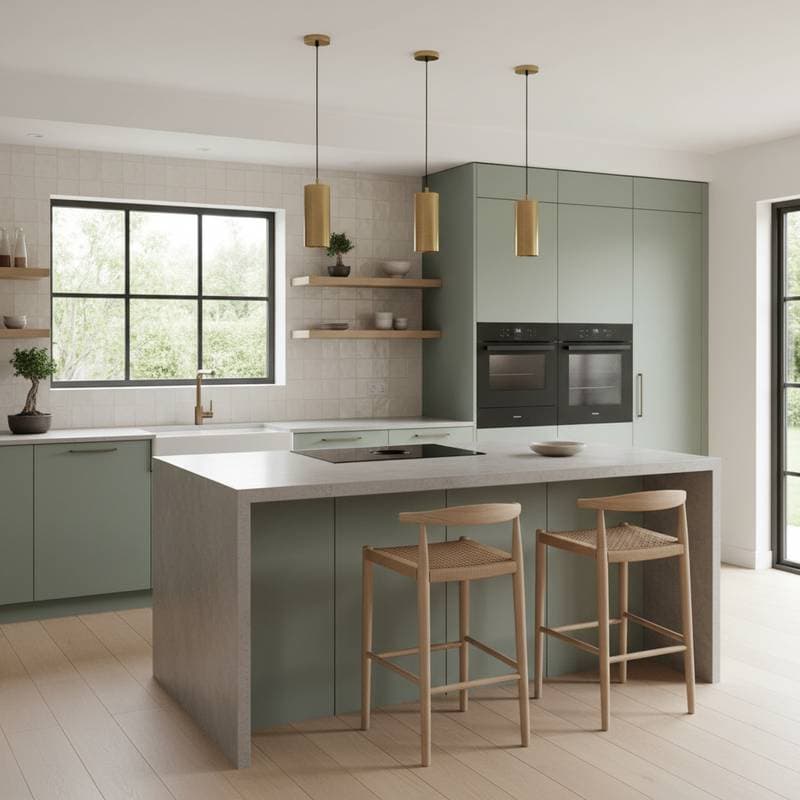
Japandi Cabinetry: The 2025 Kitchen Transformation
Kitchens designed with precise lines and soothing hues influence daily routines profoundly. Japandi cabinetry merges Japanese minimalism and Scandinavian coziness to redefine kitchen aesthetics through understated elegance. Homeowners select this style to foster organized, practical environments that remain welcoming. A complete cabinet overhaul ranges from $14,000 to $28,000, influenced by material selections and spatial configurations, yet the resulting harmony justifies the investment for many.
Defining Features of Japandi Cabinetry
Japandi cabinetry integrates the restraint of Japanese aesthetics with the organic textures and luminosity of Nordic influences. Distinguishing elements appear in seamless panel joints, subdued matte surfaces, and the absence of prominent hardware. This design philosophy prioritizes visual tranquility, ensuring each component serves a deliberate function.
Essential characteristics encompass:
- Handleless doors equipped with integrated recesses or push mechanisms for seamless operation.
- Natural wood options including white oak, ash, or bamboo for authentic warmth.
- Subtle matte laminates in tones such as clay, sand, or fog gray to enhance neutrality.
- Open shelving integrated with hidden compartments to achieve equilibrium between display and storage.
Such elements reduce visual distractions while emphasizing tactile, inviting materials. Consequently, kitchens appear more expansive and composed, regardless of size. This versatility accommodates urban apartments, row houses, and spacious family layouts alike.
Appeal to Homeowners
Japandi cabinetry aligns seamlessly with contemporary lifestyles. It conceals appliances and tools efficiently, allowing space for cherished decorative pieces like artisanal ceramics. Designers observe that clients gravitate toward this style for its emotional clarity. Reduced visual complexity fosters greater mental clarity, embodying both visual and mindful restraint.
Practical step: Initiate the process by clearing countertops entirely for one week. Observe the resulting sense of openness. If this tranquility resonates, consider adopting Japandi principles for your space.
Essential Design Elements for Authentic Japandi
Authentic Japandi requires attention to scale and surface treatments from the outset. Cabinets must integrate flush against walls and appliances, eschewing elaborate moldings or overlays. Door panels remain flat, free from extraneous hardware to preserve purity.
Fundamental choices include:
- Color selection: Opt for gentle neutrals, inherent wood shades, or subdued charcoals to maintain serenity.
- Material combination: Pair genuine wood veneers with engineered panels to balance authenticity and affordability.
- Illumination: Incorporate concealed LED strips beneath cabinets to deliver soft, ambient light.
- Surface variation: Blend sleek cabinet faces with subtle textures from backsplash tiles or natural stone.
A comprehensive kitchen renovation typically spans four to six weeks, contingent on custom fabrication timelines. Stock Japandi-inspired units can accelerate completion to two or three weeks. Thorough preparation mitigates potential setbacks and associated expenses.
Rationale for effectiveness: The restrained palette highlights superior workmanship and spatial harmony over ornamental excess. This yields an enduring aesthetic that transcends fleeting fashions.
Budgeting and Cost Considerations
Japandi cabinetry occupies a position between standard and premium pricing tiers. Semi-custom installations average $250 to $600 per linear foot. Bespoke configurations with exotic hardwoods may escalate to $900 per linear foot. Installation labor constitutes approximately 35 percent of the overall expenditure.
Influencing variables encompass:
- Specific wood varieties and their applied finishes.
- Tailored dimensions or embedded appliance integrations.
- Internal organization systems and mechanisms for silent closure.
- Regional labor costs and transportation logistics.
For cost efficiency, employ laminate cores paired with solid wood exteriors. This method authenticates exposed areas while economizing on structural components. Retaining the current cabinet framework further minimizes expenses related to utility relocations.
Prioritize durable hinges and glides, as inferior options degrade swiftly, compromising alignment and aesthetics. Investing in reliable soft-close features adds $500 to $800 yet ensures longevity spanning decades.
Practical step: Solicit at least three comprehensive estimates. Request itemized breakdowns of materials, components, and workmanship to facilitate precise comparisons.
Installation Options: DIY Versus Professional
Individuals with advanced woodworking expertise may find basic Japandi cabinetry suitable for self-assembly. Flat-panel constructions prove simpler than profiled alternatives. Essential tools include a track saw, spirit level, stud detector, and meticulous attention to detail.
DIY feasibility applies when:
- Configurations feature straightforward alignments without intricate angles.
- Proficiency exists in calibrating hinges and drawer mechanisms.
- Assistance is available for maneuvering and securing upper units.
Engage professionals for scenarios involving:
- Embedded appliances or integrated lighting systems.
- Irregular wall or floor surfaces.
- Pursuit of impeccable, high-end finishes.
Expert installation for an average kitchen totals $4,000 to $8,000. Verify portfolios of prior work and confirm insurance coverage. Certified contractors manage electrical and plumbing integrations with requisite safety protocols.
Practical step: Determine preferences for autonomy or expertise early. Self-installation may reduce costs by up to 20 percent, though errors can rapidly offset such gains.
Pitfalls to Sidestep in Japandi Projects
- Selecting shiny surfaces. Japandi thrives on matte, organic feels; reflective finishes shatter the intended repose.
- Omitting sub-cabinet illumination. Absence of this element can render warm woods lackluster.
- Neglecting scale harmony. Bulky hardware or heavy moldings fracture overall cohesion.
- Overlooking airflow needs. Concealed vents demand adequate space within streamlined facades.
- Overloading material diversity. Restrict to no more than three distinct surfaces to sustain unity.
Errors frequently stem from inadequate forethought. Employ sketches or software simulations prior to procurement. Adjustments during planning incur minimal cost compared to field alterations.
Practical step: Consult a kitchen specialist or fabricator for plan review before commitments. A single session, priced at $150 to $300, often averts substantial corrective outlays.
Maintenance and Long-Term Enjoyment
Installed Japandi cabinetry demands minimal upkeep. Clean with diluted soap solution and soft cloths. Steer clear of scrubbers or aggressive cleaners that erode surfaces. Realign hinges seasonally to uphold precision. Apply wood conditioner annually to preserve veneer vitality.
Advancing your initiative: Compile reference images, establish a feasible budget, and engage experts versed in Japandi execution. Progressive updates or complete overhauls alike cultivate enduring ease and refined beauty through deliberate simplification.