
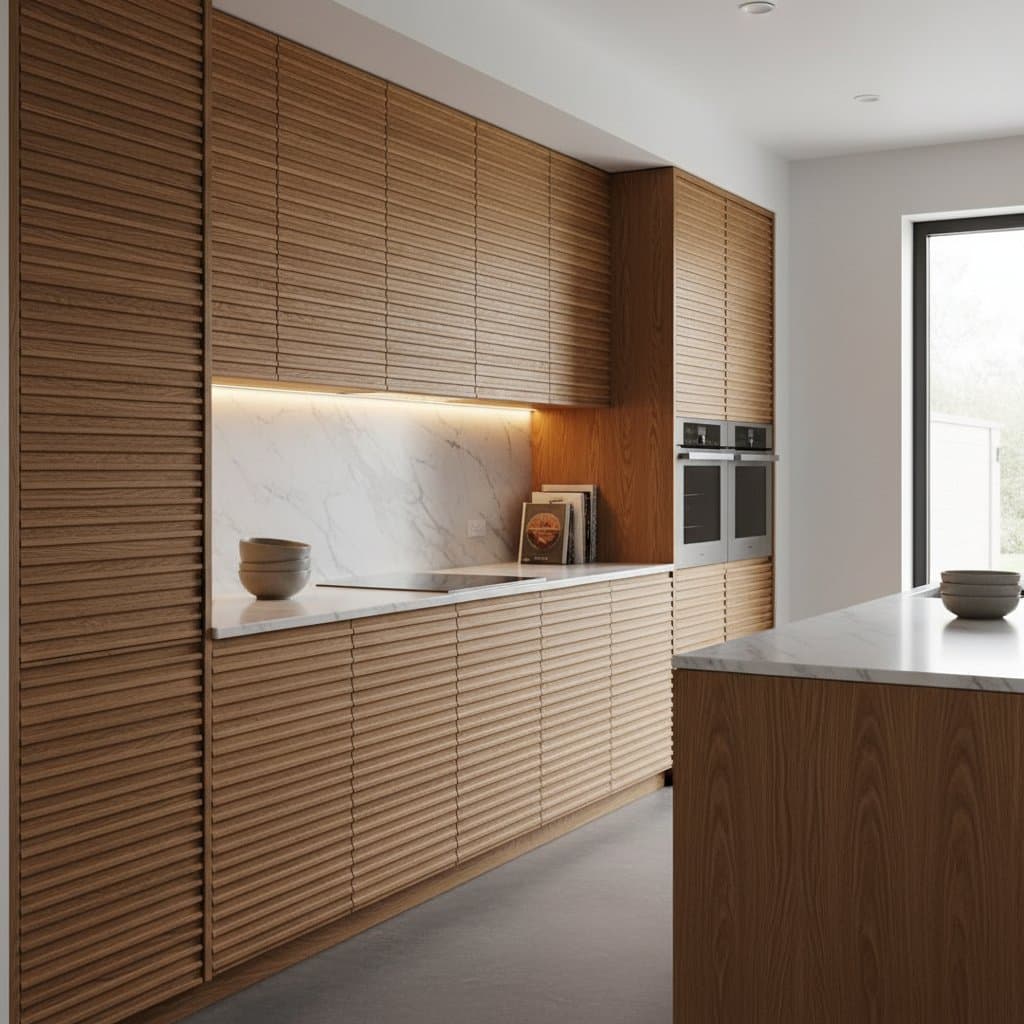
Why Ribbed Oak Cabinets Hide Wear Better Than Gloss
Enter a contemporary kitchen or bathroom display, and observe the emerging prominence of ribbed oak cabinetry. These panels feature vertical ridges that create a subtle, multidimensional surface, shifting perceptions of wood usage in functional spaces. This texture not only enhances aesthetic appeal but also addresses practical concerns like durability and maintenance.
Understanding the Textural Advantage
Ribbed oak departs from conventional flat cabinet faces by incorporating milled grooves that run vertically along the wood grain. This design captures light and shadow in varied ways, producing a dynamic visual effect that adds architectural interest without relying on bold colors or patterns. The result integrates seamlessly into modern interiors, where natural materials dominate.
Professionals highlight the adaptability of ribbed oak. It complements understated elements such as brushed metal pulls, quartz countertops, and neutral backslashes. Apply it fully across cabinetry for a cohesive look, or limit it to focal points like an island base or bathroom vanity doors. The restrained patterning maintains visual harmony while suggesting bespoke quality.
A key benefit lies in its ability to conceal minor imperfections. Unlike glossy surfaces that spotlight smudges and scratches, the ridges diffuse light and obscure daily marks from hands or utensils. This quality proves especially valuable in high-traffic areas, where aesthetics must withstand regular use.
Practical tip: Examine ribbed oak samples under various light conditions. Natural daylight alters shadow patterns throughout the day, revealing the texture's evolving character.
The Manufacturing Process
Creating ribbed oak involves precise woodworking techniques that emphasize the material's inherent strength. Start with quartersawn oak boards, selected for stability and pronounced grain. Craftsmen use specialized routers or shapers to carve uniform channels, typically 1/8 to 1/4 inch deep, spaced 1/2 inch apart.
After milling, the surfaces receive sanding to smooth edges without diminishing the ridges. Finishes range from penetrating oils that enhance the wood's warmth to durable clear coats that protect against moisture. Solid oak demands more labor for thicker panels, while veneered options apply the texture to engineered bases for cost efficiency.
This process ensures longevity. The vertical orientation aligns with the wood's natural expansion, reducing the risk of splitting over time. Homeowners appreciate the artisanal feel, as each piece reflects skilled handiwork.
Practical Durability in Daily Use
Ribbed oak stands out for its resilience against common household challenges. The textured surface resists visible accumulation of fingerprints, unlike high-sheen alternatives that require constant polishing. Light scratches from routine activities blend into the grooves, preserving the cabinet's refined appearance longer.
In kitchens, this feature supports active lifestyles. Grease splatters and spills find less purchase on the uneven terrain, simplifying spot cleaning. Bathrooms benefit similarly, as humidity variations cause minimal surface disruption compared to smoother finishes prone to water spotting.
Designers recommend pairing ribbed oak with complementary materials to amplify these advantages. For instance, integrate it with matte black fixtures to minimize glare, or position it near windows to leverage natural light for subtle highlighting.
Pricing and Investment Considerations
Budget for ribbed oak installations between $180 and $400 per linear foot, inclusive of materials and labor. This range reflects choices like solid versus veneered construction. Comparable flat-panel oak cabinets typically cost $140 to $250 per linear foot, positioning the ribbed style as a worthwhile upgrade for enhanced functionality.
Influencing factors include:
- Panel depth and density: Deeper ridges demand advanced tooling, increasing fabrication expenses.
- Surface treatment: Oil finishes offer affordability and a soft luster, though they invite periodic reapplication; polyurethane provides superior protection at a higher initial outlay.
- Installation precision: Aligning hardware on grooved faces necessitates custom drilling, adding to labor costs.
To optimize spending, incorporate ribbed elements selectively. Reserve the texture for exterior doors and drawer fronts, opting for plain interiors. Such selective application can lower overall expenses by 25 to 30 percent while retaining prominent visual impact.
Pitfalls to Sidestep During Selection and Setup
Avoid these frequent oversights to maximize the benefits of ribbed oak:
- Overlooking groove sealing: Unprotected channels accumulate residues like dust or oils. Ensure finishes penetrate fully into each ridge during application.
- Choosing overly consistent grain: Straight, uniform patterns yield monotonous results. Blend straight and cathedral grains to introduce natural variation and depth.
- Misaligning components: Slight discrepancies in door or drawer positioning disrupt the linear flow. Employ alignment jigs or spacers for uniform installation.
- Disregarding illumination effects: Harsh overhead lights can amplify shadows unevenly. Experiment with fixture positions during planning to achieve balanced play of light.
Addressing these issues early prevents costly adjustments later.
Integrating Ribbed Oak into Your Space
Ribbed oak elevates ordinary cabinetry through its interplay of light, texture, and warmth. In compact kitchens, the ridges expand perceived volume by drawing the eye vertically. Expansive areas gain intimacy, as the subtle patterning softens expansive flat surfaces.
Maintenance remains straightforward. Use a soft-bristled brush weekly to clear debris from grooves, followed by a damp cloth for wiping. Avoid abrasive cleaners that could dull the finish over time.
When embarking on a renovation, compare ribbed oak against alternatives like sleek laminates or painted shaker styles. This textured option often emerges as the choice that balances enduring style with effortless upkeep, transforming functional storage into a design centerpiece.