
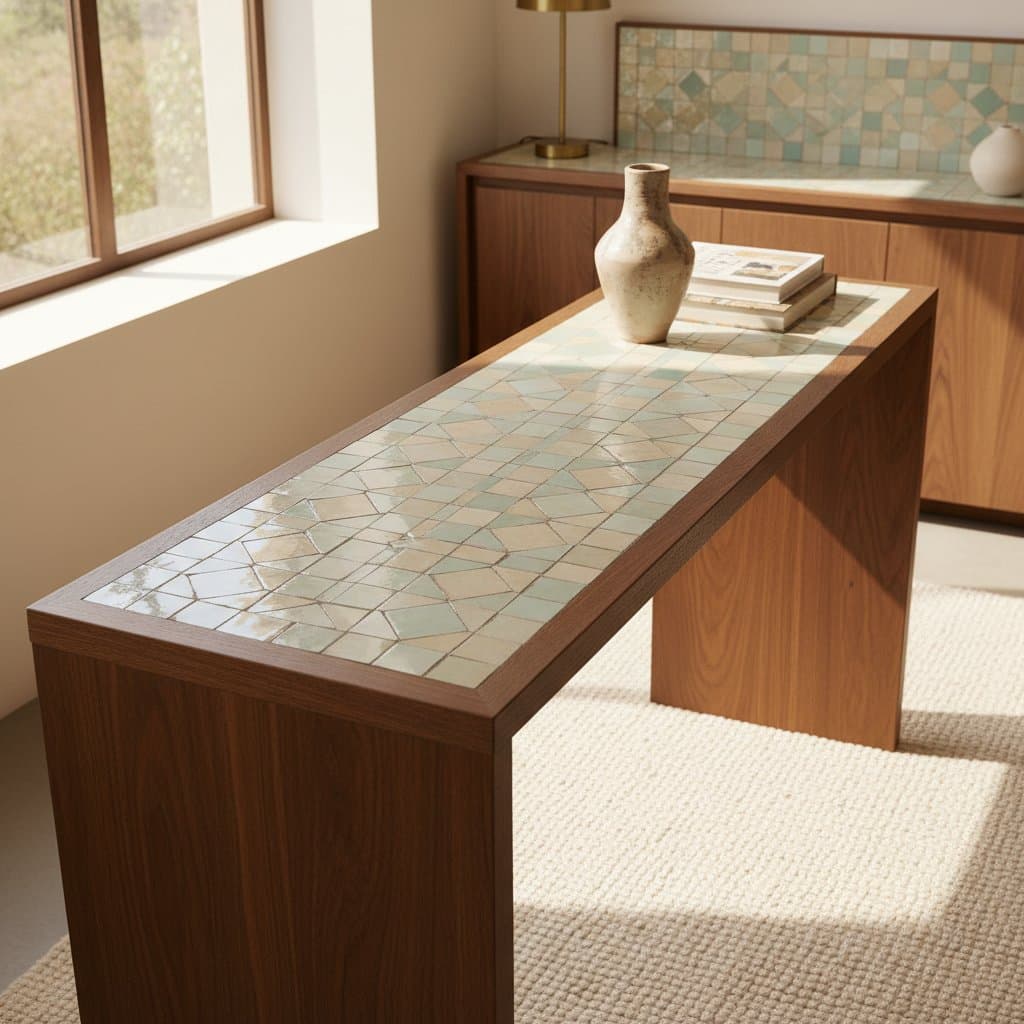
Why Zellige Tiles Revolutionize Wood Furniture
Zellige tiles, known for hand-cut edges and shimmering glazes, reshape mixed-material furniture design. Originating in Moroccan architecture, these tiles now integrate into tabletops, cabinet inlays, and custom joinery. Their varied colors and surfaces add motion to wood's inherent warmth, creating pieces that balance organic texture with subtle reflection.
At a Glance
Category: Mixed-media furniture with Zellige tile inlays
Primary Materials: Solid oak, walnut, ash, paired with handcrafted Zellige tiles
Typical Scale: Coffee tables, sideboards, kitchen islands, headboards
Design Teams: Independent woodworkers and ceramic studios
Photographers: Specialists in close-up shots of tile joints, material transitions, and color shifts
The Core Challenge
Wood furniture traditionally draws contrast from grain patterns and tonal variations. Designers seek ways to add light and depth while preserving wood's inviting warmth. Zellige tiles address this by providing micro-reflections and rhythmic patterns. Each tile scatters light uniquely, invigorating large wood surfaces and making them responsive to ambient conditions.
Furniture designer Amir Dahan noted, “I wanted something that caught the light like water but still felt grounded in natural material. Zellige gave me that bridge.”
Before: Flat Planes and Predictable Finishes
Prior to Zellige integration, wood designs relied on species combinations or stains for interest. A walnut table might incorporate maple accents or metal hardware. These approaches yielded smooth, uniform surfaces that sometimes appeared heavy or unchanging.
Designer Priya Esteban observed, “We were chasing perfection in grain matching, and everything became too precise. It lacked the irregular beauty that makes a piece feel handmade.”
Manufacturers also contended with environmental demands. In moisture-prone areas like kitchens, wood needed rigorous sealing to prevent damage.
After: A Mixed Surface That Breathes and Glows
Zellige inlays shift this dynamic by embedding tiles as integral layers rather than overlays. The tiles' uneven glazes and subtle dimensions offset wood's linear precision. Flush-set into frames, they form glowing focal points that enliven adjacent grains.
Consider a walnut console with pale sea-green Zellige bands on drawer fronts. Morning light highlights one facet, while evening deepens the hues, drawing attention to joinery details. The result animates the piece in harmony with its surroundings.
Cabinetmaker Luis Ortega explained, “It’s like adding a living surface. You don’t polish it to uniform shine. You let the tile’s irregularity do the work.”
Design Details
-
Material Pairings: Pair Zellige with walnut for contrast in reflection, or with white oak and maple to accentuate tile colors.
-
Tile Size: Standard 2 x 2 inches (5 x 5 centimeters), installed with thin grout lines for seamless integration.
-
Joinery Considerations: Cut recesses 3/8 inch (1 centimeter) deep for flush seating. Isolate tile sections on stable substrates to accommodate wood expansion.
-
Finish Coordination: Apply oils or waxes to wood to match Zellige's matte-to-glossy glazes. Steer clear of competing high-gloss varnishes.
-
Lighting: Position fixtures at 30 to 45 degrees for enhanced highlights on tile surfaces.
-
Edge Transitions: Chamfer wood edges near tiles to minimize chipping and ease visual shifts.
The Craft Connection
Zellige emerges from clay that is pressed, fired, and manually cut, yielding tiles with unique thicknesses and tones. This variation elevates furniture by softening joinery's exactitude and infusing human artistry.
Artisan woodworker Helen Cho shared her experience with a Zellige tabletop: “I laid the tiles tight, then realized the gaps were part of the language. The small variations made the wood look even more refined.”
Such imperfections redefine quality as material harmony. Wood develops patina over time, while tile glazes gain diffused scratches, fostering a unified evolution.
Layout and Proportion
Balance proves essential in Zellige integration. Excessive tile overwhelms wood's warmth; minimal use risks seeming incidental. Effective placements target interactive zones like tabletops or central panels.
For a 60-inch (152-centimeter) dining table, a 12-inch (30-centimeter) Zellige stripe down the center acts as a trivet and visual guide, bordered by solid wood to delineate seating areas.
In cabinetry, vertical tile bands between drawers unify storage elements, with grout rhythms mirroring drawer alignments for cohesive geometry.
Color and Mood
Zellige glazes span neutrals to vivid blues and greens, altering a piece's ambiance. Ivory tiles with bleached oak evoke serenity; cobalt against walnut conveys solidity.
Select colors to denote purpose: blush for vanities, jade for accents. The glazes' inconsistencies ensure dynamic light capture, infusing stillness with subtle energy.
Interior stylist Lila Carter remarked, “When we photograph Zellige furniture, we never need to fake the light. The surface already dances.”
Storage and Structure
Zellige enhances functionality on horizontal surfaces, resisting heat and moisture better than untreated wood. This suits kitchens and entryways.
In panels, tile insets provide rigidity, minimizing warp in broad areas. Back recesses with plywood for stability.
For organization, alternate tile and wood on drawer faces to aid intuitive access through tactile cues.
Lighting and Shadow Play
Zellige thrives under varied illumination. Tile edges refract light at angles, producing shimmer with viewer movement.
Ambient sources reveal tones; task lights expose depths; grazing accents from sconces highlight reliefs. Together, they render furniture sculptural.
Photographers favor oblique angles to depict gloss-matte interplay and grain-tile textures, conveying both skill and luminous emotion.
Cost and Scale
Handcrafted Moroccan Zellige costs 45 to 90 dollars per square foot (485 to 970 dollars per square meter). Furniture projects typically require mere square feet.
Labor focuses on recess precision and alignment, taking about six hours for a 48-inch (122-centimeter) tabletop. It aligns with routine woodworking once learned.
Key Takeaways
-
Zellige adds motion and light to wood, harmonizing warmth with gleam.
-
Irregularities complement precise joinery.
-
Account for wood movement and tile depth in planning.
-
Strategic lighting maximizes surface appeal.
-
Targeted applications protect against heat and moisture effectively.
Adapting the Idea at Home
Incorporate Zellige simply in personal projects.
-
Trays and Small Tables: Embed tiles in tray or table tops, using contrasting grout for emphasis.
-
Cabinet Accents: Swap a single drawer front for a tile panel to gauge scale.
-
Backsplashes and Screens: Insert tiles into wooden backsplashes or dividers.
Prepare by dry-fitting tiles, then secure with waterproof adhesive and flexible grout. Oil adjacent wood to echo tile sheen.
Maintaining Your Investment
Clean Zellige with mild soap and water; avoid abrasives to preserve glaze. Re-oil wood yearly to sustain protection and shine.
Chip repairs involve simple replacement, as tiles' uniqueness ensures seamless blending.
Living with Your Design
Zellige-tile pieces mature gracefully. Wood tones deepen seasonally, while glazes unveil new facets in shifting light. This ongoing dialogue with environment underscores their enduring allure.