
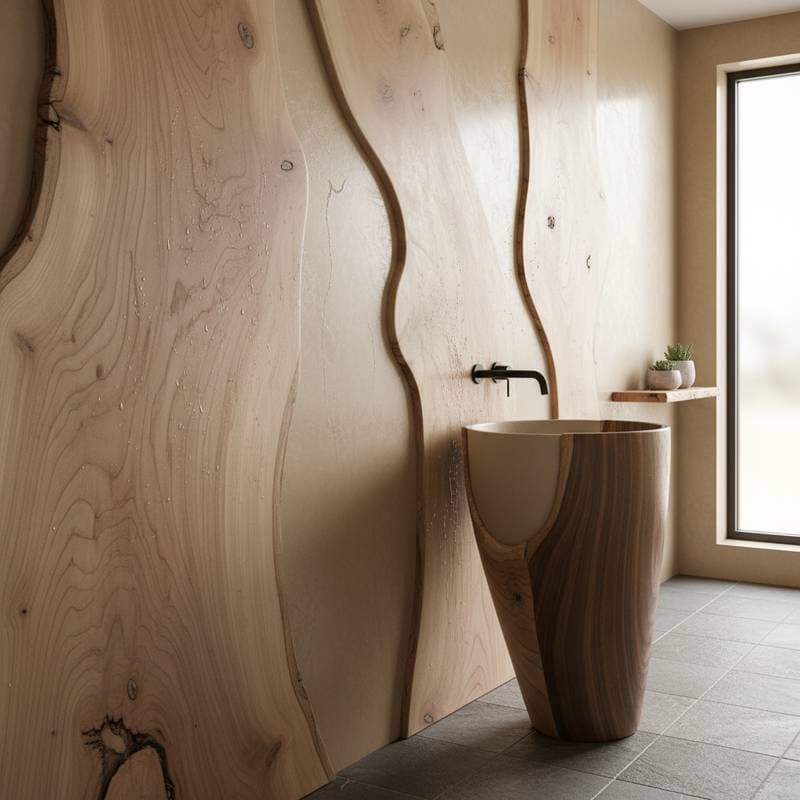
Tadelakt Meets Wood: The 2026 Waterproof Hybrid Innovation
Designers reshape waterproof finishing approaches through the combination of Moroccan plaster and select timber. Tadelakt, a lime-based plaster known for its smooth, stone-like finish, gains renewed application when integrated with wood. This hybrid creates a coating that blends wood grain warmth with mineral durability. The outcome introduces spa-like tranquility to kitchens, bathrooms, and furniture workshops, all free from synthetic barriers.
At a Glance
Target Audience: Homeowners pursuing natural waterproof solutions
Locations: International design studios and woodworking shops testing hybrid finishes
Scale: Ranges from compact vanities to extensive wall coverings
Notable Teams: Studio Atlas, Grain + Lime, Atelier Nouri
Visual Documentation: Karim Delaine
Challenges in Traditional Wood Protection
Woodworkers faced persistent difficulties in safeguarding wood within moisture-prone areas while preserving its inherent texture. Hard lacquers formed impermeable seals that compromised natural qualities. Oils applied uneven darkening to the grain. Contemporary polyurethanes often trapped moisture beneath the surface, resulting in cracks and degradation.
"Clients desired the appearance of untreated wood in showers or near vessel sinks, yet longevity remained uncertain," noted interior designer Leila Bensalem. The fundamental problem lay in wood natural tendency to breathe, contrasted against most waterproof coatings that impeded this process.
Advantages of the Tadelakt-Wood Hybrid
This innovative tadelakt-wood hybrid alters the protection paradigm. Thin mineral layers applied over prepared wood bond via a lime reaction that repels water without generating a plastic film. The finish stays vapor-permeable. Polishing with olive soap yields a gentle sheen reminiscent of burnished leather rather than applied paint.
Photographs reveal seamless transitions from plaster walls to wooden shelves, unified in color and texture. Light moves across the surface without harsh reflections. Designers apply this method to shower benches, tub enclosures, and kitchen islands. The result proves both organic and robust.
Woodworkers value the equilibrium achieved. The coating shields joints and edges while permitting wood to expand and contract with humidity changes. "We ceased viewing plaster as limited to walls," stated craftsman Rami Duarte. "It evolved into a unifying skin that connects materials rather than divides them."
Application Techniques
- Surface Preparation: Use sanded hardwood or marine plywood with beveled edges to minimize fracture risks.
- Plaster Formulation: Blend lime putty, marble dust, and fine sand for enhanced flexibility.
- Layering Process: Apply two to three coats via hand troweling, achieving a total depth of approximately 1/8 inch (3 mm).
- Finishing Steps: Burnish with a stone tool and seal with natural soap to seal microscopic pores.
- Available Hues: Neutral earth shades from soft ivory to rich clay, customized with mineral pigments.
- Upkeep Routine: Renew water resistance and subtle shine through occasional soap applications.
Significance for Sustainable Design
This method reimagines waterproofing by relying on natural mineral chemistry instead of synthetic additives. The lime component in tadelakt interacts with carbon dioxide in the air, forming calcium carbonate that fortifies the surface progressively. Paired with wood, it develops a fine protective layer resistant to mold growth and discoloration.
Professionals regard it as a viable substitute for resin-based sealants. The process eliminates volatile organic compounds and prevents microplastic release. Its sensory appeal distinguishes it further. Tadelakt offers optical depth absent in shiny varnishes. Each trowel application captures the artisans hand, bridging age-old techniques with current performance expectations.
Practical Uses
- Bathroom Installations: Shower enclosures, recessed shelves, and integrated vanities receive continuous waterproofing devoid of grout seams.
- Kitchen Surfaces: Splash guards and sink-adjacent counters maintain protection alongside an authentic tactile experience.
- Furniture Pieces: Low tables and seating units merge wooden frames with plastered surfaces for artistic expression.
- Architectural Elements: Frame surrounds, step edges, and moldings coated uniformly foster spatial harmony.
Insights from Woodworking Practice
Moisture management proves essential when overlaying tadelakt on wood. The base material requires dryness without excessive rigidity. Workshops often prime wood with a thinned limewash for breathability, then introduce plaster to a lightly moistened surface for optimal bonding. Expansion joints incorporate fine mesh reinforcements.
Sofia Nguyen, technical specialist at Grain + Lime, described the procedure as "methodical yet adaptable." She detailed how the troweling cadence guides the process. "The material signals readiness for polishing through surface tension under the tool," she added. "That moment establishes its waterproof integrity."
Illumination enhances the finish. Professionals select diffused, angled lights to accentuate the plasters gentle contours. The material responds well to warm LED accents beneath shelves or beside reflective panels, underscoring texture over sheen.
Compatible Materials
Tadelakt integrates effectively with tight-grained species like maple, alder, or birch. Oak succeeds with precise sealing to avoid pigment migration from lime. Bamboo overlays excel due to stable dimensions. Designers frequently contrast hues, such as light plaster enveloping dark walnut or subtle gray over ash for composed layering.
To achieve tonal consistency, incorporate mineral pigments into the lime mixture. Favored pairings feature beige plaster against walnut or neutral gray with ash. The intent centers on serene continuity, streamlining interior aesthetics.
Cost and Longevity Considerations
Expenses typically span $18 to $28 per square foot ($194 to $301 per square meter), covering materials and skilled labor. Upkeep involves simple soap-based cleaning that revitalizes rather than diminishes the surface. With routine attention, the finish endures for decades.
For woodworking operations, this hybrid opens a lucrative specialty. It requires expertise but draws from readily available supplies. Smaller outfits begin with prototype panels prior to comprehensive projects.
Core Advantages
- Tadelakt-wood hybrid provides genuine waterproofing absent plastic elements.
- Breathability safeguards against internal moisture buildup and structural distortion.
- Earth-derived components ensure low toxicity and ecological compatibility.
- Subtle textures and colors foster tranquil, integrated spaces that develop patina elegantly.
- The method honors skilled workmanship and supports personalized pigmentation.
This integration of mineral and timber elements heralds a subtle shift for craftspeople and innovators. Surfaces emerge visually soothing, tactilely resilient, and profoundly eco-aligned.