
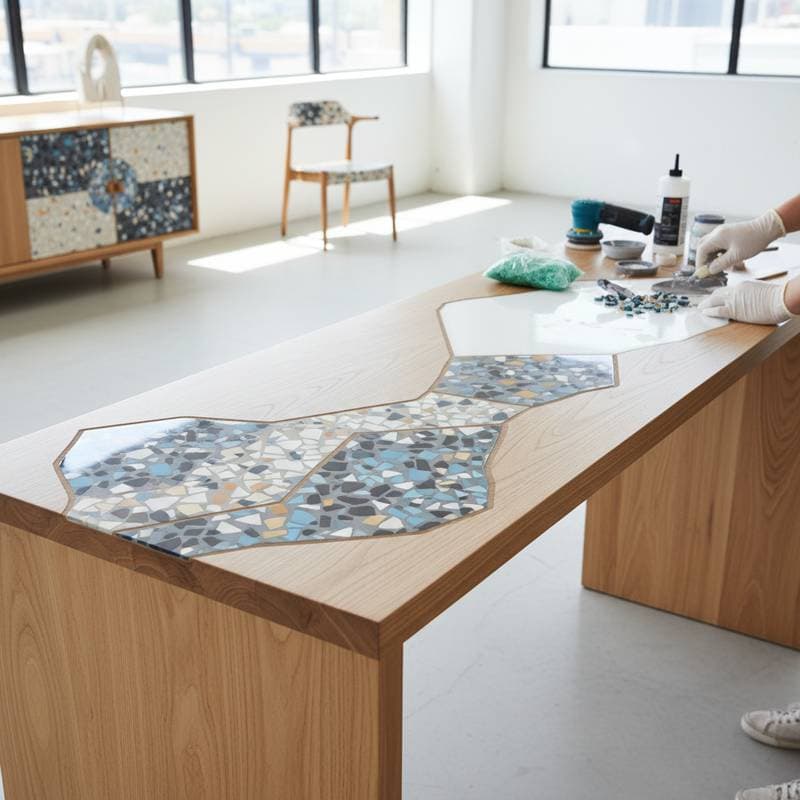
Terrazzo Inlays: Leading the 2026 Furniture Design Revolution
A custom coffee table featuring terrazzo inlays typically ranges from $950 to $1,800 in cost, influenced by material choices and labor involved. This investment becomes evident when observing how these inlays convert ordinary wood surfaces into exceptional, personalized focal points. Woodworkers and designers increasingly select terrazzo for its distinctive texture, environmental benefits, and adaptable design options. For those engaged in woodworking or seeking bespoke furniture, mastering terrazzo inlay methods proves essential as this trend permeates high-end showrooms.
The Resurgence of Terrazzo in Contemporary Furniture
Terrazzo originally gained prominence in flooring for public spaces like schools and airports. Its recent resurgence in furniture marks a significant evolution. Artisans apply it to interrupt expansive wood planes, introducing a sensory contrast that evokes both heritage techniques and innovative forms. Examples appear in tabletops, cabinet doors, and chair seats.
This material succeeds by linking traditional craftsmanship with contemporary formulations. Terrazzo inlays integrate seamlessly with woods such as walnut, oak, or ash, imparting a three-dimensional character to each item. The mottled finish captures and refracts light variably throughout the day, infusing dynamism and dimension absent in standard varnishes.
Design professionals note that clients specifically request terrazzo inlays. The allure stems from inherent variability. Every casting yields exclusive motifs impossible to replicate exactly. This uniqueness boosts resale value and appeals to collectors, particularly for limited-edition handmade works.
Action step: For designers or retailers of bespoke items, initiate with modest terrazzo elements like drawer handles or embedded panels. Gauge client feedback prior to expanding to broader applications.
Sustainability and Adaptive Design Potential
The growing popularity of terrazzo inlays aligns with broader environmental priorities. Numerous workshops incorporate recycled stone, glass, or ceramic remnants that divert waste from disposal sites. Certain operations achieve up to 80 percent reclaimed content in their formulations.
Integrating terrazzo with wood minimizes reliance on extensive solid stone blocks, which demand substantial energy for extraction and delivery. The resulting hybrid pieces weigh less, reducing transportation expenses by 20 to 40 percent relative to all-terrazzo constructions.
Artisans tint the resin base using plant-derived pigments to align with diverse schemes. Subtle earth tones pair effectively with maple or birch, whereas vivid indigos and emeralds accentuate walnut or ebonized ash. Such flexibility opens vast creative avenues.
Action step: Inquire with suppliers regarding origins of recycled aggregates. Clients favor documented eco-friendly options, which support elevated pricing structures.
Approaches to Terrazzo Inlay Creation: DIY Versus Expert Assistance
Terrazzo inlay projects occupy an intermediate level in woodworking complexity. They demand precise manual control and familiarity with resin preparation. Consider the following to determine if self-execution or professional involvement suits the task.
Scenarios for DIY Execution
- The designated area measures less than 4 square feet.
- Essential tools like a router, orbital sander, and dust extraction setup are available.
- The layout involves straightforward geometries, such as circles or rectangles.
- Tolerance exists for subtle hue shifts and slight surface undulations.
Undertaking inlays independently cuts expenses by approximately 40 percent over commissioned work. Enthusiasts often build proficiency via initial trials on trays or charcuterie boards before advancing.
Indicators for Professional Engagement
- Designs incorporate several hues or intricate contours.
- The item holds emotional significance or potential for resale.
- Absence of robust dust management or stable curing conditions prevails.
- Precise hue coordination and impeccable finishing are required.
Experts manage sealant interactions as well. Incompatible coatings between wood and terrazzo risk humidity disparities, potentially leading to distortion.
Action step: When outsourcing, solicit images of the artisan's prior terrazzo endeavors and details on their sealing protocols. This inquiry discloses expertise and material proficiency.
Maintenance and Longevity of Terrazzo-Enhanced Furniture
With appropriate sealing, furniture bearing terrazzo inlays demands little upkeep. Cleaning involves a gentle soap mixture. Steer clear of abrasive cleaners that might diminish the sheen. For minor abrasions, apply a light buff with 400-grit abrasive and refresh the protective layer.
The composition withstands thermal exposure and discoloration more effectively than many natural stones, positioning it well for dining surfaces and kitchen counters. Its non-porous nature prevents liquid penetration unlike susceptible marbles, rendering it suitable for lavatory fixtures and sheltered exterior areas.
As years pass, the inlay acquires a gentle aging that harmonizes with adjacent wood grains. Owners frequently appreciate the nuanced tonal evolutions under varying illumination.
Tailoring Terrazzo Inlays for Personal or Commercial Impact
Adapt terrazzo inlays to resonate with individual aesthetics or brand identities. Experiment with these configurations for varied effects.
- Subtle Elegance: Employ white terrazzo accented by fine marble fragments within ebony walnut borders.
- Vibrant Expression: Blend recycled glass shards in coral or turquoise shades against pale oak substrates.
- Rugged Sophistication: Pair slate-gray terrazzo with matte-finish steel supports.
- Opulent Radiance: Infuse brass or copper particles for subtle metallic highlights.
Essential Resources
Visual reference: Cross-sectional diagrams depict standard terrazzo inlay profiles alongside progressive sanding protocols.
Alt text intent: These visuals demonstrate terrazzo placement within excavated wood recesses, emphasizing binder depth and refinement phases.
Achieving Enduring Appeal Through Terrazzo Integration
Incorporating terrazzo inlays elevates furniture beyond functional utility into realms of artistry and responsibility. This approach not only satisfies contemporary demands for uniqueness and green practices but also ensures pieces endure with grace. Woodworkers who adopt these techniques position themselves at the forefront of evolving design landscapes, delivering works that captivate and sustain.