
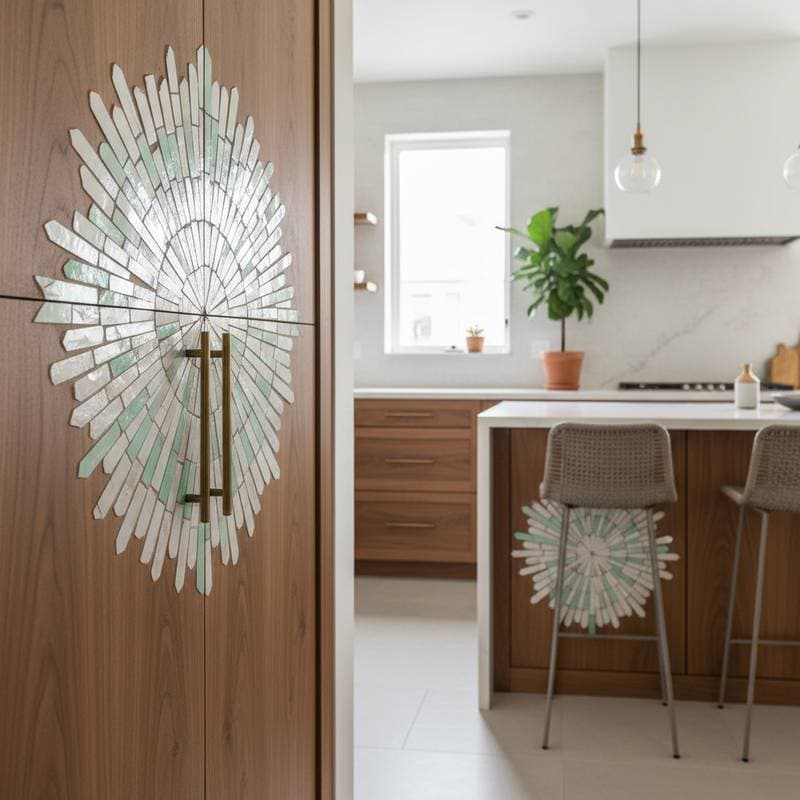
Zellige Inlays Blend Wood and Moroccan Magic in Cabinets
Handmade zellige tile possesses a shimmer that appears to come alive under light. When artisans set these vivid, irregular pieces into wood cabinetry, the resulting surface interacts dynamically with illumination, depth, and historical resonance. Homeowners seeking options more personal than standard glossy factory panels increasingly select zellige inlays to infuse kitchens, bathrooms, and built-in features with warmth and cultural depth.
At a Glance
Average cost: $180 to $320 per square foot installed
Project timeline: 3 to 6 days for fabrication and installation
Skill level: Intermediate to advanced woodworking and tile setting
Best for: Accent doors, drawer fronts, and custom furniture panels
Why Zellige Works in Wood
Zellige tile originates from handcrafted clay fired in small kilns, earning acclaim for subtle variations in color and thickness. These differences cause each tile to reflect light uniquely, producing a mosaic effect that combines organic flow with refined elegance. Inlaid into wood, such variations dissolve the divide between materials, yielding a surface that conveys human craftsmanship over mechanical precision.
Cabinetmakers typically employ 3/8-inch-thick zellige tiles, positioning them flush within a routed recess in hardwood panels. Species like oak, walnut, and maple complement the tile gloss and texture effectively. The moisture-resistant clay withstands heat and spills, rendering it suitable for kitchen backsplashes or bar fronts.
This combination delivers enduring artistry. The wood grain anchors the gem-like tiles, while the tiles shield frequently contacted areas from daily wear.
Action step: Select a focal area, such as a kitchen island or vanity doors, and sketch the inlay pattern prior to routing any recesses.
Step-by-Step: Creating a Zellige Inlay Panel
- Design the layout. Draw the pattern at full scale, accounting for grout lines approximately 1/16 inch wide.
- Prepare the recess. Employ a router or CNC machine to form a cavity matching the tile thickness plus adhesive layer, typically around 7/16 inch deep.
- Dry fit the tiles. Account for potential variations up to 1/8 inch in handmade tiles by adjusting spacing during trial placement.
- Adhere the tiles. Spread a flexible thinset mortar formulated for hybrid materials, then press tiles flush with the adjacent wood surface.
- Grout and seal. Apply unsanded grout for tight joints, followed by sealing both grout lines and wood edges to block moisture penetration.
Fabricating and finishing a single cabinet door requires three to four hours, influenced by tile inconsistencies. An entire kitchen accent wall demands two to three days in the workshop.
Action step: Assemble and test a small sample panel to verify fit and appearance before proceeding to full-scale production.
Costs and Budget
Anticipate costs of $180 to $320 per square foot for installation, varying with tile sourcing and labor demands. Authentic Moroccan handmade tiles range from $15 to $25 per square foot before installation, whereas domestic versions begin at $10 per square foot. Labor contributes $70 to $120 per square foot, reflecting the need for exacting precision and protective sealing.
Strategies to control expenses include:
- Limiting zellige application to prominent accent areas.
- Integrating veneered panels in less visible sections.
- Purchasing 10 to 15 percent additional tile to accommodate sorting and potential breakage.
Prioritize quality in adhesives and sealers, as the interface between tile and wood ensures structural integrity over time.
DIY or Professional
Individuals proficient in cabinetry and tile work can manage small panels or furniture accents independently. Essential tools encompass a router with precise depth adjustment, a tile wet saw, and steady hands for aligning irregular shapes. For extensive cabinet installations or areas exposed to moisture, engage a specialist versed in woodworking and masonry integration.
Key questions for contractors:
- Do you have prior experience combining tile with wood substrates?
- Which sealer system do you recommend for surfaces blending these materials?
- Will you produce a sample mockup panel prior to full installation?
Common Mistakes to Avoid
- Overlooking acclimation. Allow both tiles and wood to condition in the installation environment for at least 48 hours to minimize future shifting.
- Selecting rigid adhesives. Opt for flexible options to accommodate natural expansion and contraction between materials.
- Ignoring edge sealing. Protect wood margins near water sources to prevent swelling or discoloration.
- Excessive post-installation sanding. Such actions risk diminishing the tile's natural luster.
Maintaining Zellige Inlays
Zellige inlays require straightforward upkeep to preserve their appeal. Clean surfaces with mild soap and water, steering clear of acidic or abrasive cleaners. Reapply grout sealant biennially to sustain protection and vibrancy.
Over years, these inlays develop a patina that enhances their character, rewarding patient care with surfaces that evolve alongside the space they inhabit.