
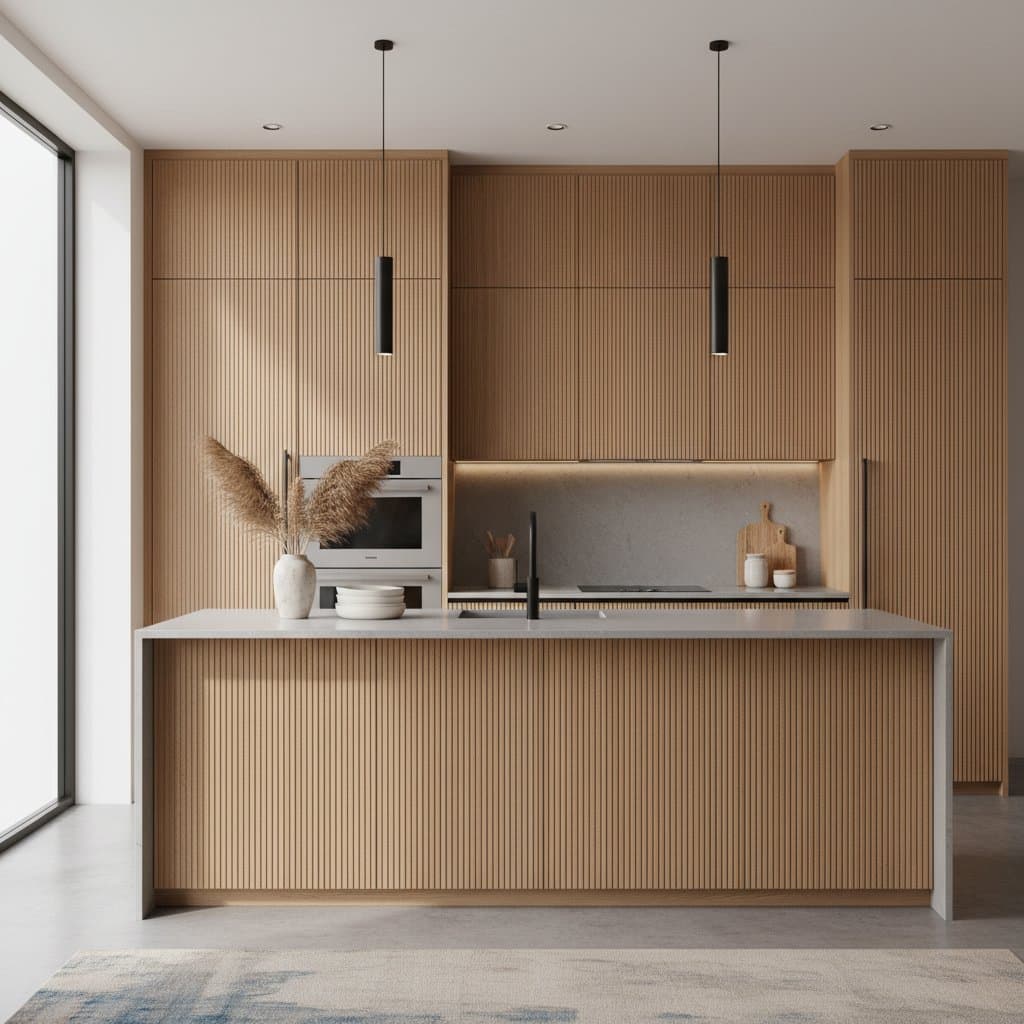
Ribbed Oak: Textured Cabinets Transforming Modern Kitchens
Contemporary kitchens once depended on smooth, flat cabinet doors to achieve a sleek look. Ribbed oak cabinetry introduces sculpted surfaces and rhythmic lines that inject vitality into these spaces. Designers select this material to infuse warmth and subtle movement into structured environments. The result achieves a balance between modern simplicity and grounded craftsmanship, inviting appreciation for both the visual and tactile qualities of the wood. This evolution underscores the rising popularity of textured elements in home design.
At a Glance
Who lives here: A young family of four who prepare meals daily and desired a kitchen with distinct character.
Location: Portland, Oregon
Size: 320 square feet (29.7 square meters)
Design team: Studio Alton, principal designer Mara Jensen
Photographer: Colin Reyes
Before
The original kitchen featured plain white laminate doors marked by visible seams. The layout served basic functions, yet the room appeared flat and uninviting. "We had storage, but no soul," the homeowner observed. Harsh reflections from glossy surfaces contributed to a cold atmosphere, and fingerprints appeared readily on the finishes. The family pursued a handcrafted design that withstands daily use and acquires an attractive patina over time.
After
Studio Alton replaced each cabinet face with vertical ribbed oak panels, finished in a matte clear coat to accentuate the grain. The texture diffuses light, generating shifting shadow patterns throughout the day. This ribbed detail extends from floor to ceiling on the pantry wall and surrounds the island base, creating a cohesive sculptural element.
The team also optimized lighting and traffic flow. Under-cabinet LED strips accentuate the texture, while recessed ceiling lights deliver uniform overhead illumination. The revised island measures slightly narrower, providing a 42-inch (106.7-centimeter) walkway for improved circulation.
"The ribbing adds depth without heaviness," designer Mara Jensen explained. "It catches light like corduroy, softening the mood in a modern kitchen."
Design Details
- Cabinet Doors: White oak featuring a 3-millimeter deep fluted profile, sealed with matte polyurethane.
- Countertops: Honed quartz in soft gray.
- Hardware: Slim blackened brass pulls recessed into the ribs to maintain continuous texture.
- Lighting: Multi-layer system with recessed ceiling fixtures, linear pendants over the island, and LED strips under upper cabinets.
- Storage Features: Pull-out spice racks, double recycling bins, and a full-height pantry with adjustable shelving.
- Flooring: Natural oak planks stained one shade darker than the cabinets for subtle contrast.
Photographs capture the interplay of shadows across the oak surfaces, particularly where light skims the vertical ribs. The grain maintains consistency, and seams between doors blend into the pattern. This approach conveys meticulous attention and natural harmony.
Why Ribbed Oak Succeeds
Fluted surfaces draw inspiration from historical architecture, yet their application in kitchens addresses a contemporary demand for texture that conveys warmth. Oak amplifies this quality through its pronounced grain and robust structure, surpassing painted MDF or thin veneers. The wood responds to finishes in ways that enhance visual depth.
Designers such as Jensen discover that ribbed oak adapts to diverse aesthetics. It invigorates minimalist arrangements, harmonizes with midcentury color schemes, or integrates into coastal motifs. Vertical lines direct the eye upward, enhancing the perceived height of standard 8-foot (2.44-meter) ceilings.
When combined with smooth quartz countertops and understated hardware, ribbed oak forms a tactile foundation. The cabinets emerge as focal points that encourage interaction, rather than receding into the background.
The Craftsmanship of Textured Oak
Producing ribbed oak demands precise milling techniques. Artisans route boards to carve uniform channels, typically 1/8 inch (3.2 millimeters) wide and deep, adjusted to the specified depth. Panels align to ensure the pattern continues seamlessly across doors.
At the mill shop favored by Studio Alton, the process starts with quarter-sawn oak for enhanced stability. Following routing, hand-sanding refines the edges before finish application. The thin coating protects against moisture and cleaning while preserving the surface relief.
Workshops rely on high-quality tools for optimal results. Sharp cutters minimize splintering, and consistent feed rates produce even grooves. CNC routers deliver precision for production runs, whereas traditional shapers handle custom smaller-scale projects.
Illuminating the Texture
Light activates the full potential of ribbed oak. Directional grazing highlights the vertical rhythm, while diffused sources moderate the effect. Jensen incorporated three tiers: ambient recessed lights for task illumination, warm pendants above the island, and under-cabinet LEDs to emphasize texture.
Homeowners can replicate this by positioning lights at approximately 30 degrees to the surfaces. Select bulbs rated at 2700 to 3000 Kelvin for warm tones that complement the oak.
Variations and Finishing Options
Tailor rib depth to suit the environment. Grooves measuring 2 to 3 millimeters provide gentle shimmer, while 5 to 8 millimeters create bold lines. Designers sometimes alternate depths, applying deeper flutes to islands and shallower ones to pantry doors.
Finishes influence the overall ambiance. Matte clear coats retain the wood's natural hues. Light whitewash diminishes yellow tones. Smoked or fumed treatments introduce added dimension. Round ridge edges to enhance safety and prevent fabric snags.
Painted alternatives gain traction as well. Routed MDF accepts paint effectively and suits cost-conscious endeavors, although oak sustains texture integrity beneath finishes more reliably.
Sourcing and Sustainable Practices
Numerous suppliers provide pre-fluted oak in standard 4-by-8-foot (1.22-by-2.44-meter) sheets for straightforward adaptation. Choose FSC-certified wood to promote ethical sourcing. Local mills accommodate custom rib spacings and coordinate stains with existing elements.
This method consumes additional material, increasing costs by 15 to 25 percent relative to flat veneers, based on wood type and processes. The premium accounts for waste and labor, justified by the enhanced appearance and tactile experience.
Maintenance Essentials
Maintain textured surfaces with careful routines. Employ a soft brush vacuum attachment to remove dust from grooves. Wipe parallel to the grain using a damp microfiber cloth to protect the finish. Steer clear of wax-based cleaners that accumulate in channels.
Ribbed oak conceals minor flaws more effectively than glossy alternatives. The texture scatters light, reducing the visibility of everyday marks.
Ideal Applications for the Trend
Ribbed oak enhances kitchens requiring visual intrigue without elaborate ornamentation. It complements stone, plaster, and stainless steel elements. In open-concept layouts, it introduces warmth that bridges transitions to adjacent living spaces.
Professionals extend this finish to bathrooms, media walls, and entryways. The primary benefit endures: texture offsets uniformity and introduces dimension.
Practical Guide: Incorporating Ribbed Oak
Entry Level:
Incorporate a ribbed oak panel on a range hood or modest island segment. This method introduces texture through limited modifications.
Mid Range:
Substitute lower cabinet doors with ribbed oak, retaining flat uppers. The juxtaposition anchors the area and spotlights the wood.
High End:
Outfit all cabinetry with custom-milled panels reaching full height. Extend ribbing to appliance fronts for uninterrupted continuity.
Key Measurements:
- Minimum rib depth: 2 millimeters for understated impact.
- Ideal door thickness: 0.75 inch (19 millimeters).
- Recommended lighting gap: 18 inches (45.7 centimeters) from counter to upper cabinet bottom for optimal grazing light.
Key Benefits in Daily Use
- Texture Builds Warmth: Ribbed oak energizes sleek modern kitchens.
- Lighting Reveals Craft: Angled sources accentuate patterns and workmanship.
- Maintenance Stays Simple: Routine dusting and gentle wiping preserve details.
- Customization Expands Options: Adjust spacing, edges, and finishes for personalized outcomes.
- Durability Matches Style: Oak endures use and gains character through patina.
Daily Life in the Transformed Space
The Portland family reports altered habits in their ribbed oak kitchen. "We cook more now," the homeowner shared. "It feels calm but alive. You see the grain, you feel the texture, and it just feels right." The cabinets organize essentials while modulating light and fostering interaction.
This initiative demonstrates how targeted renovations elevate everyday experiences. Ribbed oak restores artisanal elements to contemporary designs, merging tangible quality with enduring appeal.