
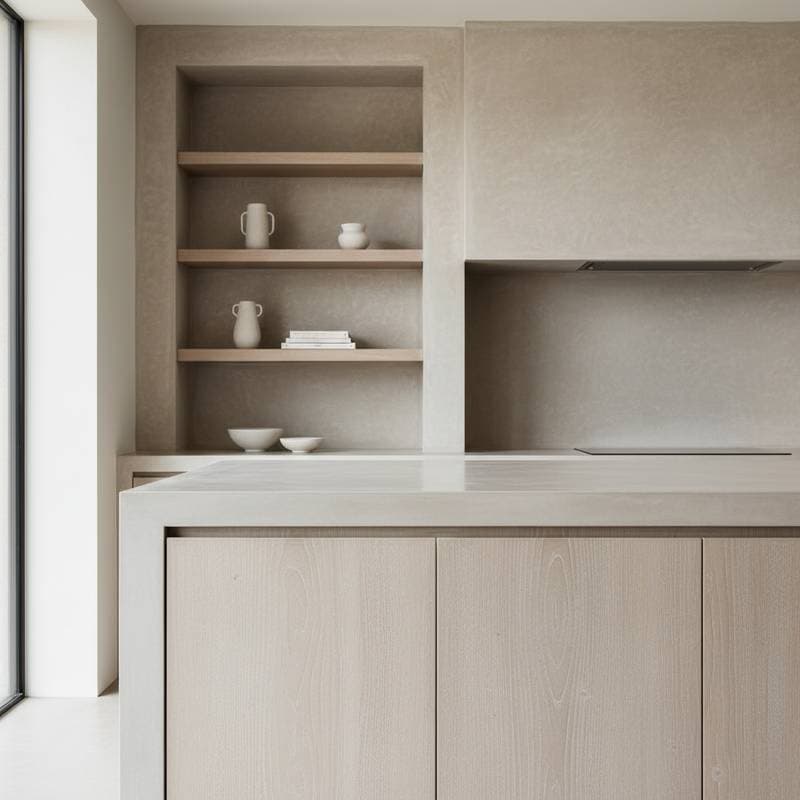
Why Venetian Plaster Outperforms Paint on Wood
Venetian plaster extends its timeless appeal from walls to wood surfaces, transforming cabinetry, panels, and furniture in ways that paint simply cannot achieve. This mineral-based finish delivers a polished sheen and handcrafted texture that breathes life into flat wood. Designers and woodworkers value it for connecting traditional artistry with today's demand for understated luxury.
Paint often sits atop wood like a uniform veil, masking grain and limiting depth. Venetian plaster, by contrast, integrates with the substrate, amplifying natural patterns while adding layers of visual interest. Its application demands skill, yet the result justifies the effort: surfaces that evolve with light and touch.
At a Glance
Project Type: Luxury wood surface finishing
Finish Focus: Venetian plaster applied to cabinetry, millwork, and furniture pieces
Design Insight: Multi-layered texture for light diffusion and inherent strength
Design Team: Studio Rho Interiors
Photographer: Daniel Kline
Before: The Limitations of Traditional Paint and Stain
Wood surfaces typically receive stain or lacquer to enhance appearance. These methods can dull the grain's natural beauty and restrict how light interacts with the material. Clients frequently seek a finish that conveys richness without excessive shine, one that invites contact yet cleans effortlessly.
Homeowner Laura Kim shared her experience: "Our oak cabinetry looked dry. We wanted dimension without pattern overload." Standard topcoats failed to balance softness with resilience, leaving surfaces prone to wear and lacking in subtlety.
After: The Transformative Power of Venetian Plaster
The design team applied fine Venetian plaster in precise, thin layers over sealed wood panels. Technicians troweled each layer and compressed it using a stainless-steel blade, yielding a subtle luster that changes with natural daylight. Visually, the finish resembles honed stone, but it retains the warmth of wood beneath.
The lime in the plaster interacts subtly with the wood's undertones, highlighting grain variations rather than concealing them. Designer Mateo Ruiz noted, "The plaster finish matches the quiet luxury our client wanted. It softens the wood's surface while adding a mineral depth you cannot fake."
This technique suits diverse applications, from entire kitchen installations to closet doors and bespoke tables. When combined with hardware in brushed brass or matte black, it anchors color schemes without dominating them.
Design Details
Preparation forms the foundation of success. Begin by sanding the wood to 220 grit for smoothness. Apply a clear acrylic primer to seal the surface, then lightly scuff it to promote adhesion.
The plaster mixture consists of natural lime putty blended with marble dust. Incorporate earth pigments to harmonize with tones like walnut or white oak. Apply three micro-thin coats using a flexible knife, burnishing each while damp to achieve compression and light-reflective qualities.
Complete the process with a breathable wax topcoat, buffed to a satin finish that repels fingerprints. For optimal effect, pair the surface with warm LED lighting or diffused pendant fixtures, where the texture emerges clearly.
Each successive coat contributes unique character. The finished result captures light in nuanced layers, elevating cabinetry to a focal architectural element. Consider leaving edges sharp for contemporary precision or softening them slightly for fluid transitions between surfaces.
To expand on application techniques, skilled applicators often work in controlled environments to manage humidity, ensuring even drying. This prevents cracking and preserves the plaster's integrity over time. For intricate details like raised moldings, use finer tools to maintain clean lines.
Key Takeaways
- Depth Without Gloss: Venetian plaster introduces dynamic movement on wood surfaces, free from lacquer's harsh reflections.
- Natural Durability: The lime composition wards off mold and abrasion, ideal for high-traffic areas like kitchens and bathrooms.
- Custom Color Control: Adjust pigments precisely to complement adjacent materials such as stone countertops or metal accents.
- Easy Maintenance: Renew the wax layer periodically to sustain the finish's appearance for extended periods.
- Design Versatility: Apply it seamlessly to millwork panels, stair risers, or tabletops for cohesive interiors.
Woodworkers appreciate this method for its value addition without requiring advanced equipment. It calls for steady hands and deliberate pacing, but yields bespoke results that endure. The synergy of plaster and wood grain imparts an artisanal essence unattainable through industrial processes.
Applying Venetian Plaster: Step-by-Step Guidance
Start with clean, dry wood. After priming and scuffing, mix the plaster to a creamy consistency. Load the trowel sparingly to avoid buildup.
Spread the first coat evenly, feathering edges to prevent ridges. Allow partial drying before the second coat, which builds opacity. The third coat refines the surface, ready for burnishing.
Test on scrap wood first to match tones. In humid climates, extend drying times between coats. This methodical approach ensures professional outcomes even for intermediate craftsmen.
Living with the Finish
Day-to-day interaction reveals the finish's grounded quality. It repels smudges while encouraging tactile exploration. Morning sunlight brings a gentle glow, while evening accents uncover soft tonal variations.
Homeowners describe these surfaces as calming influences in their spaces, fostering balance and serenity. The material's breathability prevents moisture buildup, supporting long-term health in occupied rooms.
Sources or Credits
Design Team: Studio Rho Interiors
Photographer: Daniel Kline
Quote Contributors: Laura Kim, homeowner; Mateo Ruiz, designer.
Elevating Wood Through Craft
Venetian plaster on wood demonstrates that true luxury resides in depth, texture, and meticulous execution. It redefines simple woodworking as elevated design, providing creators with tools to infuse modern spaces with enduring warmth and authenticity.