
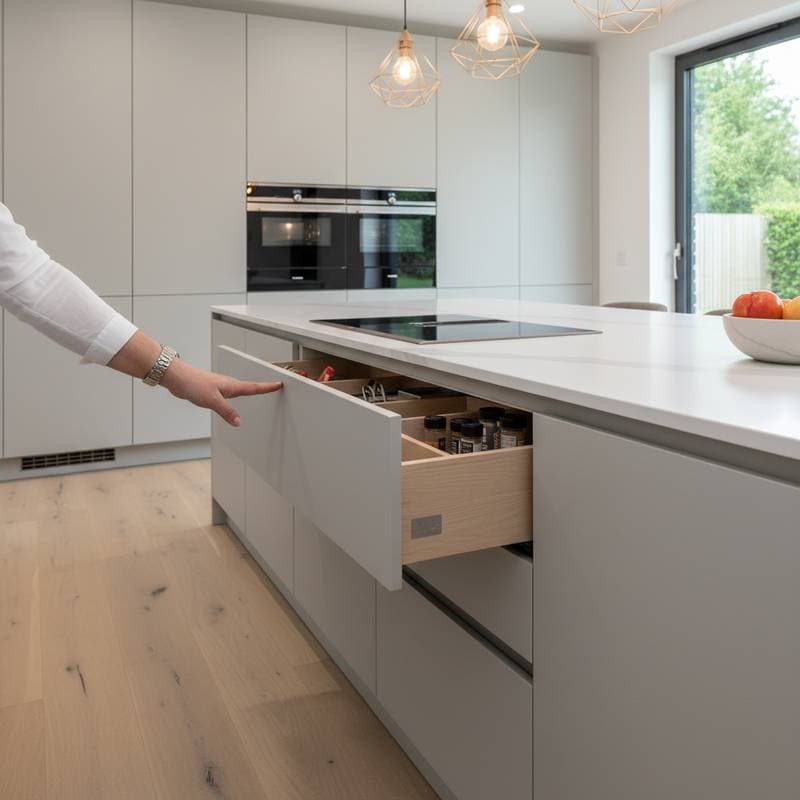
Install Touch-Open Drawers for Handle-Free Cabinets in One Weekend
Effective storage defines the functionality of a kitchen or workshop. Opening a drawer with full or soiled hands presents a common challenge. Touch-open drawer systems address this by allowing a light push on the drawer front to trigger an automatic release. These mechanisms deliver a contemporary appearance, dependable performance, and straightforward installation. Equipped with appropriate hardware, a dedicated weekend suffices to upgrade cabinetry to a refined, handle-free aesthetic that conveys luxury at an accessible cost.
Benefits of Touch-Open Drawers in Modern Cabinetry
Conventional drawers depend on pulls or knobs for operation. Touch-open systems substitute these with spring-loaded or magnetic latches that activate upon gentle pressure. Such designs permit opening and closing using one hand, a knee, or an elbow, which proves invaluable during meal preparation, material sanding, or project assembly.
These innovations gain traction in contemporary cabinet designs by removing visible hardware, resulting in smoother surfaces that simplify cleaning. The absence of protrusions minimizes opportunities for snags or impacts in confined areas. Additionally, touch-open features enhance accessibility for individuals with reduced hand dexterity, surpassing the usability of traditional handles. Basic models employ mechanical push latches, whereas premium options incorporate low-voltage motors for powered assistance.
In kitchen settings, the design accelerates maintenance by eliminating crevices where residues accumulate around knobs. Workshops benefit similarly, as cleaner lines reduce dust buildup and facilitate efficient workflows. Overall, touch-open drawers integrate seamlessly into diverse environments, promoting both practicality and visual appeal.
Action step: Assess drawers in your space that would gain from handle-free operation, including those for utensils, tools adjacent to benches, or lower cabinet storage.
Detailed Installation Instructions
Mounting touch-open drawer slides appears complex at first glance, yet the procedure remains accessible with careful measurement and steady effort. Experienced DIY participants typically finish a set of three drawers within two hours.
Step 1: Disassemble Existing Drawers
Extract the drawer and detach the current slides. Thoroughly clean the cabinet interior to remove debris. Verify the squareness of the cabinet frame, as misalignment leads to operational difficulties downstream.
Step 2: Position the Touch-Open Slides
Locate the mounting points on the cabinet sides, generally aligning them centrally with the drawer height. Employ a level to confirm even placement, securing with manufacturer-supplied screws. Maintain precise parallelism between opposing slides to prevent binding.
Step 3: Secure the Drawer to the Slides
Align the drawer box with the tracks and slide it into position. Push firmly to close and activate the latch. Perform multiple open-and-close cycles to confirm fluid movement without resistance.
Step 4: Calibrate Tension and Clearance
Access the adjustment screw within the latch assembly to modify spring tension. Aim for a balance where minimal pressure initiates release, yet the drawer remains secure against unintended opening. Fine-tune as necessary based on testing.
Step 5: Verify Soft-Close Functionality
Gently close the drawer to evaluate damping. Should it close abruptly, adjust the damper mechanism. If latching fails, inspect for misalignment, loosen fasteners marginally, reposition while closed, and then secure tightly.
Action step: Establish the first successfully installed drawer as a benchmark, replicating its settings for subsequent units to guarantee uniform performance throughout the cabinetry.
Deciding Between DIY and Professional Services
Individuals with solid DIY skills manage touch-open installations using fundamental tools like a drill, level, and screwdriver. Mechanical variants demand no wiring, positioning them as ideal introductory projects.
Opt for DIY installation if:
- Drawer boxes exist in square, sturdy condition.
- Precise slide removal and remounting falls within your capabilities.
- Initial experimentation precedes broader cabinet enhancements.
Engage a professional for:
- Premium or integrated cabinetry featuring narrow clearances.
- Electric-assisted systems necessitating electrical integration.
- Extensive alignments across numerous drawers.
Professional cabinetmakers typically charge between $75 and $125 per drawer. This investment secures precision akin to factory standards and enduring durability. Most specialists offer warranties of one year or more, providing reassurance for the upgrade.
Action step: When selecting a professional, request client references and verify familiarity with your chosen hardware brand to ensure compatibility and expertise.
Maintaining and Enjoying Touch-Open Drawers
After installation, the intuitive operation of touch-open drawers fosters habitual use. Their minimalist profile complements streamlined kitchens, contemporary offices, and professional woodworking areas. Routine upkeep involves periodic wiping of latch components and vacuuming of slide channels to prevent buildup.
Should spring tension diminish over time, many systems allow isolated replacement of the latch without full slide disassembly. This modularity extends the lifespan of the installation. Users report heightened satisfaction from the enhanced accessibility and reduced visual clutter, making daily tasks more efficient.
Essential considerations:
- Mechanical kits range from $25 to $65 per drawer.
- Allocate 20 to 45 minutes per drawer using standard tools.
- Maintain alignments within 1/16 inch for optimal function.
- Select mechanical options for ease or electric for advanced features.
Action step: Schedule a monthly inspection of all touch-open mechanisms to address minor adjustments early, preserving smooth operation year-round.