
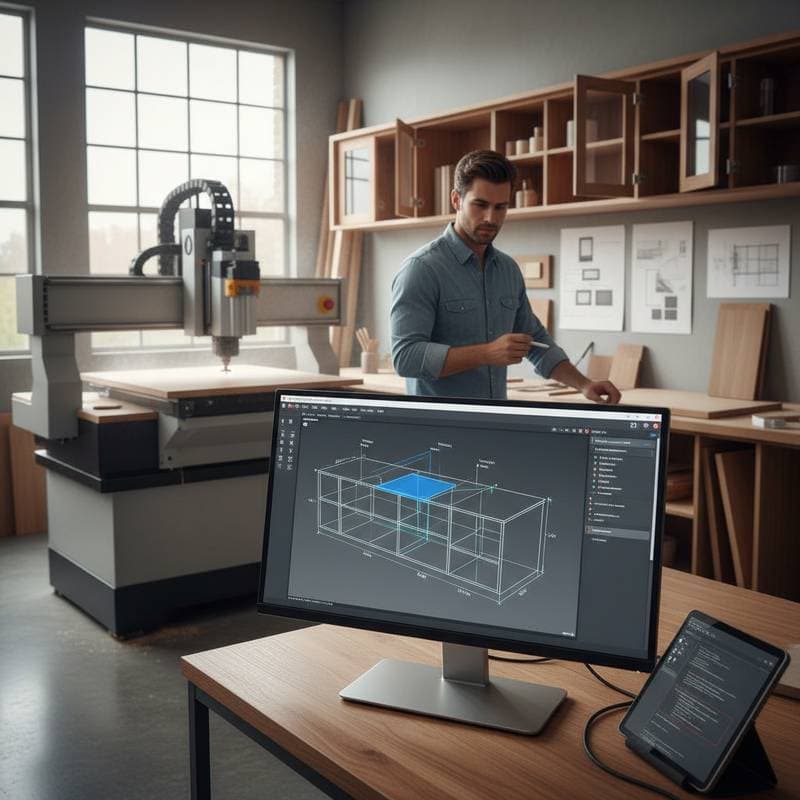
Unlock Custom Cabinetry with Parametric Design Tools
Kitchen renovations frequently start with a simple sketch and conclude with concerns over expenses, measurements, and final appearance. Cabinets account for 30 to 50 percent of the total budget in many projects. However, numerous initiatives continue to depend on fixed plans and hand calculations. Parametric design tools address these challenges by enabling designers to establish connections between components. As a result, alterations to one element automatically update cabinet sizes, connections, and resource allocation. Tasks that previously required hours of revision now resolve in mere seconds.
This examination provides an overview of how parametric software influences custom cabinetry. It includes details on expenses, suitable applications, and decisions between personal use and professional assistance.
How Parametric Design Functions in Cabinetry
Parametric design incorporates logic directly into the digital model. Designers specify parameters such as height, depth, and material thickness. They then outline responses for each component. For instance, a door panel could consistently retain a 3 mm gap from the frame. If the cabinet width shifts, the gap remains unchanged due to the governing rule that controls the shape.
This method tackles a primary issue in bespoke fabrication: exhaustion from repeated adjustments. Designers avoid recreating each version from scratch. Instead, they establish connections once and apply the framework repeatedly.
Key benefits include:
- Variables substitute fixed measurements, which significantly lowers mistake rates.
- Lists for material cuts refresh immediately, decreasing waste by as much as 15 percent in standard workshops.
- Geometry prepared for CNC machines integrates seamlessly with pathing programs, shortening manufacturing duration by 20 to 40 percent.
Initial implementation step: Select a basic base cabinet. Set parameters for width, depth, toe-kick elevation, and door clearance. Observe the impacts of modifications on the model. After achieving stability, duplicate the setup for overhead cabinets or storage units.
Building Intelligent Cabinet Designs
A parametric process extends beyond mere scaling of structures. It embeds design knowledge into the system. Rules can govern spaces, hardware positioning, and surface changes.
Essential rules to incorporate:
- Drawer faces preserve uniform intervals irrespective of cabinet elevation.
- Positions for shelf pins adapt spacing as internal height varies.
- Deduct edge banding width from total measurements to guarantee precise final sizes.
Modifying one input prompts a full recalculation that upholds these links. This yields dependable shapes and assured assembly.
Significance of this approach:
Redimensioning by hand frequently leads to accumulating inaccuracies. Parametric rules maintain the original vision across all changes. Designers gain the freedom to test ideas without compromising balance or positioning.
To illustrate, consider a kitchen island where counter height adjusts for user preferences. The parametric model recalibrates leg lengths, apron supports, and overhangs simultaneously. Such integration ensures ergonomic consistency and structural integrity from the outset.
Choosing Between DIY and Professional Support
The optimal strategy hinges on familiarity with digital platforms and project scale.
Scenarios for Independent Use
Individuals proficient in CAD for planning and managing limited runs benefit from parametric skills. The acquisition phase typically spans about 30 hours, divided among guided lessons and practice assemblies. Reusable templates emerge that halve design efforts.
Start with free resources like online videos for software basics. Progress to woodworking forums for cabinet-specific parameter setups. Track progress by timing a full cabinet iteration before and after implementation.
Cases for External Expertise
Complex installations, such as expansive kitchens, institutional fixtures, or residential complexes, warrant collaboration with specialists. CAD experts or engineers develop adaptable templates for team modifications. Hourly fees range from $50 to $100, frequently balanced by fewer on-site corrections and quicker estimates.
Selection criteria for partners:
- Confirm expertise in parametric systems tailored to woodworking.
- Examine demonstration files showing modifiable parameters.
- Ensure outputs align with your CNC and optimization tools.
- Clarify rights to files to maintain independence.
Practical step: Retain duplicates of parameter structures and labels when delegating. This safeguards adaptability for alterations or provider changes.
Professionals often provide training sessions alongside model delivery. These build in-house capacity, blending immediate results with long-term self-reliance.
Linking Parametric Models to CNC Manufacturing
With a verified model, the focus shifts to fabrication integration. Parametric platforms typically output arranged components for CNC operations.
Anticipated outcomes:
- Formats including DXF, STEP, or G-code move efficiently when layers and scales correspond to equipment settings.
- Optimization for nesting trims sheet usage by 10 to 20 percent.
- Simulations of tool paths confirm spaces and access prior to cutting.
Adherence to safety protocols:
Double-check origin points and securing methods prior to full runs. Comply with regional regulations and equipment directives.
Testing procedure: Fabricate a trial cabinet from waste material. Assess assembly and connections. Refine parameters for blade offset and fitting allowances before broader application.
This connection not only accelerates output but also enhances quality control. Digital previews reveal potential issues, such as interference in joints, allowing preemptive fixes.
Strategies for Effective Parametric Use
Begin modestly by parameterizing a single dimension, like cabinet breadth. Employ consistent labels, such as cab_width or door_clearance, for clarity. Test each rule in an isolated model prior to expansion.
Visual aids like color schemes or layers help monitor interconnections. Regular backups of templates, coupled with shared documentation, mitigate risks in collaborative environments.
Adopt version control practices, similar to software development, to track evolutions. Review models quarterly to incorporate new hardware or material standards. These routines foster reliability and innovation in your workflow.
Advancing Your Woodshop Through Parametric Precision
Implementing parametric tools equips woodshops to handle custom demands with efficiency and accuracy. Reduced rework translates to higher client satisfaction and profit margins. As projects grow in scope, these systems scale seamlessly, positioning your operation as a leader in adaptive design.
Invest time in mastery to unlock sustained advantages. The shift from manual to parametric methods not only conserves resources but also sparks creative possibilities in cabinetry fabrication.