
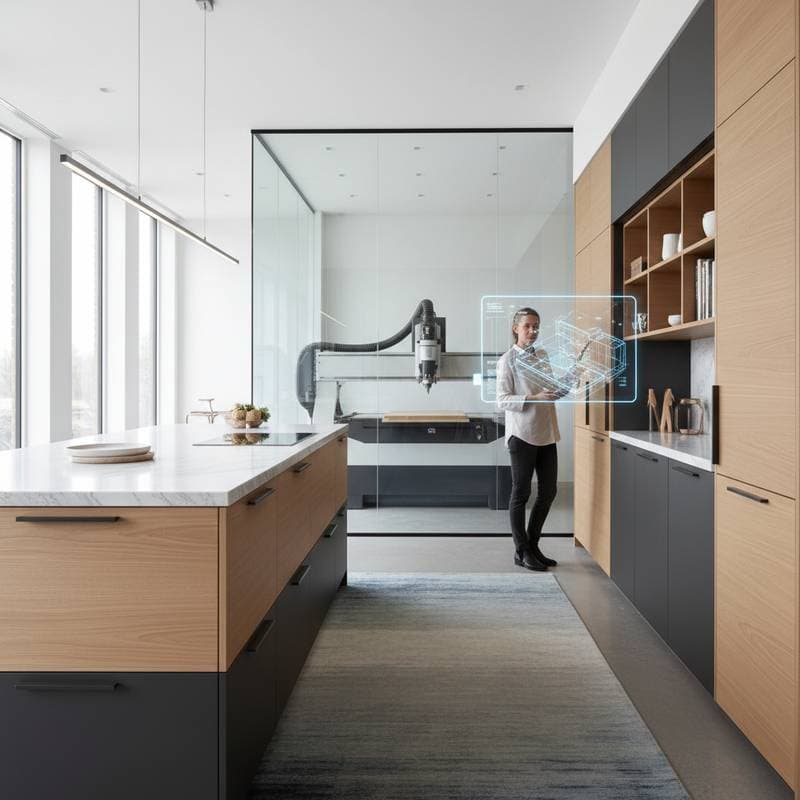
Parametric Design Cuts Cabinet Drawing Time in Half
Parametric design transforms custom cabinetry by integrating dimensions, materials, and fabrication processes into a single adaptive model. This approach enables small workshops to attain levels of precision previously reserved for large firms. Design time decreases significantly, material waste diminishes, and client trust increases through reliable outcomes. Digital tools enhance traditional craftsmanship, blending efficiency with creative expression to reshape the creation of cabinets.
Key features of parametric design include material efficiency, where sheet optimization algorithms minimize waste by up to 15 percent based on workshop data. Lighting integration becomes seamless, as parametric cutouts model LED channels and wiring paths prior to fabrication. Assembly precision improves through digital joints and dowel placements that export directly to CNC drilling files, thereby reducing on-site adjustments.
Each parameter functions as a guiding rule. Once established, these rules dictate relationships among components. Modifications propagate automatically throughout the model, maintaining project consistency without manual intervention.
The Value of Parametric Design in Cabinetry
Parametric cabinetry combines traditional craft with computational power. This method does not supplant woodworking expertise; instead, it channels that skill into finer details. Artisans select materials, edge treatments, and surface finishes, supported by models that account for practical limitations.
Such design proves essential in custom residential projects and renovations, where walls rarely align perfectly. Parametric systems accommodate these variations, ensuring cut files align accurately upon installation. Enhanced coordination among tradespeople results, as electricians and plumbers consult precise cabinet models early to prevent later conflicts.
Visual benefits extend to client interactions. Rendering software connected to parametric data generates photorealistic images that accurately represent the final product. Clients view dependable previews during consultations, which accelerates decision-making and fosters approval.
Integrating Parametric Design into Your Workshop
Adopting parametric design requires no comprehensive digital overhaul. Start with one cabinet style, such as a base unit. Identify core parameters: total width, height, depth, door configuration, and hardware locations. Construct the model to automatically adjust interconnected elements when any parameter shifts.
With a functional template in place, replicate it for variations like upper cabinets or islands. Gradually develop a library of adaptable parts. For new commissions, combine these elements modularly, tweaking only essential variables to suit specific needs.
Follow these steps to implement effectively:
- Pursue targeted training through community maker spaces or virtual tutorials on parametric principles.
- Connect design software to fabrication tools, verifying compatibility for direct data transfer to CAM or CNC systems.
- Experiment with prototypes, such as a compact vanity or entry bench, to calibrate fit and tolerances.
- Maintain detailed records of parameter logic in a team-accessible guide, facilitating smooth onboarding for others.
The rewards manifest in consistent performance. Tuned systems handle revisions in minutes rather than hours, allowing focus on intricate joinery, material choices, or client consultations. Workshops report halved drawing times, with some achieving even greater reductions through refined workflows.
Consider a practical example: designing a kitchen island. Adjust the countertop overhang from four inches to six, and the model instantly recalibrates leg positions, drawer depths, and toe-kick heights. Export updated files to the CNC machine, and fabrication proceeds without discrepancies. This level of responsiveness turns iterative feedback into swift iterations, enhancing project momentum.
Core Advantages for Woodworkers and Clients
Parametric tools deliver speed and adaptability, often slashing drafting durations by half or more. Linked parameters minimize errors in the shop, cutting down on rework and associated costs. Projects launch from intelligent foundations rather than rigid blueprints, enabling true customization.
Sustainability gains emerge from optimized material layouts, which conserve resources and lower expenses. Clients benefit from visualizations that mirror installations, building assurance in the process.
Cabinetmaker John Pierce observes, "The software handles the calculations, but the artistry remains in our hands." His team applies parametric models across all projects, from integrated shelving to complete kitchen ensembles, yielding reliable results.
Precision in Everyday Use and Professional Practice
Homeowners experience tangible improvements in functionality. Drawers operate smoothly without interference, shelves position accurately beside appliances, and moldings meet walls seamlessly. This reliability stems from a digital structure attuned to balance and purpose.
Professionals enjoy reduced uncertainties and improved profitability. Complex bespoke commissions evolve into streamlined procedures, preserving creative integrity. Workshops transitioning from manual sketching to parametric methods report heightened productivity and satisfaction.
This evolution signals a broader change in the field. By fusing computational modeling with manual expertise, artisans expand the possibilities of custom cabinetry, delivering pieces that endure in form and function.