
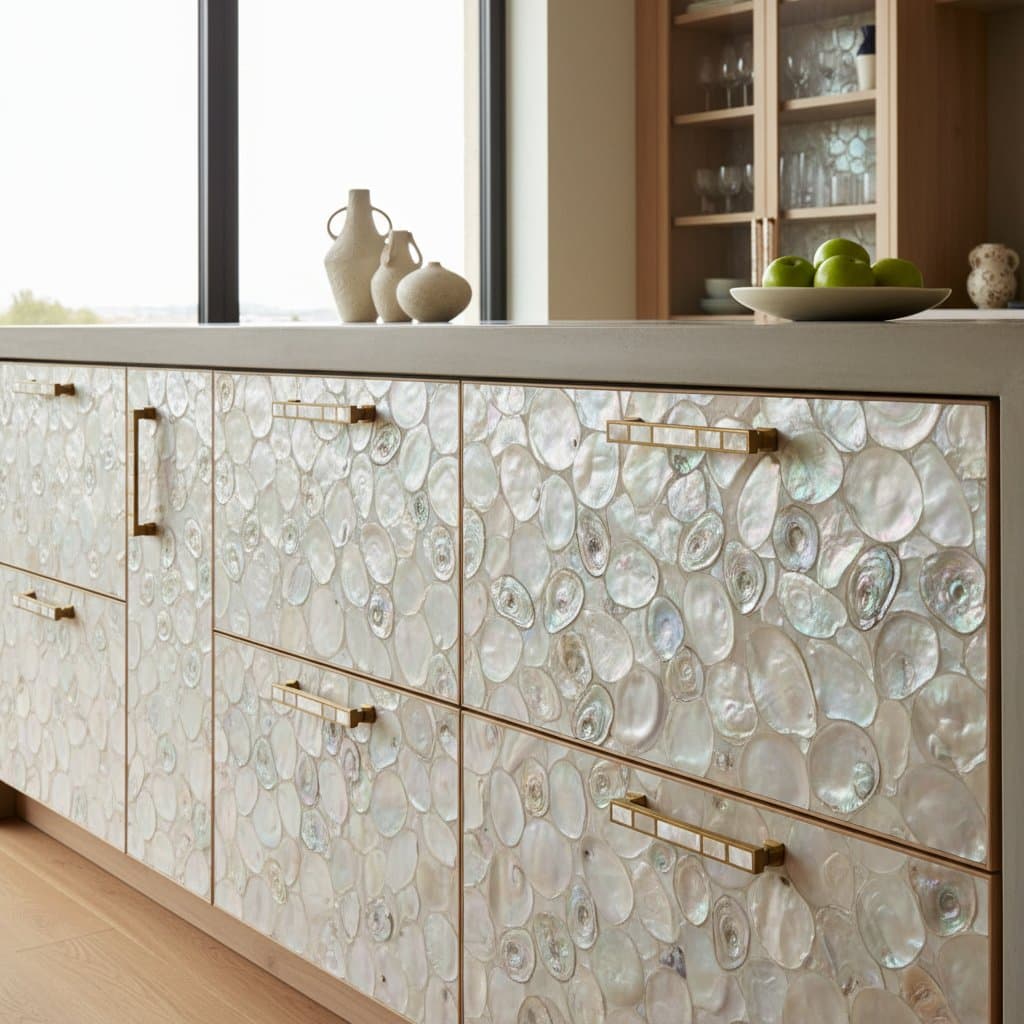
Why Oyster Shells Define 2026 Cabinet Luxury
Oyster shells, once dismissed as mere seaside remnants, now elevate high-end cabinetry with their inherent depth, subtle shimmer, and iridescent quality. This trend introduces a grounded form of luxury that prioritizes sustainability alongside visual appeal. Designers incorporate genuine shell inlays, crushed shell composites, and pearlescent finishes to infuse kitchens, bathrooms, and built-in storage with a gentle, light-responsive glow. Beyond aesthetics, these materials connect natural elegance to practical durability and responsible sourcing practices.
At a Glance
Target Audience: Homeowners seeking organic luxury elements
Primary Markets: Coastal regions and urban centers nationwide
Cabinet Dimensions: From 10 linear feet to 22 linear feet (3 to 6.7 meters)
Featured Design Firms: Studio Maren Interiors, Blackline Woodworks, Atelier Coast
Visual Credits: Photography by Evan Holt and Lina Carmichael
The Shift from Traditional Finishes
Earlier iterations of cabinet luxury relied on high-gloss lacquers and gleaming brass accents. Such surfaces projected affluence yet often appeared stark under indoor lighting and attracted smudges easily. Designer Mila Tran of Studio Maren Interiors notes, “We sought a tactile, luminous option that avoids excessive shine. The ideal finish adapts to changing light rather than overpowering it.”
Embracing Oyster Shell Integration
Oyster shell applications introduce finishes that capture light softly, free from harsh reflections. Cabinet faces display nuanced shifts from soft grays to warm creams. Designers pair these with matte brass hardware and subtle integrated illumination that skims the surface. During the day, the panels emit a diffused radiance; by evening, they settle into a subdued, enriching sheen.
At Atelier Coast, designer Julian Ramos describes the process: “We layer thin shell veneers beneath a protective water-based resin. This method safeguards the material, maintains its texture, and eliminates the overpowering polish of conventional luxury options.” The result combines organic authenticity with polished sophistication, creating surfaces that respond dynamically to illumination.
These shell-based finishes prioritize endurance as well. Composite panels, formed by blending crushed oyster byproducts with bio-resins, withstand humidity and prevent distortion. In moisture-prone areas like kitchens and bathrooms, this robustness proves essential. The composition delivers an earthy feel while matching the reliability of synthetic stone alternatives.
Essential Design Specifications
- Material Origin: Sourced from reclaimed oyster shells collected from restaurant discards and aquaculture operations, then categorized by hue and pattern.
- Application Methods: Options include hand-cut inlay strips, crushed shell composites, or pearlescent overlays on bases of maple or white oak.
- Illumination Techniques: Install under-cabinet LEDs at 2700K to 3000K for enhanced sheen without brightness. Add cove lighting above upper cabinets to produce an upward diffusion.
- Accessory Choices: Select brushed brass, matte nickel, or seamless integrated pulls that complement rather than overshadow the shell texture.
- Eco-Friendly Aspects: Panels incorporate up to 80 percent recycled elements. Sealants feature low-VOC formulas, and adhesives rely on water-based solutions.
- Care Instructions: Clean surfaces using a soft cloth dampened with mild soap. Steer clear of harsh abrasives to retain the inherent luster.
The Broader Implications
This oyster shell trend redefines luxury by moving away from ostentatious shine toward materials rich in narrative, functionality, and graceful aging. It unites artisanal techniques with environmental stewardship, repurposing industrial waste into premium design features.
Cabinet fabricators must exercise exacting care when handling shell elements. Machine crushed composites similarly to solid surfaces, but apply hand-laid inlays with meticulous attention. Woodworker Aaron Bell of Blackline Woodworks observes, “Every segment reveals unique veining. Align colors and shapes for seamless flow. The labor-intensive approach yields exceptionally radiant outcomes.”
Optimizing Layout for Illumination
Oyster shell surfaces thrive under dynamic lighting conditions. Professionals now configure cabinet arrangements to maximize light interaction. Position base units near windows to harness natural morning rays, and equip wall-mounted sections with gentle overhead sources. This strategic interplay elevates functional storage to sculptural prominence.
In a Studio Maren Interiors project, shell-veneered panels encase a kitchen island with cascading edges. Concealed LED strips along the base create an illusion of levitation. The texture activates under light, positioning the island as the space's understated focal point. Homeowners benefit from integrating shell elements with multifaceted lighting schemes.
Expanding into Other Spaces
The versatility of oyster shell finishes extends to bathroom vanities, bar facades, and custom wardrobes. Within an urban loft, Atelier Coast applied crushed shell composites to dressing room panels. The delicate gleam evokes fine fabric while enduring damp conditions. In a seaside residence, Blackline Woodworks embedded shell inlays within walnut frameworks, harmonizing organic warmth with reflective subtlety. Combining shell with complementary woods tempers the shimmer, rendering it more accessible.
Pricing and Implementation Strategies
Expect costs for shell-veneer or composite cabinetry to fall between $250 and $400 per linear foot. Intricate custom inlays may increase to $600 per foot based on design density. To manage expenses, apply shell selectively to prominent areas like islands or feature panels, preserving strong visual presence.
In compact environments, incorporate a lone shell-accented drawer or suspended shelf to achieve comparable light play without dominating the layout.
Core Insights
- Oyster shell treatments provide profound depth and subtlety beyond imitation pearlescent coatings.
- Utilizing reclaimed shells infuses cabinetry with ecological value and compelling provenance.
- Strategic lighting layers unlock the full potential of texture and sheen.
- Deploy shell on targeted surfaces to optimize budget and compositional balance.
- Upkeep remains straightforward and sustainable, promoting long-term cabinet vitality.
Experiencing the Everyday Appeal
Owners characterize these installations as serene and radiant. The panels evolve in tone across daily light cycles, mirroring both direct sun and softer interiors with fluid grace. Their inviting texture encourages interaction, while inherent variations across sections infuse the design with organic character.
Homeowner Sara Leto shares, “The cabinets feel alive. They evoke coastal essence without overt theming. It is luxury suited for daily life.”
Oyster shell cabinetry embodies contemporary refinement, weaving together skilled workmanship, ecological awareness, and multisensory allure.
Sources and Credits
Design insights from Studio Maren Interiors, Blackline Woodworks, and Atelier Coast. Photography by Evan Holt and Lina Carmichael.