
The DIY Slat Ceiling That Quiets Rooms Without Sacrificing Height
Echoing rooms disrupt focus and comfort, especially in home offices or media spaces. Home woodworkers and designers increasingly turn to acoustic slat ceilings as a subtle solution. This system uses narrow wood strips over sound-absorbing material to reduce noise while preserving ceiling height and adding visual warmth.
Basic carpentry tools and precise planning allow anyone to install a professional-looking version. The result combines functionality with style, creating spaces that sound as good as they look.
Project Overview
Homeowners: A couple who work remotely and sought a serene office-lounge hybrid.
Setting: Suburban home studio.
Area: 240 square feet (22.3 square meters).
Design Input: Interior designer Lila Kent provided the concept; homeowner Paul Reyes handled custom millwork.
Photography: Jenna Lark.
The Challenge Before Installation
Smooth drywall walls, laminate flooring, and a low plaster ceiling created persistent echo in the 12-by-20-foot (3.6-by-6.1-meter) room. Video calls suffered from tinny reverberation that standard fixes like rugs and curtains failed to resolve. Paul noted, "The space felt hollow despite added furniture."
The couple needed an acoustic improvement that avoided dropping the ceiling height or introducing bulky elements. Small changes promised noticeable results in the compact area.
The Transformation After Installation
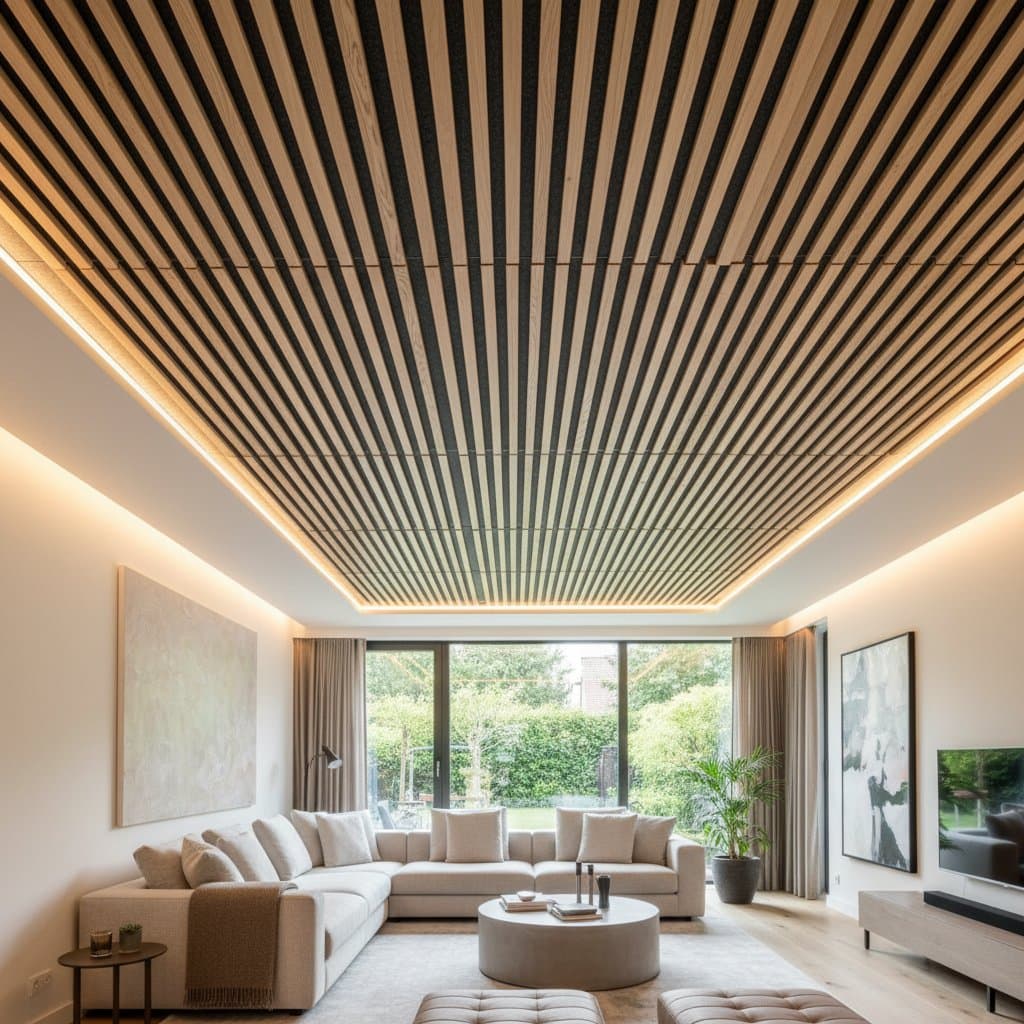
Rhythmic oak slats now cover the ceiling, spaced over black acoustic felt for a sculptural yet functional surface. Shadow lines between strips add depth and help trap sound waves. The installation maintains an open feel while delivering clear audio improvements.
Paul observed, "The room grew quieter even halfway through the project." Lila Kent added that the wood and backing "disrupt reflections and introduce deliberate texture, blending science with design."
Integrated linear LED lights run between slat rows, providing adjustable illumination. The setup allows dimming for evenings or brightening for tasks, turning the ceiling into a versatile feature that enhances the room's adaptability.
Technical Specifications
Materials and Construction
- Slats: 1-by-2-inch (25-by-50-millimeter) white oak battens with clear sealant.
- Backing: 0.5-inch (12-millimeter) charcoal acoustic felt panels.
- Spacing: 0.75-inch (19-millimeter) gaps between slats.
- Attachment: Hidden clips on furring strips for easy access to wiring.
Lighting Integration
- Channels: 1-inch (25-millimeter) recessed aluminum tracks positioned between every fourth slat.
- Lights: Dimmable 2700 Kelvin LED strips for warm, versatile lighting.
- Height Impact: Original ceiling height reduced by less than 1.25 inches (32 millimeters).
Acoustic Results
- Decibel meter tests indicated a 30 percent echo reduction post-installation.
- Felt absorbs mid- and high-frequency sounds; slats diffuse lower frequencies.
Finishing Elements
- Rounded oak edges for gentle light reflection.
- Felt extends 2 inches (51 millimeters) down wall edges for seamless appearance.
- Perimeter trim hides furring for a polished edge.
Acoustic Principles Behind the Design
Sound waves reflect off hard surfaces much like light off mirrors, amplifying noise in empty spaces. Slat ceilings alter this path: wood strips redirect waves at varied angles, and underlying felt captures the energy. This dual action diffuses and absorbs reverberation for even sound distribution.
Proportion matters for effectiveness. Kent emphasized, "Match slat width to gap size closely to optimize both acoustics and visuals." The oak grain introduces natural warmth against the dark felt, preventing a cold feel while light diffusion from the wood promotes tranquility.
The design appears handcrafted and lightweight, with organized lines that align sight and sound for an immersive experience.
Step-by-Step DIY Guide
Adapt this approach to kitchens, bedrooms, or studies by adjusting scale and materials. Focus on thin profiles, consistent spacing, and quality backing for best results. Follow these steps for a secure installation.
- Measure and Layout: Locate joists and mark fixture positions. Calculate slat runs and gaps to ensure even coverage.
- Install Furring Strips: Secure lightweight pine strips perpendicular to slat direction, spaced no more than 16 inches (406 millimeters) apart.
- Apply Backing: Fasten acoustic felt or polyester panels to the furring with staples or screws. Cut edges precisely for fit.
- Incorporate Lighting: Wire LED strips or fixtures into channels before placing slats.
- Secure Slats: Attach with clips or brad nails, verifying alignment after every few rows.
- Complete Edges: Install trim or molding to conceal seams and transitions.
Practical Enhancements
- Add a magnetic access panel for maintenance.
- Route cables through slat backs for discreet audio setups.
- Repurpose excess oak for coordinated wall features like hooks or ledges.
Budget Considerations
Materials typically cost 12 to 18 dollars per square foot (130 to 195 dollars per square meter), varying by wood type and lights. The featured project totaled about 3,600 dollars for supplies and hardware.
Essential Lessons
- Slat ceilings cut echo by up to 30 percent in standard rooms with minimal disruption.
- Narrow, uniform spacing boosts acoustic and aesthetic performance.
- Embedded lighting preserves height while adding functional layers.
- Wood over felt creates enduring, organic style.
Caring for Your Slat Ceiling
Dust slats periodically with a soft brush or microfiber cloth to maintain appearance. Avoid harsh cleaners on the wood; use a damp cloth with mild soap if needed. Inspect clips annually for security, especially in humid areas. The felt requires no special treatment but benefits from vacuuming to preserve absorption.
Regular care ensures the ceiling performs and looks new for years, enhancing daily comfort without ongoing effort.