
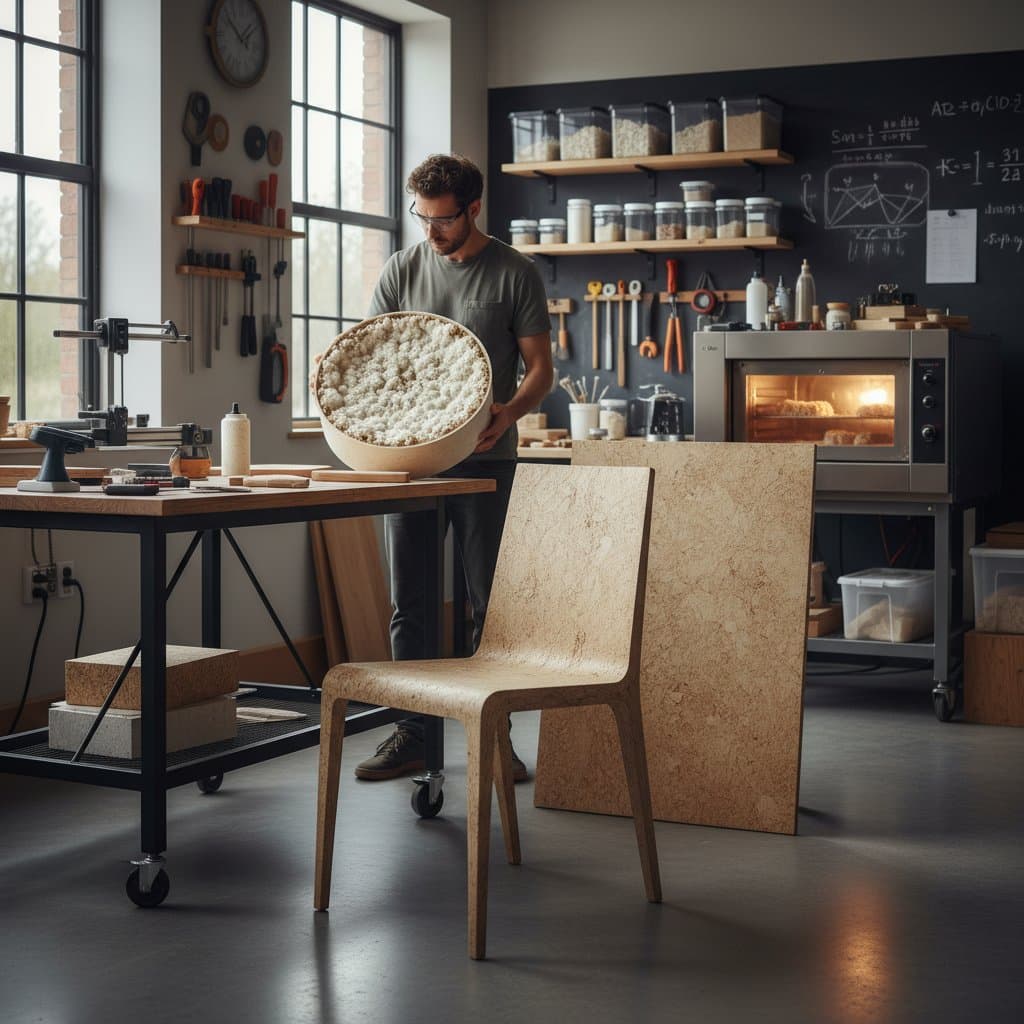
Mycelium's Emergence: Cultivating Eco-Wood for Sustainable Construction
Woodworkers and designers increasingly select mycelium composites as an environmentally sound substitute for wood. These materials derive from fungal growth and replicate wood characteristics while demanding less than half the energy for production per cubic foot compared to plywood. The process allows cultivation of structural elements directly in a workshop using agricultural byproducts, simple molds, and several days of controlled growth.
For independent builders and small operations, mycelium serves as both an innovative material and a step toward sustainability. It offers low weight, full biodegradability, and adequate strength for furniture and interior fixtures. The following sections detail the mechanism, expenses, and safe experimentation methods.
Understanding Mycelium and Its Functionality
Mycelium forms the underground root structure of fungi. When combined with a substrate like sawdust or agricultural straw, it extends thread-like filaments that interconnect the particles. Upon dehydration, this network solidifies into a firm, natural composite without reliance on synthetic glues, excessive water, or elevated temperatures.
The material gains durability from chitin and glucan polymers, which function similarly to organic reinforcement fibers. In a confined mold, the fungal growth permeates all spaces, creating a seamless structure that withstands applied forces. The finished product resembles lightweight balsa or rigid foam, entirely composed of biological elements.
Woodworkers benefit from this approach by producing panels, solid forms, and curved surfaces without harvesting timber. It enables direct formation of custom shapes rather than subtractive machining from larger pieces.
Action Step: Prepare a modest mold measuring 12 inches by 12 inches, pack it with sterilized sawdust mixed with a mycelium inoculum from a starter culture. Sustain 60 percent humidity and ambient temperatures until the substrate shows complete coverage by white mycelial threads. Then, bake at low heat below 150 degrees Fahrenheit to halt development and rigidify the composite.
Capabilities and Practical Uses
Mycelium-based panels and forms suit cores for furniture, ornamental surfaces, and sound-dampening components. Applications involving load-bearing frames or outdoor exposure demand additional sealing and support.
Densities typically fall between 8 and 22 pounds per cubic foot, lighter than pine at approximately 30 pounds per cubic foot. Such properties position mycelium well for portable items like seating, lighting fixtures, and decorative hangings. Compression testing yields 60 to 120 pounds per square inch, adequate for non-structural interior divisions or distributed weight applications.
Beyond mechanics, mycelium excels in noise reduction and heat retention. A one-inch-thick sheet provides an R-value near 3, comparable to natural cork. In cabinet construction, it substitutes for synthetic foams in veneered assemblies, thereby minimizing petroleum-based components.
Action Step: Pair mycelium interiors with slim wood veneers or natural resin overlays to enhance longevity. This combination retains aesthetic appeal while bolstering defense against humidity.
Choosing Between DIY and Commercial Options
Scenarios for DIY Production
Home-based mycelium fabrication fits modest endeavors, creative displays, and exploratory sustainability projects. With standard woodworking equipment and a sanitized area, individuals can cultivate and process panels effectively. The hands-on method imparts insights into environmental management and composite principles.
Cases for Professional Sourcing
Projects requiring reliable load support or consistent performance benefit from commercially produced mycelium. Established producers maintain sterile facilities and precise climate controls for uniform outcomes. They furnish technical documentation on physical properties, essential for commercial product development.
Evaluating Suppliers
- Request detailed data on density and mechanical strength.
- Confirm complete deactivation to prevent unintended regrowth.
- Obtain trial samples to assess surface preparation and bonding suitability.
- Inquire about integrated fire-resistant modifications for architectural installations.
Action Step: Acquire a single professional panel for direct comparison with homemade versions. This evaluation clarifies the feasibility of larger-scale adoption.
Safety Protocols and Regulatory Adherence
Despite its organic origins, mycelium handling warrants attention to health, fire, and legal standards.
- Permitting: Personal-scale production often avoids formal approvals, though commercial furniture sales might necessitate fire certification depending on local codes.
- Fire Resistance: Raw mycelium burns readily; proximity to flames in interiors calls for non-toxic flame-suppressant applications.
- Personal Protection: Don a dust mask during machining or abrasion of cured pieces to avoid respiratory irritation from particulates.
- Waste Management: Decompose surplus scraps in an outdoor compost system, where breakdown occurs within two months.
Action Step: Maintain records of all applied finishes and preservatives, particularly for marketable items. Such records foster confidence among environmentally aware consumers.
Advancing Your Mycelium Initiative
Initiate with a trial fabrication, such as a compact seat or sound panel. Record the workflow through images and observations. Exchange experiences via community workshops or digital platforms dedicated to green fabrication. Shared knowledge refines formulations and procedures for broader application.