
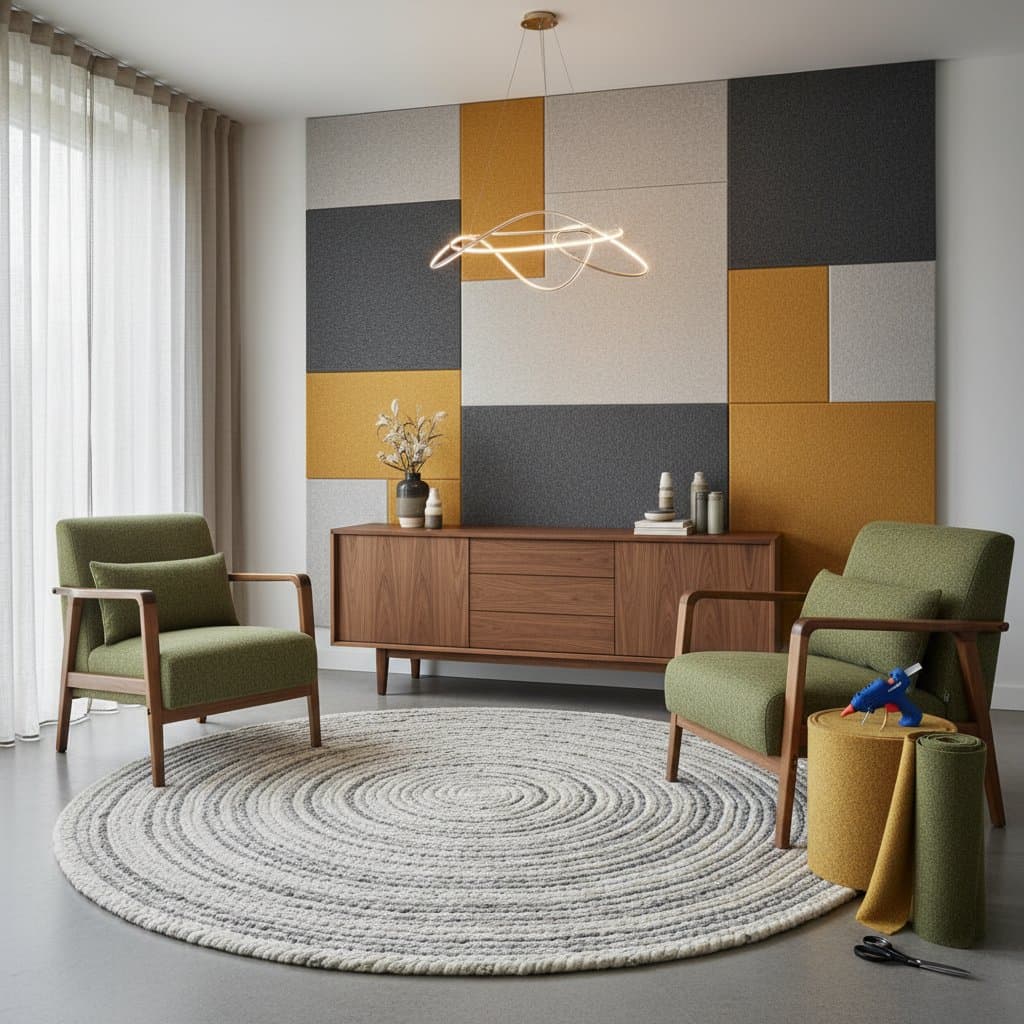
DIY Felt Panels: Craft Quiet Furniture for Better Acoustics
Noise infiltrates every area of a home or workshop. Hard surfaces reflect sound waves, open floor plans amplify echoes, and even attractive furniture contributes to the clatter. Solutions do not always demand expensive renovations or advanced materials. Basic crafting skills, felt fabric, and wood allow construction of panels and furniture that reduce sound while introducing tactile comfort.
This guide covers the process of creating DIY felt panels and incorporating them into furniture for effective sound dampening. Readers gain insights into selecting optimal materials, designing layouts for acoustic improvement, and restoring tranquility to active spaces.
At a Glance
Who: Homeowners, craft enthusiasts, or small workshop operators seeking reduced interior noise
What: Custom acoustic felt panels and felt-covered furniture pieces
Where: Interior settings, such as home offices, creative studios, or living areas
Size: Standard panels measure 24 by 48 inches (61 by 122 cm), with options to customize for walls or furniture
Design Guidance: Insights from acoustic consultant and fabricator Lauren Pike
Photography: Images courtesy of Studio Quiet Form
Pike noted, "Felt provides acoustic management in a gentle, inviting manner. It conveys warmth rather than a clinical appearance."
The Solution: Furniture That Absorbs Sound
Acoustic furniture design focuses on the interaction between sound and physical forms. For instance, a cabinet door lined with felt captures vibrations near audio sources or discussion areas. A wool-felt wrapped headboard diminishes evening disturbances while enhancing surface appeal. A desk partition featuring felt sections promotes concentration in collaborative environments.
Specialized equipment proves unnecessary. A table saw, staple gun, and spray adhesive suffice for most tasks. Success relies on strategic layering: felt captures sound energy, and sturdy frames or backings ensure structural integrity.
Materials and Tools
Core Materials
- Acoustic Felt: Select dense wool or polyester varieties approximately 3/8 inch (10 mm) thick. Wool provides inherent strength and flame retardancy.
- Backing Board: Use medium-density fiberboard (MDF) or plywood cut to 1/4 inch (6 mm) thickness.
- Adhesive: Employ spray adhesive compatible with both fabric and wood surfaces.
- Wood Frame: Opt for 1 by 2 inch (25 by 50 mm) pine or poplar lumber to build supportive structures.
- Mounting Hardware: Choose French cleats, screws, or construction adhesive based on the installation surface.
Tools
- Circular saw or track saw for precise cuts
- Utility knife equipped with new blades
- Staple gun or brad nailer for secure attachments
- Tape measure and framing square for accurate measurements
- Level and pencil for alignment and marking
Maintain clean cuts and right angles throughout. Felt conceals minor imperfections, yet exact edges elevate the professional finish.
Integrating Felt into Furniture
Desks and Work Surfaces
Secure felt panels to the rear or bottom of desks to intercept sound propagation in expansive rooms. In multi-user setups, install felt dividers rising 18 inches (46 cm) high and 1 inch (25 mm) deep. These elements serve as both visual separators and sound barriers.
Cabinet Doors
Substitute plain door inserts with felt sections bordered by wooden stiles. Incorporate 1/2 inch (13 mm) MDF centers to preserve door stability. This approach quiets kitchen or studio environments without altering overall configurations.
Benches and Headboards
Layer felt over foam padding and plywood bases to form cushioned backs and seats. Such upholstered constructions mitigate low-frequency vibrations, fostering serenity in compact areas. Select subdued hues like gray, sand, or moss to harmonize with surrounding decor.
Wall Systems
Pair open shelving units with felt-lined backs. Bookshelves diffuse sound, and the felt layer traps rebounding waves. This combination appears purposeful and results in noticeably reduced ambient noise.
Finishing Touches
Color and Pattern
Felt fabric appears in numerous tones. Subtle grays and beiges form neutral foundations, whereas richer blues or forest greens introduce dimension. Cut felt into geometric forms and arrange in staggered layers to achieve a three-dimensional aesthetic.
Edge Treatment
Unprotected felt borders may unravel over time. Apply fabric glue to seal edges or affix narrow wood molding. For a contemporary style, position felt between panels secured by exposed fasteners or rivets.
Maintenance
Wool felt naturally repels dust and minor spills. Clean by vacuuming with a soft brush or dabbing with a moist cloth. Steer clear of abrasive detergents. Polyester versions might accumulate static, so occasional wiping with a lightly dampened microfiber cloth helps.
Key Takeaways
- Target Reflection Points for Absorption: Place panels facing speakers, work areas, or seating groups to maximize effectiveness.
- Incorporate Air Gaps for Enhanced Results: A minimum 1 inch (25 mm) void behind panels boosts control over bass frequencies.
- Layer Materials for Added Depth: Pair felt with wooden or metallic accents to achieve equilibrium in form and function.
- Integrate Lighting Thoughtfully: Direct illumination across felt textures accentuates patterns and minimizes harsh contrasts.
- Embed in Furniture to Optimize Space: Sound-dampening items minimize visual disorder while serving dual purposes.
Treating furniture as an acoustic component eliminates the need for obtrusive wall additions and upholds visual harmony.
Experiencing the Results
After installing felt panels and modified furniture, observe the transformation in everyday audio. Dialogues gain intimacy, footfalls lose sharpness, and persistent drones recede. Workshops benefit from tempered tool sounds, while offices support heightened productivity.
Homeowner and fabricator Dan Morales shared his experience following the addition of felt-supported shelving and a desk partition. "It felt as if the space began to absorb rather than rebound," he explained. "Clear communication now occurs without the need to elevate voices."
Benefits surpass auditory improvements. Felt introduces a sensory softness absent in many artificial materials. Its subtle surface invites interaction and tempers optical busyness with a non-reflective quality. As panels age, they develop faint patina, reflecting patterns of daily engagement.
Pro Tips for Success
- Prototype Placements: Position panels temporarily against surfaces and evaluate audio changes. Refine locations to optimize sound equilibrium.
- Vary Panel Dimensions: Larger formats address deep tones, while smaller ones manage high-pitched echoes.
- Prevent Excessive Dampening: Limit coverage to avoid a lifeless acoustic profile. Retain reflective surfaces on at least half of room elements.
- Layer with Floor and Window Coverings: Incorporate rugs and drapes to achieve comprehensive sound management.
- Account for Lighting in Planning: Ensure overhead or wall lights maintain a 4 inch (10 cm) clearance from panel borders.
Sources and Credits
Design and fabrication guidance draws from acoustic consultant Lauren Pike and maker Dan Morales. Photography provided by Studio Quiet Form.