
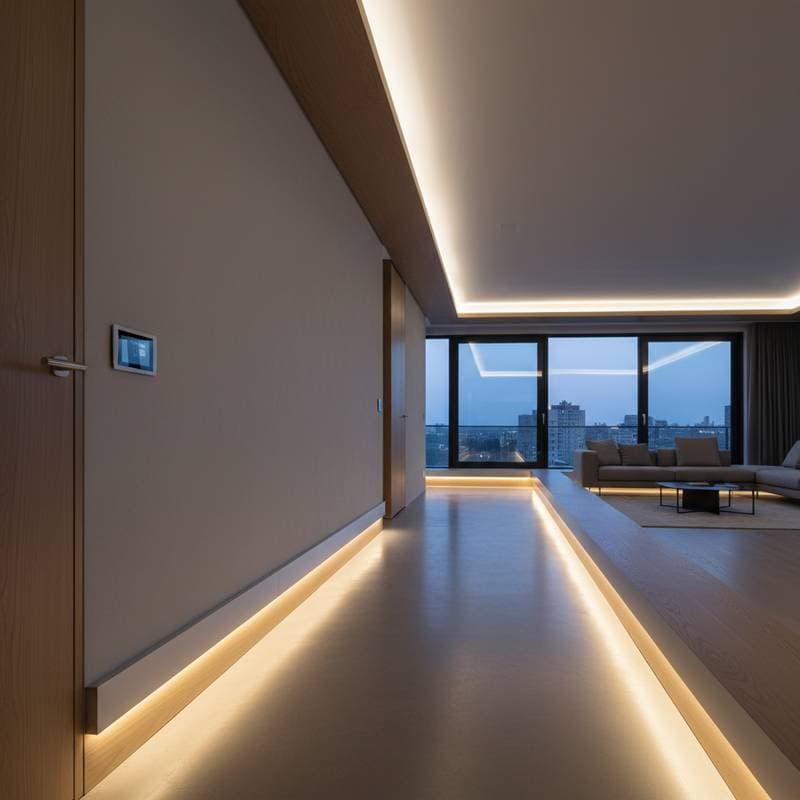
Illuminated Baseboards: The Smart Upgrade Replacing Traditional Night Lights
Picture navigating your home in the evening with a gentle, guiding light tracing the edges of your floors and walls. No need for stark overhead fixtures or separate night lights. Smart baseboards equipped with embedded LED technology achieve this by merging classic trim elements with contemporary illumination, offering both practical guidance and refined visual appeal.
These innovations transform ordinary molding into a multifunctional feature. Homeowners gain enhanced safety through low-level lighting that highlights pathways and obstacles. At the same time, the design contributes to a cohesive, modern interior without disrupting architectural lines.
Understanding the Functionality of Smart Baseboards
Smart baseboards incorporate slim LED strips within their profiles, directing light upward or outward to create a diffused glow along base areas. This setup eliminates visible fixtures, preserving clean wall aesthetics. Integration with ecosystems such as Amazon Alexa, Google Assistant, or Apple HomeKit allows users to customize settings via mobile applications or voice commands, including dimming levels, color temperatures, and activation schedules.
The lighting serves multiple roles: as a safety aid in dim conditions, an ambient enhancer for relaxed evenings, and a decorative accent for architectural emphasis. Installations prove particularly effective in transitional spaces like corridors, entryways, and stairwells, where reduced visibility poses risks. In living areas, the soft radiance fosters a welcoming atmosphere without overwhelming brighter sources.
Key advantages include:
- Reduced eye strain from indirect, below-line-of-sight illumination.
- Elimination of dark corners that overhead lights often leave unaddressed.
- Energy efficiency, with LEDs drawing minimal power compared to standalone lamps.
Practical consideration: Before selecting a product, verify compatibility with existing smart devices. Unified platforms streamline routines, such as linking baseboard lights to motion detectors for automatic activation upon approach.
Installation Process and Material Options
Professional installation typically involves measuring wall perimeters, cutting trim to fit, and embedding LED components during assembly. DIY enthusiasts can manage simpler projects using pre-wired kits, though electrical knowledge ensures safe wiring. Baseboards come in materials like engineered wood, PVC, or composite options, each suited to different environments and finishes.
For moisture-prone areas such as bathrooms, opt for water-resistant variants. Painted surfaces allow seamless blending with wall colors, while stained woods add warmth to traditional decors. LED densities vary, with higher counts providing brighter output for larger rooms.
Step-by-step installation overview:
- Measure and purchase sufficient linear footage, adding 10 percent for cuts and overlaps.
- Remove existing baseboards if replacing, then prepare surfaces by cleaning and leveling.
- Route low-voltage wiring through walls or channels, connecting to a central power supply.
- Secure the trim with adhesive or nails, ensuring LEDs align for even diffusion.
- Test functionality and pair with smart hubs before final sealing.
This process usually completes in a day for standard rooms, minimizing disruption.
Budgeting for Your Smart Baseboard Project
Material costs range from $8 to $18 per linear foot, influenced by factors like LED quality, trim durability, and included smart features. Installation fees add $15 to $30 per linear foot, covering labor, wiring, and testing. For a 200-square-foot space requiring 80 linear feet, total expenses might fall between $1,840 and $3,840, depending on customizations.
Strategies for cost management:
- Prioritize zones with frequent nighttime use to limit scope.
- Select modular systems that expand over time rather than full-room commitments.
- Bundle with other smart upgrades for potential contractor discounts.
Essential investments include LEDs rated for 50,000 hours of use and diffusers that ensure uniform light distribution. Low-quality alternatives lead to uneven brightness and premature failures, increasing long-term expenses.
Potential Pitfalls and Best Practices
Several oversights can compromise performance and longevity. For instance, inadequate airflow around LEDs may cause overheating, reducing efficiency. Design channels with small vents or gaps to allow heat dissipation.
Electrical mismanagement, such as exceeding transformer capacities, risks system failures. Calculate total wattage needs and distribute loads across multiple units if necessary. Visible LED points detract from the seamless effect; always incorporate frosted lenses or channels for soft diffusion.
Regulatory compliance matters too. Consult local building codes for low-voltage lighting requirements, particularly in rental properties or renovations. Professional electricians handle permits and inspections, avoiding fines or rework.
Pro tip: Prototype a small section in an inconspicuous area to assess light output and color accuracy before full commitment. Adjustments at this stage prevent larger issues.
Integrating Smart Baseboards into Daily Life
Once installed, these baseboards adapt to household rhythms. Program scenes for bedtime routines, where warm tones ease transitions to sleep. In family homes, sync with security systems to illuminate exteriors upon entry, enhancing overall protection.
Power usage remains negligible at under 4 watts per foot, translating to annual costs below $10 for continuous operation in average setups. Maintenance involves occasional dusting and firmware updates via apps, keeping the system current with platform advancements.
This fusion of craft and technology not only illuminates spaces but also refines how inhabitants interact with their environments. Homeowners report greater confidence in low-light navigation and a subtle elevation in interior sophistication. Consider starting with a single room to experience the shift toward smarter, more intuitive living.