
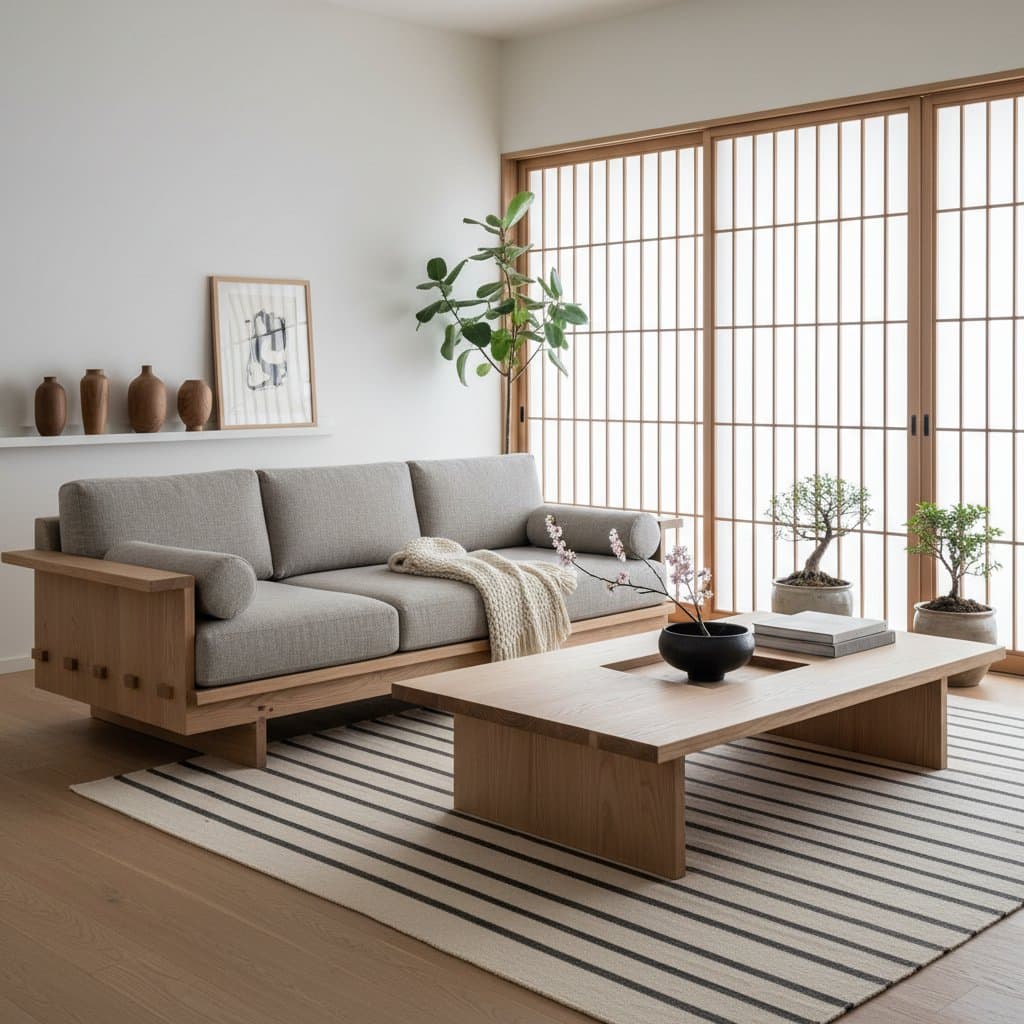
Japandi DIY: Blending Minimalism and Craftsmanship for Timeless 2025 Homes
The fusion of Scandinavian design's clean lines and Japanese craftsmanship's soulful restraint defines Japandi. This style emphasizes warmth, purpose, and calm. For woodworkers and DIY builders, Japandi serves as a blueprint for creating furniture that combines modern appeal with enduring quality. Key elements include pale woods, low profiles, and hand-applied finishes that celebrate natural materials without added ornamentation.
At a Glance
Who lives here: Homeowners who seek quiet, functional environments
Location: Urban and suburban residences around the world
Average size: 1,200 to 2,000 square feet (111 to 186 square meters)
Design teams: Independent makers, small studios, and DIY renovators
Photographer: Various contributors who document Japandi projects
Before Japandi
Many homes favored either minimalist Scandinavian aesthetics or traditional Japanese order. Builders encountered persistent challenges, such as excessive visual clutter, inconsistent lighting, and storage solutions that did not support everyday activities. A primary issue was achieving balance. Scandinavian interiors often appeared stark, while Japanese designs could feel overly enclosed for open-plan lifestyles.
A maker from Portland shared, "I wanted the calm of a tatami room but the function of a Nordic kitchen. Nothing available fit both."
After Japandi
The emergence of Japandi provided an effective resolution. Designers integrated tactile woods, soft neutral colors, and harmonious proportions to craft furniture and rooms that promote ease and flow. Typical layouts now incorporate open sightlines, supported by low furniture and seamless flooring materials. Light oak, ash, or bamboo establishes visual continuity across spaces.
Photographs reveal rift-sawn oak panels adjacent to slatted screens. A linen pendant lamp scatters light over a hand-rubbed walnut table. Cabinets feature flush fronts with handles carved directly into the wood grain. The result is serene without sterility. Every surface displays visible grain patterns, and each joint serves a clear function.
Designer Hana Saito, who instructs in small-space woodworking, explained, "The joinery itself becomes the ornament. You see the craft, not decoration."
Design Details
- Materials: White oak, maple, ash, bamboo, and muted walnut, finished with matte oil or soap for a subtle natural sheen.
- Color palette: Warm neutrals, soft grays, and clay tones that enhance natural light reflection.
- Lighting: Layered fixtures such as paper lanterns, low-profile sconces, and recessed LED strips equipped with dimmers.
- Storage: Floating cabinets, built-in bench drawers, and open shelving that displays essentials while maintaining containment.
- Hardware: Minimal pull slots or integrated finger grooves in place of metal handles.
- Layout: Open rooms with circulation paths measuring at least 36 inches (91 centimeters) wide.
- Accents: A single ceramic vase, a linen runner, or a textured rug to temper geometric forms.
This method succeeds by eliminating visual distractions. Each element secures its position through careful proportion and utility.
Key Projects in the Trend
Compact Studio Reclaimed
Location: Copenhagen apartment
Credits: Studio Lykke, photography by Mads Jensen
In a 430 square foot (40 square meter) studio, built-in birch cabinetry and a fold-down dining table introduced tranquility. The design team minimized clutter by embedding storage within the bed platform and wall panels. The pale finish preserves an airy atmosphere, while a single oak beam delineates the work area. The team aimed "to make small living feel generous through order and light."
Family Kitchen Renewal
Location: Kyoto townhouse
Credits: Jun Takada Design, photography by Emi Nishimura
The original kitchen suffered from dark cabinets and restricted movement. The renovation added open ash shelving and a continuous countertop of honed limestone. A skylight above the sink extends daylight into the interior. The family now prepares meals, dines, and assembles around a central island that spans 72 inches (183 centimeters). The designer noted that the island "acts as a bridge between Japanese restraint and Scandinavian utility."
Workshop Table DIY
Location: Seattle backyard studio
Credits: Homeowner and maker Leo Grant
Constructed from reclaimed Douglas fir, the table top incorporates butterfly joints to highlight natural imperfections. The legs taper gently, drawing from Japanese chabudai tables. At a final height of 30 inches (76 centimeters), it offers ergonomic support alongside visual stability. Grant reflected, "I wanted to feel the wood under my hands and see the grain tell the story."
Why Japandi Suits DIY Makers
Japandi prioritizes handmade quality. It appreciates precision while embracing subtle patina over time. For DIY builders, this translates to projects that emphasize basic joinery, thorough sanding, and straightforward finishes, avoiding intricate decorations. The inherent simplicity minimizes material waste and renders builds accessible to various skill levels.
Begin with modest undertakings, such as a side stool or open shelf. Select local hardwoods, round edges slightly, and apply oil rather than lacquer. Focus on proportion: adjust leg width, lower seat heights, or recess drawer fronts to achieve composed elegance.
Incorporate lighting thoughtfully to add depth and warmth. Position a paper lantern above a reading nook or a linen-shaded fixture over a workspace to diffuse shadows and accentuate textures.
Key Takeaways
- Start with balance. Combine warm woods and light fabrics to anchor spaces while preserving brightness.
- Plan for flow. Design open pathways and uniform flooring to link rooms seamlessly.
- Build with intention. Select joinery techniques and finishes that emphasize wood grain.
- Edit accessories. Limit to one or two purposeful items to avoid unnecessary decoration.
- Value longevity. Opt for natural oils that refresh easily, prolonging each piece's durability.
Experiencing Japandi Daily
A completed Japandi interior alters daily interactions and perceptions. Surfaces encourage tactile engagement, corners remain free of accumulation, and light evolves softly throughout the day. The removal of surplus elements underscores the underlying craftsmanship.
For woodworkers, the core insight emerges: simplicity demands meticulous attention to detail. Every precise cut, secure joint, and applied finish justifies its inclusion. This dedication to purpose and proportion elevates Japandi beyond fleeting fashion.
Sources or Credits
Design teams: Studio Lykke, Jun Takada Design, Hana Saito Workshop
Photographers: Mads Jensen, Emi Nishimura, courtesy of homeowners
Interviews: Hana Saito, Leo Grant, project homeowners.