
Tung Oil Milk Paint Hybrids Lead Wood Finish Trends
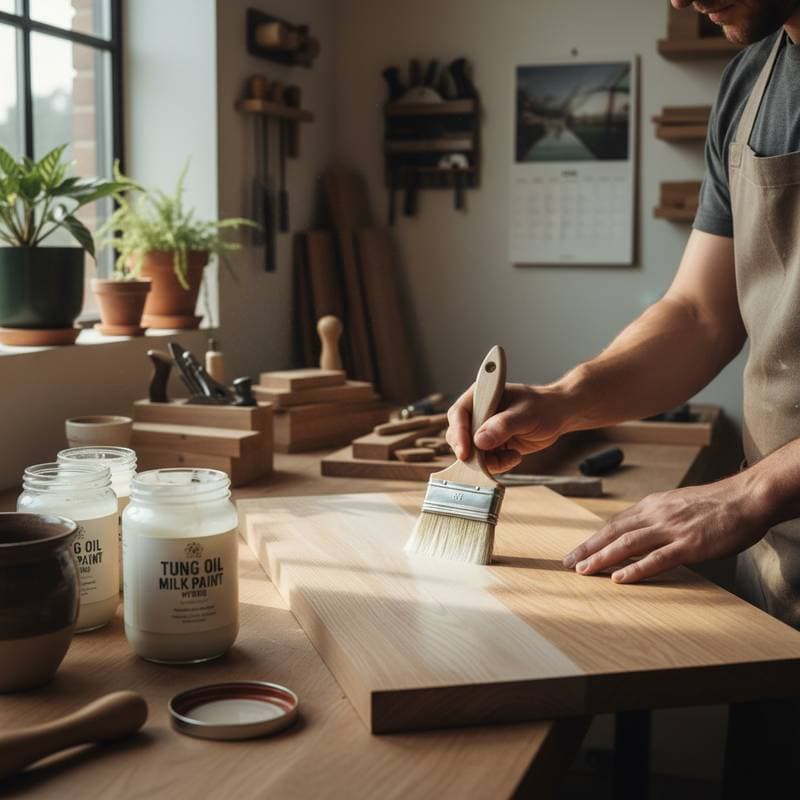
A furniture maker applies a satin sheen that radiates like aged varnish yet maintains a natural tactile quality. The appearance suggests handcrafting rather than mechanical spraying. This finish gains popularity in workshops and design studios. Tung oil milk paint hybrids establish the standard for contemporary wood finishes, integrating durability, low toxicity, and warm texture within a single-coat system.
At a Glance
- Average cost: $45 to $70 per quart
- Coverage: 100 to 150 square feet per quart
- Dry time: 6 to 12 hours per coat
- Typical use: Solid wood furniture, cabinetry, interior trim
- Skill level: Moderate
Why Tung Oil Milk Paint Hybrids Are Surging
Tung oil attracts woodworkers through its deep penetration and inherent water resistance. Milk paint, derived from casein protein, lime, and pigment, imparts a matte, historical appearance that allows wood to breathe. Hybrid systems merge these elements to address longstanding limitations of each.
Pure tung oil typically requires five or six coats to develop a protective layer. Standalone milk paint may appear chalky and demands a separate sealer. The hybrid formulation accelerates hardening, enhances scratch resistance, and preserves the subtle luster of hand-rubbed wood.
Small-batch producers note that hybrid finishes reduce application time by approximately half. A base coat of milk paint followed by two oil-infused layers achieves the depth of a full week's varnish application. Such efficiency proves essential for operations balancing production and restoration tasks.
Why It Works
Oil molecules polymerize within wood fibers as milk paint pigments bind to surface lime. This interaction forms a micro-layer functioning as both stain and sealer. The finish accommodates humidity fluctuations without peeling, suiting solid-wood panels, chair spindles, and expansive tabletops subject to seasonal expansion.
Action Step
For those new to hybrids, begin with a small offcut of maple or ash. Combine one part commercial milk paint base with one part pure tung oil. Stir thoroughly, then apply thinly with a brush. After one hour, remove excess using a lint-free cloth. Allow overnight curing before assessing color depth and surface feel.
What to Expect from the Finish
Hybrid finishes produce nuanced color variations based on the paint-to-oil ratio.
- 1:1 mix yields a semi-matte effect akin to waxed wood.
- 2:1 milk paint to oil results in greater opacity and a vintage patina.
- 1:2 milk paint to oil emphasizes an oiled wood sheen with subtle pigment accents.
The surface remains smooth and non-plasticky, outperforming standard oil in resisting water rings. Sand lightly between coats using 400-grit paper to ensure uniformity. Projects generally require two to three coats.
For items enduring daily contact, like dining tables, add a final pure tung oil coat post-curing of hybrid layers. This step introduces mild sheen and boosts water resistance by up to 20 percent over hybrid applications alone.
Why It Matters
Unlike synthetic varnishes, hybrids release minimal volatile organic compounds. Cleanup involves warm water and mild soap. Facilities lacking spray booths apply them safely with adequate ventilation. These qualities appeal to small studios and home garages prioritizing air quality and odor management.
Action Step
Select a soft natural-bristle brush or lint-free pad. Steer clear of foam brushes, which capture air bubbles. Apply in sections limited to two square feet to promote consistent absorption.
Costs and Budget
A quart of milk paint concentrate ranges from $25 to $35. High-quality pure tung oil costs $35 to $45 per quart. Finishing a mid-sized dresser or dining table typically totals $60 to $90 in materials.
Ready-mixed hybrids from specialty brands fall between $45 and $70 per quart. These products frequently incorporate natural dryers to hasten curing.
Factors That Affect Cost
- Wood species: Dense hardwoods such as oak demand less material, whereas softwoods like pine often require an additional coat.
- Color depth: Deeper pigments increase paint usage per square foot.
- Environment: Elevated humidity prolongs drying and may necessitate extra ventilation.
Money-Saving Tips
Prepare only the quantity needed for each session, as mixtures separate if stored overnight. Reuse cloths for initial wipe-downs, but dispose of oil-saturated rags properly to avoid fire risks.
For multiple pieces, group by color to batch applications. One mix ratio suffices for three to four small items before viscosity rises.
Where Not to Cut Corners
Avoid replacing tung oil with boiled linseed oil, which yellows more rapidly and provides inferior water resistance. Source milk paint from trusted suppliers disclosing full ingredients, as certain milk-style alternatives include acrylic binders altering the finish texture.
DIY or Professional
Tung oil milk paint hybrids demand skills bridging hobbyist and professional levels. Patient DIYers with suitable tools manage the process effectively.
When DIY Works
- Small furniture under 15 square feet of surface area.
- Rustic or vintage designs where subtle brush marks enhance character.
- Controlled environments offering warmth and dust-free curing.
Anticipate six to eight hours of active work over two days.
When to Hire a Pro
Extensive built-ins, commercial counters, or custom color matches benefit from spray equipment and regulated airflow. Professionals charge $6 to $12 per square foot based on intricacy. They integrate hybrid layers with polyurethane topcoats for heightened durability in demanding settings.
Vetting Contractors
Request samples demonstrating pure oil and hybrid results. Reliable shops furnish test boards illustrating grain, color, and sheen variations. Verify liability insurance and adherence to local ventilation regulations.
Common Mistakes
- Overmixing: Aggressive stirring traps bubbles that manifest as white spots upon drying. Stir gently and filter through fine mesh.
- Skipping cure time: Coats require a minimum of six hours to polymerize. Haste produces tacky results.
- Uneven sanding: Coarse abrasives create visible scratches beneath translucent layers. Conclude preparation with 220-grit or finer.
- Inconsistent ratios: Visual estimation leads to blotchy coverage. Employ measuring tools for precise proportions.
- Ignoring temperature: Below 60 degrees Fahrenheit, oil viscosifies and absorption slows. Sustain a consistent workspace.
Fixes
For sticky surfaces, wipe with mineral spirits-dampened rag, then allow a full day before reapplication. Address uneven color by light sanding followed by a thin, paint-rich glaze coat to unify tone.
Maintaining Your Investment
Hybrid finishes develop patina over time. Refresh them without full removal, conserving effort and resources. Apply a thin tung oil layer every few years to revive sheen.
Eschew silicone polishes, which may haze the surface. Routine maintenance entails mild soap-and-water cleaning followed by drying with a cloth.
On countertops or tabletops, use felt pads beneath hot items and coasters for cold beverages. These practices mitigate moisture damage and prolong longevity.
Long-term Benefits
Hybrids prove biodegradable and straightforward to repair. They minimize chemical waste relative to synthetics and cut disposal expenses. Workshops adopting natural finishes observe reduced respiratory issues and simplified storage protocols.
Next Steps for Your Project
Conduct initial tests on scrap material. Record mix ratios, coat counts, and drying durations for replication. Upon identifying an ideal formula, label containers and store in cool, dry conditions.