
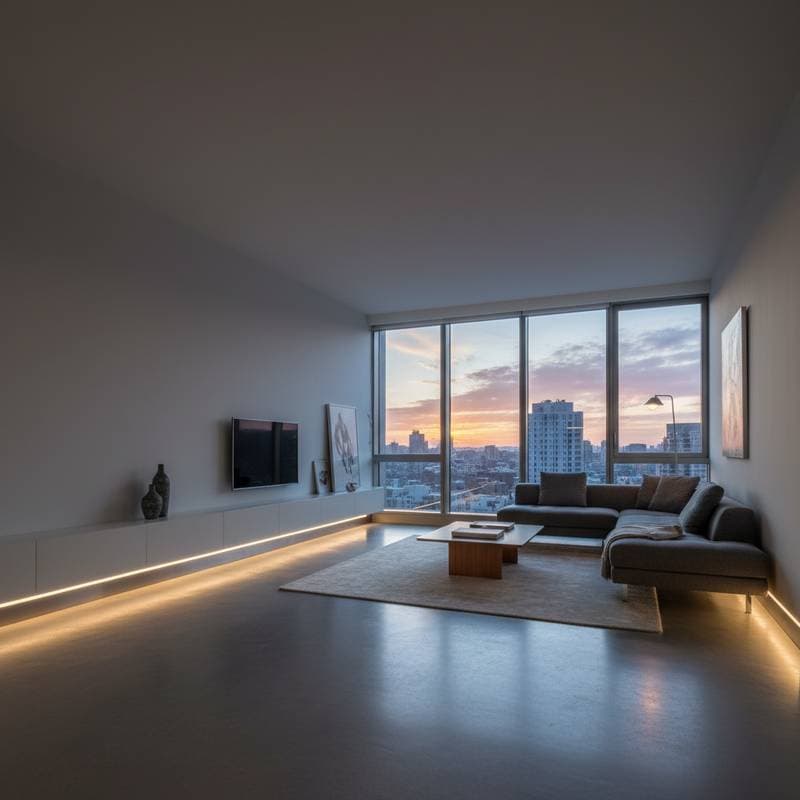
Hidden LED Baseboards: A Smart Upgrade for Ambient Lighting
Hidden LED lights embedded in baseboards transform ordinary trim into a functional design element that enhances room functionality and aesthetics. This installation allows navigation through spaces at night without activating main lights, accentuates flooring details, and provides a gentle glow that contributes to a polished appearance. Suitable for both contemporary and classic interiors, illuminated baseboards represent a practical enhancement that integrates seamlessly.
Benefits of Integrating LEDs into Baseboards
Baseboards form a continuous path along room perimeters, making them ideal for distributing light evenly. Positioning LEDs within the trim delivers indirect lighting that proves gentler on the eyes compared to overhead sources. The illumination reflects off walls and floors to produce diffused ambient light.
This method typically decreases dependence on ceiling lights by 20 to 40 percent in the evenings. With a power consumption of 4 to 6 watts per linear foot, the system maintains low energy use. LEDs produce little heat, ensuring compatibility with wooden or composite materials when paired with proper diffuser channels.
For those seeking smart home integration without prominent fixtures, this solution offers a discreet option. Homeowners often select warm white tones at 2700 to 3000 Kelvin for a cozy effect, whereas 4000 Kelvin cool white suits sleek, modern settings.
Practical Tip: Survey your home in low light to identify floor shadows. Prioritize those areas for initial baseboard lighting installation.
Estimating Costs and Budgeting Effectively
Costs vary based on material choices, LED quality, and whether professionals handle the work or individuals undertake it themselves.
Standard Cost Breakdown
- DIY Installation: $4 to $8 per linear foot
- Professional Installation: $9 to $18 per linear foot
- Smart Control Integration: $60 to $150 per controlled zone
- Power Supplies and Wiring: $100 to $200 per room
In a 200-square-foot space featuring 50 linear feet of baseboard, a professional installation ranges from $450 to $900. Advanced systems with dimming capabilities may increase expenses to approximately $1,200.
Strategies to Control Expenses
- Opt for plug-in LED strips in less frequented zones to eliminate wiring expenses.
- Limit each power supply to runs of 16 feet or less to minimize voltage drop and transformer needs.
- Coordinate with painting or flooring projects to consolidate labor and preparation efforts.
Select durable diffuser and channel components to prevent long-term issues. Inferior plastic alternatives may discolor or deform due to even slight heat exposure.
Pitfalls to Sidestep During Installation
Minor oversights can result in inconsistent appearance or early system failure. Consider these common issues:
- Neglecting Layout Assessment. Failure to account for furniture and door placements leads to illuminating concealed sections.
- Inconsistent Color Temperatures. Source all LED strips from the same production batch to ensure uniform hue.
- Overlooking Ventilation Needs. Although LEDs remain cool, transformers require air circulation; do not enclose them in confined wall spaces.
- Insufficient Power for Extended Runs. Voltage reduction dims distant sections; employ thicker gauge wiring or additional power inputs.
- Improper Mounting Height. Position the light source at least 0.5 inches above the floor to avoid direct glare.
Addressing installation flaws after completion proves more costly than initial precision. Dedicate time to planning and preliminary testing.
Ensuring Longevity Through Maintenance
Illuminated baseboard systems demand minimal routine care, yet periodic inspections sustain performance.
- Clean diffusers of dust accumulation every few months.
- Check for disconnected wires or intermittent flickering.
- Repair faulty segments by trimming and reconnecting with specialized clips.
- Maintain access to transformers for straightforward replacement.
Properly executed setups endure for over a decade. Primary threats include impacts from cleaning tools or pet activity; reinforce with protective trim in busy locations.
Experiencing the Everyday Impact
After setup, LED baseboards integrate naturally, diminishing the need for freestanding or ceiling illumination. The soft radiance fosters warmth and visibility without harshness. Users frequently observe that this lighting expands perceived room dimensions and enhances tidiness.
For property sales, such features impress potential buyers. Agents emphasize the energy-efficient aspect of illuminated trim, setting listings apart in competitive markets.
Planning and Executing Your Installation
Essential Considerations
- Budget $9 to $18 per linear foot for professional services.
- Allocate 4 to 8 hours per standard room.
- Choose aluminum channels and diffusers for a refined finish.
- Incorporate smart controls for enhanced usability and security.
Begin by measuring perimeters and sourcing compatible components. Test segments before full commitment to verify even output and color consistency.