
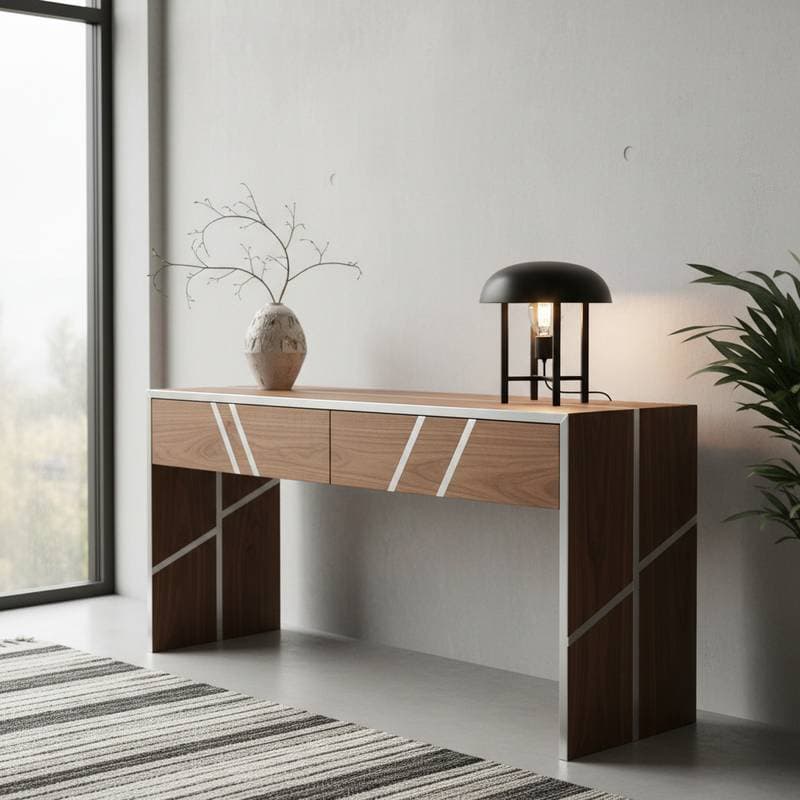
Why Aluminum Inlays Rule 2026 Wood Trends
A slim line of metal transforms modern woodworking. Aluminum inlays, previously confined to high-end furniture accents, now drive a movement toward precision and light-responsive design. These elements convert standard oak, walnut, or maple into graphic, architectural statements. The subtle glint reveals thoughtful construction from edge to edge.
At a Glance
Primary users: Custom cabinetmakers, furniture studios, and small-shop artisans
Common applications: Dining tables, built-ins, floors, and panels
Installation scale: 600 to 2,500 square feet (55 to 230 square meters) for residential projects
Leading design teams: Ridge & Grain Studio, Northline Woodworks, Atelier Sano
Image credits: Courtesy of the designers
Why Aluminum, Why Now
Woodworkers seek contrast materials that maintain tight tolerances and reflect light without appearing stark. Aluminum meets these criteria effectively. It machines with clean edges, bonds securely to hardwood, and withstands corrosion in humid environments. The material establishes sharp visual rhythm against matte or oiled wood finishes.
Aiden Cole of Ridge & Grain Studio notes, “We wanted a material that could define geometry without overpowering the wood. Aluminum lets the wood breathe while adding a crisp line.”
This combination yields a modern yet grounded aesthetic. It connects solid craftsmanship with contemporary forms, meeting demands for precise, tailored interiors. The inlays also capture light well in photographs, sustaining visibility in design publications and online portfolios.
Before: Heavy Grain and Dark Finishes
Earlier wood designs relied on deep stains, iron hardware, and substantial edge profiles. Visual density prevailed. Builders concealed joints with dark fillers or covered seams with trim. The outcome felt sturdy but formulaic. As homes incorporated larger windows and more natural light, these heavy aesthetics absorbed illumination rather than enhancing it.
Homeowner preferences accelerated the evolution. Individuals sought warmth paired with brightness, moving away from the opacity of conventional finishes. Aluminum inlays addressed this by introducing subtle sheen over outright gloss.
After: Light Lines and Precision Joints
Contemporary installations feature aluminum lines as narrow as 1/16 inch (1.5 millimeters) along tabletop seams, drawer fronts, and door edges. This approach extends beyond aesthetics to influence overall layout. Designers integrate grain direction with inlay paths, viewing the metal as a coordinating framework for the piece.
Northline Woodworks employs CNC routing for grooves, followed by hand-pressing aluminum strips for seamless integration. Their recent dining table series demonstrates the interplay of natural texture and engineered precision. Morning light traces these lines across the surface, mapping the joinery clearly.
Mia Tran from Northline explains, “Aluminum helps define movement in a surface. It guides the eye and connects separate boards into one composition.”
Design Details
- Inlay dimensions: Standard widths range from 1/16 inch (1.5 millimeters) to 1/4 inch (6 millimeters). Thinner profiles convey refinement, while broader ones provide striking contrast.
- Surface treatments: Brushed or bead-blasted finishes complement satin or matte clear coats. Steer clear of mirror polishing, which may overshadow wood grain.
- Adhesion techniques: Epoxy adhesives secure the fit and resist lifting amid humidity fluctuations.
- Groove depth: A 1/8 inch (3 millimeters) depth seats strips flush after sanding.
- Upkeep routines: Buff lightly with fine steel wool to restore luster without impacting nearby finishes.
These specifications promote durability. The inlays serve as structural guides, aiding panel alignment and preserving straightness over years.
Trend One: Framing Function
In kitchens and built-ins, aluminum inlays delineate boundaries rather than occupy space. Atelier Sano's walnut pantry wall incorporates thin horizontal bands along shelf lines. The designer observes that the strips “help the wall read as a single piece instead of a stack of doors.” This solution proves both functional and sculptural, clarifying opening rhythms and easing everyday interactions.
For practical implementation, inlays direct hand placement or mark baseboard shifts. A narrow horizontal line separates open shelving from drawers or outlines a countertop edge. The metal offers tactile cues during use, enhancing navigation without relying on prominent hardware.
Trend Two: Light as a Material Partner
Aluminum engages light uniquely compared to brass or steel. It diffuses illumination softly rather than reflecting it sharply, suiting luminous interiors. With pale maple or ash, it heightens daylight effects. In darker woods, it evokes a gentle glow akin to moonlight.
Lighting designer Eliza Ward aligns fixture temperatures with inlay tones. “A warm white around 3000 Kelvin keeps aluminum from going too blue,” she states. This strategy maintains harmony between surfaces and sources, preventing the metal from overwhelming the color scheme.
Test overhead lighting on the inlay prior to final finishing. If reflections prove excessive, apply a gray abrasive pad to temper the brightness.
Trend Three: Modular and Repeatable Patterns
CNC tools democratize intricate inlay patterns for smaller operations. Circular designs, chevrons, and grids now grace doors and panels previously suited only to veneers. Aluminum supports exact replication without fracturing, enabling modular approaches.
A Portland studio crafted a wall system of 12-inch (305 millimeter) squares featuring diagonal aluminum crosses. Magnetic connections allow reconfiguration. This setup converts blank walls into adaptable backdrops for retail or home environments. Efficiency arises from producing identical components rather than custom fittings.
On modest scales, route repeating lines across a tabletop to replicate modular flow. A lone stripe along a bench length visually unites multiple elements.
Trend Four: Sustainability and Reuse
Aluminum's recyclability bolsters its role amid constrained wood supplies. Designers procure inlay material from industrial scraps or extrusion remnants. Its low weight cuts shipping emissions, and inherent stability reduces refinishing needs.
Furniture restorer Leo Martinez comments, “We can sand and refinish around aluminum without pulling the strip. That saves hours in restoration.” Such resilience contributes to sustainability by extending piece lifespans and curbing replacements.
Homeowners benefit from reduced maintenance. The metal safeguards edges and endures impacts better than wood alone.
Practical Uses at Home
Incorporate the style without extensive facilities. Consider these applications:
- Coffee table centerline: Mill a central groove, embed a brushed aluminum strip, and apply clear oil. The line structures the surface and separates items like books or trays.
- Cabinet face frames: Install vertical inlays between doors to simulate frameless construction. This ensures alignment across cabinet arrays.
- Floor borders: Embed aluminum along outer boards to bounce light and demarcate zones in open spaces.
- Headboards: Integrate slim diagonal lines mirroring light angles. The geometry appears crisp and structured.
Each technique leverages light and alignment to upgrade everyday surfaces into deliberate features.
Fabrication Insights
Achieve precise outcomes through these essentials:
- Tool selection: Opt for carbide-tipped bits to form accurate grooves. Worn tools risk grain tearing and uneven gaps.
- Environmental management: Aluminum expands with warmth. Perform cuts and installations in controlled conditions to prevent subsequent separation.
- Finishing order: Sand and seal wood prior to metal insertion, then level with final sanding to avert staining.
These practices keep inlays stable amid seasonal humidity changes.
Cost Considerations
Stock costs approximately 2 to 4 dollars per linear foot (6.6 to 13.1 dollars per meter) for basic flat bars. Custom shapes or colored anodizing raise expenses. Labor for routing and fitting adds significantly due to the precision required. A standard dining table incurs an extra 150 to 300 dollars versus all-wood builds. The enhancement in clarity and market value justifies the investment.
Clients frequently embrace the premium upon observing light interactions on the completed work. It conveys superior craftsmanship and enduring quality.
Key Takeaways
- Aluminum inlays link traditional craft with innovative technology, delivering form and function.
- They introduce rhythm and light reflection while respecting wood's inherent character.
- The method suits minimalist modern spaces and rustic settings seeking subtle updates.
- CNC accuracy and eco-friendly sourcing render it viable for operations of all sizes.
- Meticulous routing, bonding, and finishing ensure enduring performance.
This approach reimagines detail for makers and provides efficient renewal options for owners.
Living with Your Design
Installed inlays demand minimal care. Wipe with a soft cloth or use a vacuum brush for dust. Skip waxes that build up on metal. Reapply oil to adjacent wood periodically to sustain contrast. The aluminum develops a soft patina over time, harmonizing with the wood's aging.
Beyond ornamentation, these elements direct light, outline boundaries, and highlight construction expertise.
Sources or Credits
Images and quotes courtesy of Ridge & Grain Studio, Northline Woodworks, Atelier Sano, and contributing designers.