
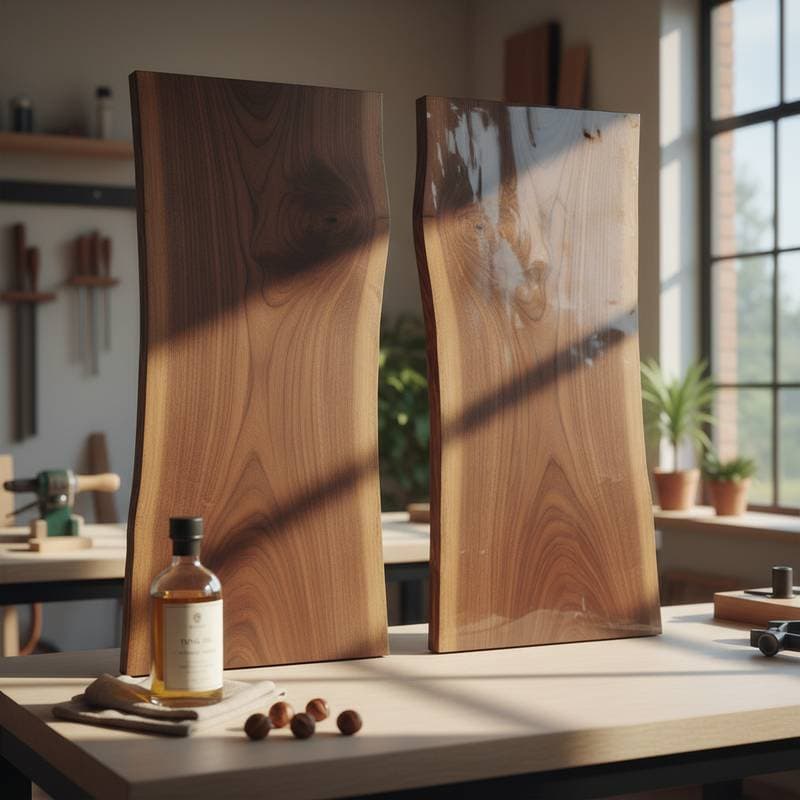
Why Tung Oil Surpasses Polyurethane for Enhancing Wood Grain
Woodworkers often seek a flawless finish to bring out the inherent beauty of their projects. Selecting the appropriate product presents challenges, as polyurethane dominates store shelves with its availability. However, tung oil delivers superior performance in preserving natural aesthetics, facilitating repairs, and ensuring environmental safety. For those desiring wood that appears vibrant rather than encased in a synthetic layer, tung oil emerges as the optimal solution.
The Advantages of a Natural Finish
Tung oil derives from a plant-based drying oil extracted from tung tree seeds. Upon application to raw wood, it seeps into the fibers and hardens into a thin, flexible layer that reinforces the surface while preserving the grain's visibility. This process yields a subtle luster that mimics the wood's authentic appearance, avoiding any plastic-like sheen. In comparison, polyurethane forms a rigid film atop the wood, offering robust defense against liquids yet often diminishing the material's texture and depth.
Observe how tung oil causes walnut to exhibit a rich shimmer and maple to radiate a soft glow. This effect arises from the oil's ability to refract light through the wood fibers themselves. Polyurethane, on the other hand, bounces light from its exterior surface, potentially rendering the wood flat and lifeless. When the objective involves highlighting the wood's innate qualities rather than masking them, tung oil provides precise control over the final look.
Practical step: Apply both finishes to scrap wood from your current project. Examine the samples under natural lighting conditions. This comparison reveals how tung oil accentuates warmth that polyurethane frequently obscures.
Understanding Costs and Application Timelines
Completing a tung oil finish on a dining table generally requires materials costing between $30 and $60 when using pure oil. Opting for blended or modified versions may increase expenses by an additional $10 to $20. Polyurethane incurs similar costs per quart, though its application demands fewer coats and thus less overall time.
Plan for two to three days to achieve a thorough tung oil application, accounting for necessary drying periods. Polyurethane might require only one day for initial coats, yet full curing before intensive use can extend to several days. The deliberate pace of tung oil application compensates with enhanced depth and greater flexibility for future maintenance.
Cost-efficiency advice: Purchase pure tung oil in larger quantities for ongoing projects. A gallon typically ranges from $60 to $80 and suffices for multiple furniture items. Steer clear of inexpensive products labeled as tung oil finishes, which often contain minimal actual oil. Verify the label indicates 100% pure composition.
Avoiding Frequent Errors in Tung Oil Application
Tung oil application remains straightforward, yet certain common pitfalls can compromise the outcome. Awareness of these issues prevents material waste and unnecessary setbacks.
-
Applying layers too generously
Thick applications remain tacky for extended periods. Wipe away surplus oil within 20 minutes of each coat. -
Neglecting proper surface preparation
Sand the wood to a minimum of 220 grit and eliminate all dust particles prior to oiling. Any contaminants become visible through subsequent layers. -
Combining products without prior testing
Certain commercial blends incorporate varnish or resins. Assess compatibility on a test area before full integration. -
Hastening the curing process
Authentic tung oil polymerizes through exposure to oxygen. Allow at least 24 hours per coat, extending this in high-humidity environments. -
Overlooking adequate airflow
Even formulations with low volatile organic compounds emit subtle odors while curing. Maintain circulation to accelerate drying.
Remediation suggestion: Should the surface feel sticky after 24 hours, clean it with mineral spirits to eliminate unpolymerized oil, then permit additional resting time before reapplication.
Health and Environmental Advantages
Pure tung oil avoids heavy metals and synthetic accelerators entirely. Once fully cured, it qualifies as food-safe, suiting applications on cutting boards, serving platters, and toys for children. Polyurethane frequently includes solvents that emit volatile organic compounds during use and drying.
Numerous woodworkers select tung oil to support a low-toxicity workflow in their workshops or homes. Application occurs indoors with limited odor, and cleanup involves citrus-based solvents rather than aggressive chemicals.
Regulatory considerations: Suppliers often certify tung oil under low-volatile organic compound standards for air quality compliance. Confirm the product label denotes pure or polymerized tung oil, distinguishing it from generic tung oil finishes.
Selecting and Sourcing Quality Tung Oil
Identifying reliable tung oil sources ensures consistent results. Reputable brands emphasize purity and provide detailed composition information. Consider polymerized variants for faster curing without compromising natural properties.
For visual guidance, review application demonstrations from established woodworking resources. These illustrate techniques for even penetration and optimal sheen development. Stocking essential tools, such as lint-free cloths and fine abrasives, streamlines the process.
Sourcing tip: Seek suppliers specializing in natural finishes, where staff offer advice on product selection. Bulk purchases from these outlets reduce long-term costs while guaranteeing authenticity.
Long-Term Maintenance for Enduring Beauty
Tung oil's true value manifests in its maintenance simplicity. Periodic reapplication, often annually for high-use surfaces, revives the finish without stripping prior layers. This approach contrasts with polyurethane, which may require complete removal and refinishing after wear.
Regular care involves gentle cleaning with mild soap and water, followed by light sanding if needed. Such upkeep preserves the wood's breathability, preventing cracks from moisture buildup. Woodworkers appreciate this renewability, as it extends the piece's lifespan while retaining its original warmth.
Embrace tung oil for projects where natural enhancement matters most. This finish not only elevates aesthetic appeal but also aligns with sustainable practices, delivering satisfaction through generations of use.