
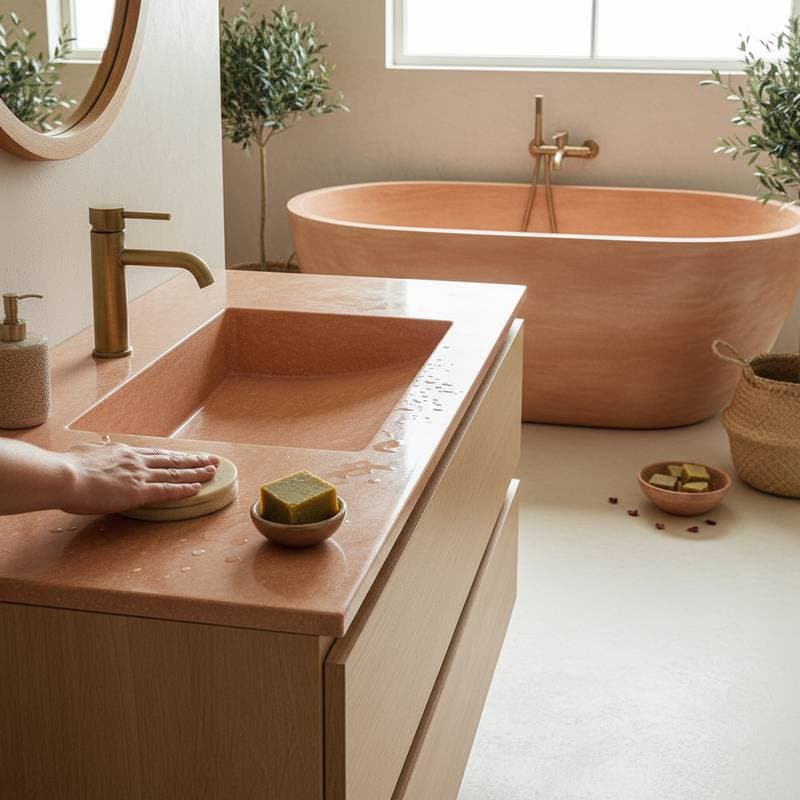
Mastering Tadelakt: The Moroccan Lime Plaster Technique for Waterproof Wood
Woodworkers increasingly turn to Tadelakt, a time-honored Moroccan lime plaster, to achieve a luxurious, water-resistant finish on wood. Originally crafted for stone hammams and palaces, this method now enhances furniture, cabinetry, and architectural elements with its seamless application and subtle sheen. The result offers both aesthetic appeal and practical protection against moisture, bridging traditional craftsmanship with contemporary design needs.
Key Overview
Material Composition: Hydrated lime plaster blended with fine aggregates like marble dust, finished with olive oil soap.
Material Cost Range: $8 to $14 per square foot.
Total Application Duration: 2 to 3 days, plus up to one week for full curing.
Required Expertise: Intermediate to advanced, demanding precise trowel work and patience.
Ideal Applications: Bathroom vanities, kitchen backsplashes, outdoor benches, and decorative panels.
This finish stands out for its eco-friendly profile, using natural, breathable materials that avoid synthetic sealants. Professionals appreciate its longevity, often exceeding 50 years with minimal upkeep.
Understanding Tadelakt's Compatibility with Wood
Tadelakt derives its strength from slaked lime, which reacts with water to form a hard, impermeable layer. On wood, the plaster bonds through a mineral interface, creating a barrier that withstands spills, steam, and high humidity. The polishing phase introduces olive soap, triggering a saponification process that converts lime compounds into water-repellent calcium stearate.
Selecting the right wood substrate proves essential for success. Materials such as Baltic birch plywood or medium-density fiberboard (MDF) minimize dimensional changes due to moisture fluctuations. Solid hardwoods like oak or maple require extra stabilization to prevent the plaster from delaminating. Begin by applying a penetrating sealer, such as shellac or a lime-compatible primer, to lock in the wood's fibers and promote uniform adhesion.
In humid environments, this technique excels where varnishes might yellow or peel. Testing on small sections reveals how the finish interacts with local conditions, ensuring a flawless outcome.
Detailed Application Process
Achieving a professional Tadelakt finish demands methodical preparation and execution. Follow these steps to transform ordinary wood into a resilient, elegant surface.
Surface Preparation
Start with clean, smooth wood. Sand progressively from 120 to 220 grit to eliminate imperfections and create a receptive texture. Wipe away all residue with a tack cloth, then apply two coats of a breathable primer, such as rabbit skin glue or a commercial lime putty base. Allow each coat to dry fully, typically 4 to 6 hours, before proceeding. This foundation prevents the plaster from soaking into the wood unevenly.
For curved or intricate pieces, use flexible sanding tools to maintain consistency. Inspect for any voids or knots, filling them with wood filler compatible with lime products.
Mixing the Plaster
Source high-quality hydrated lime putty and aggregate from specialty suppliers. Measure 4 parts lime to 1 part fine marble powder or quartz sand. Gradually incorporate distilled water until the mixture achieves a yogurt-like consistency, free of lumps. Cover and allow it to mature for 12 to 24 hours; this resting period enhances workability and reduces air bubbles.
Stir gently before use to preserve the emulsion. If the mix thickens, add water sparingly to avoid weakening the final bond.
Layering the Plaster
Apply the first coat thinly, about 1/16 inch, using a flexible stainless steel trowel. Work in sections no larger than 2 by 2 feet to control drying. Let this base layer firm up for 1 to 2 hours until it resists finger pressure but remains workable.
Add subsequent coats, feathering edges for seamlessness. The second layer builds thickness, while the third refines the surface. Between coats, mist lightly with water to slow evaporation and promote carbonation, where lime absorbs carbon dioxide to harden.
Each coat demands 30 to 60 minutes per square foot, depending on ambient temperature. Maintain room conditions between 60 and 75 degrees Fahrenheit for optimal results.
Polishing and Sealing
As the final layer sets—around 4 to 6 hours after application—prepare a solution of warm water and pure olive oil soap (1:10 ratio). Burnish the surface in circular motions with a smooth river stone or acrylic trowel, pressing firmly to embed the soap. This action not only imparts luster but also activates the waterproofing mechanism.
Continue polishing until the surface feels slick and uniform. For deeper color variations, incorporate natural pigments like ochre during mixing.
Curing Phase
Cover the piece with damp cloths or plastic sheeting for 48 to 72 hours to retain moisture. This controlled hydration prevents rapid shrinkage and cracks. After initial curing, expose gradually to air over 4 to 7 days. Full strength develops as the plaster fully carbonates, rendering it ready for light use.
Monitor for any hairline fissures, addressing them with a touch-up coat if needed.
Budgeting for Tadelakt Projects
Materials alone range from $8 to $14 per square foot, covering lime, aggregates, and soap. Professional installation adds labor at $10 to $15 per square foot, bringing totals to $18 to $25. DIY enthusiasts save by purchasing bulk lime (around $20 per 50-pound bag) and renting trowels ($10 daily).
Factor in substrate costs: Baltic birch sheets run $50 to $80 for a 4-by-8-foot panel. Primers and tools add another $50 to $100 for starters. Larger projects benefit from economies of scale, but always allocate 10 percent extra for waste and testing.
Compare this to alternatives like epoxy resin, which costs similarly but lacks Tadelakt's breathability and natural patina.
Deciding Between DIY and Hiring Experts
Tadelakt rewards those with experience in plastering or painting, but novices should start small. Practice on 12-by-12-inch boards to hone techniques before tackling full pieces. Online tutorials and workshops provide guidance, though hands-on trial trumps theory.
For intricate designs or commercial installations, engage certified artisans. Seek portfolios showcasing lime work in moist settings, and verify insurance coverage. Expect consultations to refine your vision, with timelines spanning 3 to 5 days per project.
Professionals handle challenges like uneven substrates or color matching, ensuring compliance with building codes for wet areas.
Pitfalls and Prevention Strategies
Overloading the plaster leads to sagging and eventual failure; stick to thin applications. Neglecting the soap polish results in a chalky, absorbent finish—always complete this vital step.
Unstable woods like pine warp under plaster weight, so opt for engineered options. Hastening curing invites stress cracks; patience yields superior durability.
Test compatibility in advance, especially with adjacent materials, to avoid chemical reactions.
Long-Term Care and Preservation
Tadelakt thrives with simple maintenance. Clean routinely using a soft cloth dampened in mild soap solution, rinsing thoroughly. Steer clear of vinegar or bleach, which erode the surface.
Every 6 to 12 months, buff in a fresh layer of olive soap to rejuvenate the protective barrier and enhance glow. In high-use areas, inspect annually for wear, repairing minor spots promptly.
This approach sustains the finish's integrity, preserving the wood beneath while delivering enduring beauty and functionality.