
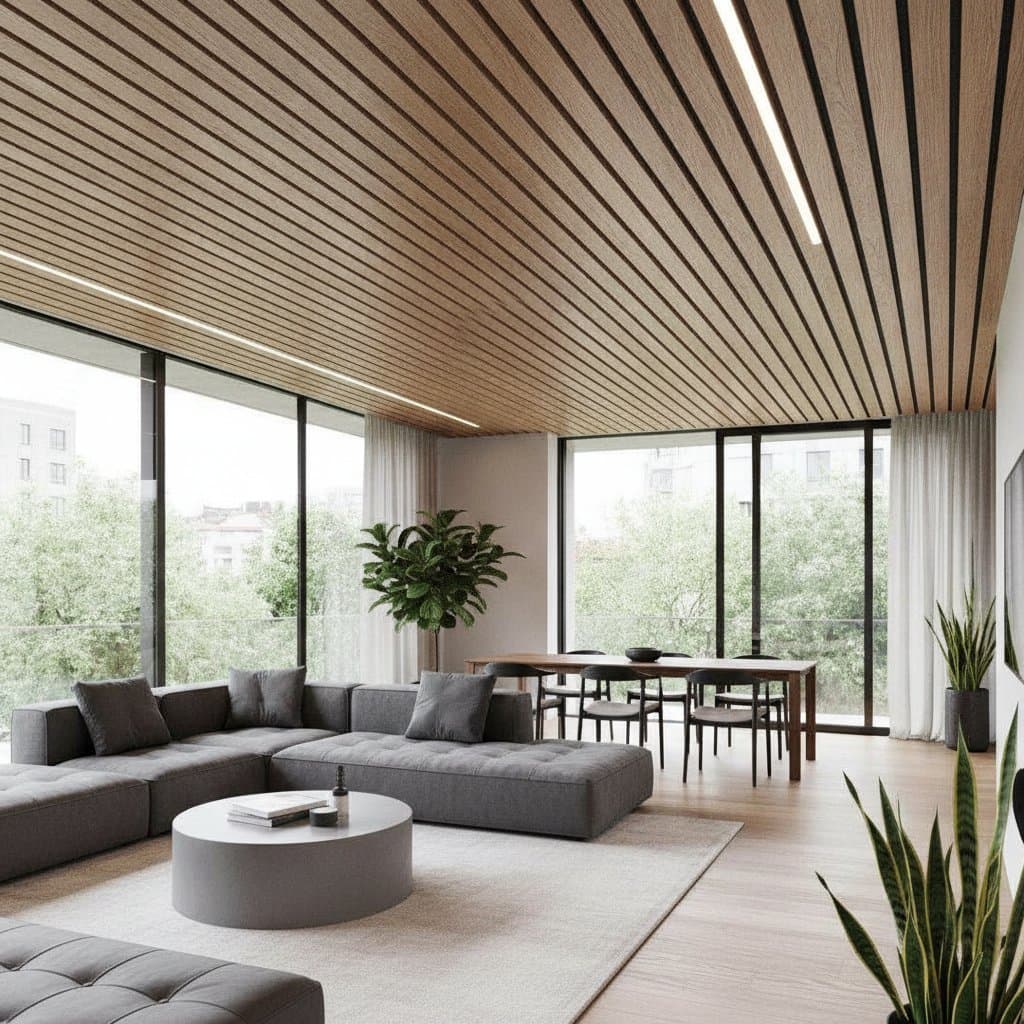
Acoustic Wood Slat Ceilings Transform Open Floor Plans
Few upgrades improve both sound quality and visual appeal like an acoustic wood slat ceiling. The approach originated in professional studios and hospitality settings. It now appears in homes where open layouts create excessive echo.
Homeowners gain texture overhead along with reduced noise below. The system pairs precise woodwork with straightforward mounting methods.
Project Overview
- Homeowners who want sound control without sacrificing warmth
- Suitable for residential remodels and modest commercial areas
- Effective on ceilings measuring 120 to 500 square feet
- Executed by woodworkers, designers, and acoustic specialists
Limitations of Standard Ceilings
Open floor plans often suffer from reflected sound. Hard drywall surfaces send voices and appliance noise back into the room. A single central light leaves edges dark and the ceiling flat.
One homeowner described the issue clearly. Conversations in the kitchen became difficult to follow because every surface bounced sound.
How the System Performs
Acoustic wood slat ceilings address both appearance and acoustics at once. Narrow wood strips sit above an absorptive backing of felt or mineral fiber. Gaps between the strips scatter sound waves while the backing captures them.
Panels attach to furring strips or joists. The finished surface resembles custom millwork yet delivers measurable noise reduction. Linear shadows lengthen the visual space. Recessed fixtures or LED channels fit between slats for even lighting without glare.
Interior designer Emma Ortiz noted that the vertical rhythm creates a modern impression while the wood tone keeps the room grounded.
Material and Performance Details
- Species options include white oak, walnut, maple, and ash; veneered MDF serves budget projects
- Slats measure one inch wide with half inch spacing; panels reach 94 inches long
- NRC values near 0.75 suit open living areas and small studios
- Mounting uses screws into furring strips placed 16 inches on center with a quarter inch expansion gap
- Finishes consist of clear matte polyurethane for color retention and humidity resistance
Installation Sequence
- Inspect joist direction and electrical locations before any cutting.
- Attach kiln dried furring strips perpendicular to the planned slat direction.
- Cut panels to length with a fine tooth blade and seal all edges.
- Secure panels with flush black screws and stagger joints for continuity.
- Position lighting channels or recessed cans between slats during layout.
- Apply trim or metal profiles at wall transitions for clean edges.
Precise measurement remains essential for a professional result.
Acoustic and Visual Benefits
Sound control affects daily comfort as directly as lighting or temperature. The slats reduce mid range frequencies that contribute to listening fatigue. In offices, phone calls become clearer. In kitchens, background clatter decreases.
Acoustic consultant David Lee observed that most people overlook how much reflected sound influences concentration.
The linear pattern complements Scandinavian and mid century interiors. It works equally well against stone, painted walls, or dark cabinetry.
Practical Considerations
Material costs range from seven to fifteen dollars per square foot depending on species and rating. Each panel covers approximately eight square feet. Required tools include a stud finder, level, chop saw, drill, and screw gun.
Most mid size ceilings reach completion in one weekend.
Daily Experience After Installation
The ceiling produces gentle shadows that shift with daylight. Conversations remain contained rather than echoing throughout the room. Music gains definition without added equipment.
A homeowner who completed a living room installation observed that guests notice the improvement even when they cannot identify its source. The result is quiet, consistent performance that supports everyday routines.