
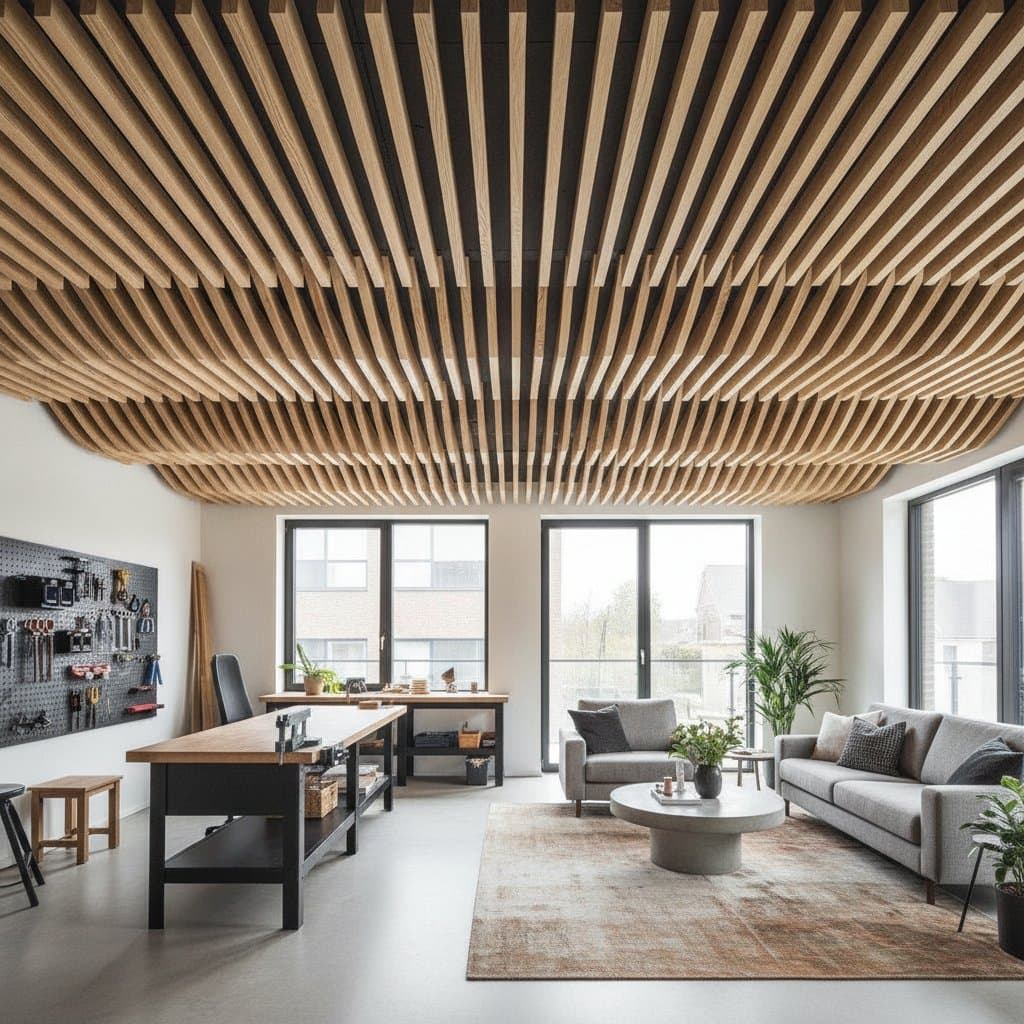
Wooden Acoustic Baffles: The 2026 DIY Ceiling Trend
Wooden acoustic baffles are moving from commercial interiors into home workshops and living spaces. The look is sculptural, the effect is quiet, and the install is achievable with careful planning. This trend brings texture overhead while solving a practical problem: how to control echo in open layouts and rooms with hard surfaces.
At a Glance
- Who: Homeowners and hobby woodworkers looking for better acoustics and visual warmth
- Where: Across home offices, studios, and kitchens
- Size: Suitable for ceilings from 100 to 400 square feet (9 to 37 square meters)
- Design Lead: Independent makers and design-forward carpenters
Why the Trend Resonates
Open floor plans and minimalist finishes have made echo more noticeable. When you add wood baffles to a ceiling, you break up sound waves while adding rhythm and dimension. The look fits both rustic cabins and clean-lined modern homes. The appeal is equal parts craft and comfort.
Designer and builder Rita Quan said, "People want quiet rooms that still feel alive. Wood adds that soft visual texture and helps the ear relax." Her comment captures why this material shift matters. It is not only about sound. It is about how a space feels when you walk in, talk, and listen.
Before the Upgrade
Many homes rely on drywall ceilings that reflect sound. In kitchens, clatter bounces between counters and upper cabinets. In open studios, voices echo off unfinished rafters. Some homeowners try rugs and curtains, but ceiling reflections remain the toughest to treat. The challenge is finding a solution that looks intentional, not technical.
Homeowner Eric Vega described his workshop before the upgrade: "I had tools whirring and music playing, but everything sounded harsh. It made me work shorter hours." That frustration is common when acoustics do not match the function of a space.
After the Upgrade
Adding wooden acoustic baffles reshapes both the look and sound of the room. Panels or slats hang vertically or horizontally, spaced evenly to absorb and scatter sound. The ceiling becomes a visual grid that defines the zone below it. In photos, the change is immediate: shadows deepen between slats, light filters more softly, and the room tone feels grounded.
In Vega workshop, birch plywood baffles line the center bay. Each piece measures 6 inches (15 centimeters) wide and 2 inches (5 centimeters) thick, spaced 4 inches (10 centimeters) apart. The layout keeps airflow open while softening the buzz of saws and sanders. "It finally sounds calm," Vega said. "I can hear detail in music again."
In living spaces, designers mount oak or walnut fins that run perpendicular to windows. This orientation breaks glare and balances daylight. When paired with recessed LED strips between rows, the effect is both acoustic and architectural.
Design Details
Materials and Finishes
- Solid oak, ash, or birch plywood sealed in matte polyurethane for durability
- Black acoustic felt backing for higher sound absorption
- Natural oil finishes highlight wood tone and grain
Mounting and Spacing
- Typical spacing of 4 to 6 inches (10 to 15 centimeters) between baffles
- Ceiling drop of 8 to 12 inches (20 to 30 centimeters) for optimal sound control
- Aluminum channels or wood cleats for easy alignment and removal
Lighting Integration
- Linear LEDs recessed between every second or third baffle
- Dimmable options to shift from task to ambient light
- Warm color temperature around 2700K for residential comfort
Smart Storage Moves
- Conceal wiring inside hollow baffle sections
- Combine with ceiling-mounted shelving for hybrid workshop settings
- Use removable panels for access to ducts and junction boxes
How It Works
Sound energy moves in waves. Hard parallel surfaces reflect it, creating echo. Wooden baffles interrupt those reflections by scattering waves and allowing air gaps for absorption. The wood itself does not soak up much sound. When paired with felt or mineral wool backing, it becomes a tuned system. The result is less reverberation and clearer conversation.
Acoustic consultant Laura Mendel explained, "It is like tuning a guitar room. You reduce noise peaks, and everything sounds more balanced." Her insight applies to more than studios. A calm-sounding kitchen or home office improves focus and reduces fatigue.
DIY Planning Guide
Building your own wooden baffles is within reach if you can rip boards or panels accurately and finish them cleanly. The process takes patience but not specialized tools.
Step 1: Measure and Model
Sketch your ceiling grid. Plan total coverage at roughly 40 percent of the ceiling area for balanced effect. Mark lighting zones and vents before cutting.
Step 2: Choose the Wood
Plywood is economical and stable. Solid wood adds richness but needs acclimation to avoid warping. For lighter ceilings, use softwoods like pine or fir.
Step 3: Prepare and Finish
Sand to 180 grit, then seal all sides. Oil finishes deepen color and make maintenance easy. If you prefer contrast, paint the upper edges a darker tone.
Step 4: Mount Securely
Install continuous cleats across joists. Attach each baffle with screws through hidden brackets or clips. Check alignment every few rows to keep spacing consistent.
Step 5: Tune the Acoustics
Add felt or foam backing behind every second row if the room still echoes. Test while speaking or playing music. Small adjustments in spacing can change the sound noticeably.
Typical Cost Range
- DIY materials only: 6 to 10 dollars per square foot (65 to 108 dollars per square meter)
- Pro installation: 15 to 25 dollars per square foot (161 to 269 dollars per square meter)
- Lighting integration: Add 5 dollars per linear foot (16 dollars per meter)
Key Benefits
- Quiet beauty: Wooden baffles bring acoustic comfort and architectural depth.
- Scalable skill: Simple framing tools and accurate layout yield professional results.
- Sustainability: Use FSC certified wood or offcuts from other projects to reduce waste.
- Personal style: Vary slat width or stain color to match cabinetry or flooring.
- Maintenance: Dust occasionally with a microfiber cloth and check fasteners yearly.
Living with the Result
Once installed, the difference is immediate. Rooms sound smaller, voices carry naturally, and music has clarity. The ceiling becomes a crafted surface that defines the mood below. Morning light reveals texture, while evening lights trace clean lines between wood fins.
These ceilings age gracefully. Wood darkens slightly, felt stays hidden, and the pattern remains timeless. For homeowners or makers, it is a reminder that good acoustics start with good craftsmanship.