
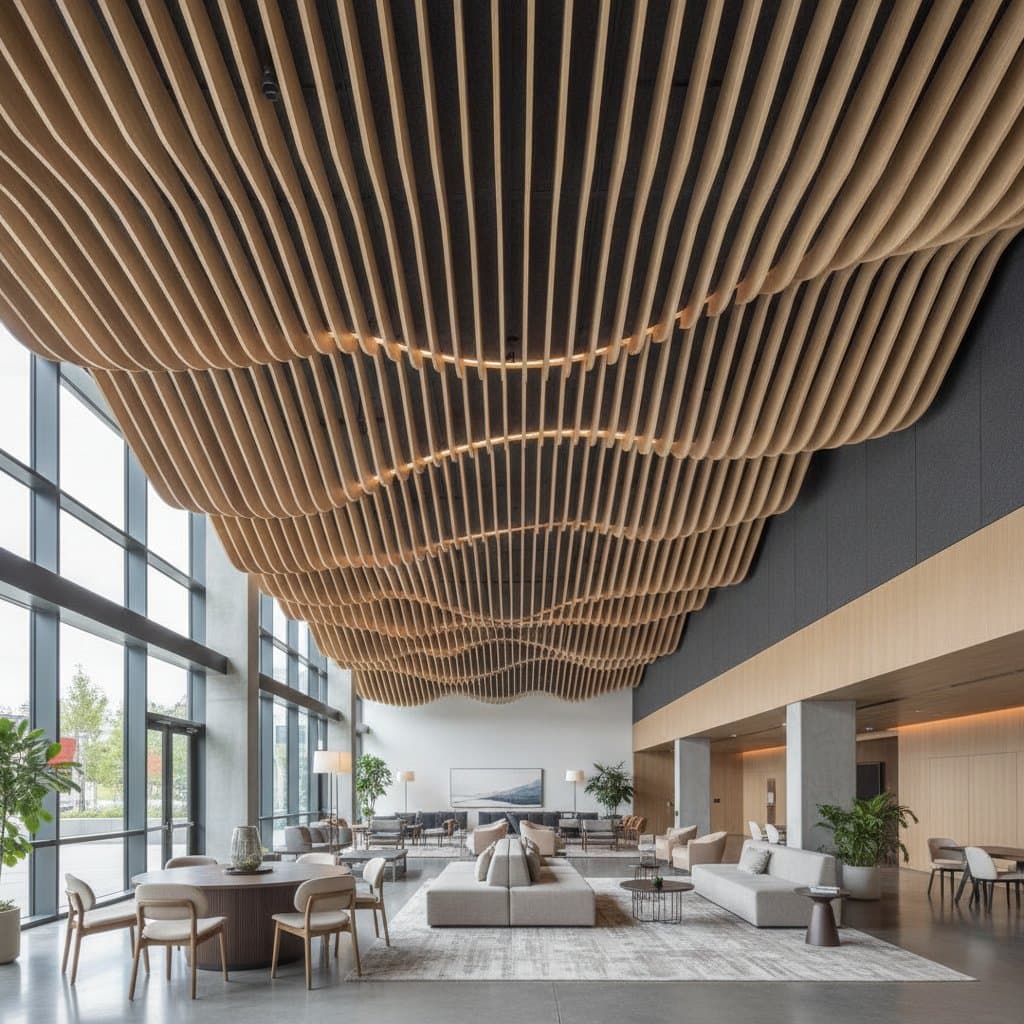
How Wood Slats Quiet Busy Lobbies
Acoustic wood slats transform ceilings into sculptural sound absorbers. They combine craftsmanship with acoustic science to deliver quieter, elegant spaces. In a Seattle lobby retrofit by Studio Ardent, oak slats paired with felt panels produced warmth, clarity, and calm while meeting performance and maintenance needs.
Project Specifications
- Linear LED strips at 3000 Kelvin placed every 36 inches.
- Slim ventilation diffusers installed flush between slats.
- Installed cost of 45 to 60 dollars per square foot.
The team tested multiple spacing patterns before selecting a 1 inch gap. Wider spacing reduced sound absorption. Narrower gaps created a darker appearance. The final rhythm balanced visual tone with acoustic performance.
Acoustic Performance
Wood naturally scatters sound waves instead of reflecting them uniformly. When installed over a soft backing, slatted panels function as broadband absorbers that reduce echo across a wide frequency range. The vertical voids behind each slat trap sound energy and convert vibration into heat.
Lighting integrated between the slats articulates the pattern and prevents glare. Continuous linear fixtures deliver even brightness that maintains a calm atmosphere.
Maintenance access remains straightforward because each slat can be removed individually. This feature simplifies future wiring or HVAC modifications in commercial environments where systems change over time.
Application in Homes
The same approach improves residential spaces. A slatted ceiling above a kitchen island or media room wall increases speech clarity and reduces reverberation. Hardwood or veneered MDF provides visual warmth when backed with acoustic felt in charcoal or light gray tones.
Prefabricated panels suit smaller rooms. These modular sheets combine slats and felt and attach directly to furring strips or drywall. Standard panel dimensions of 24 by 96 inches allow two people to complete installation efficiently.
In bedrooms, wall mounted panels behind the bed absorb noise from adjacent rooms. In living rooms, ceiling perimeter placement softens reflections from hard flooring.
Fabrication and Storage Practices
Hidden access panels located behind slat runs keep wiring organized. Designers integrate downlight housings and sprinklers within the gaps so equipment remains functional yet unobtrusive.
Woodworkers who fabricate custom slats benefit from standardizing lengths to minimize waste. Consistent tongue and groove edges speed alignment and simplify future replacement. Finishing all surfaces before installation prevents moisture imbalance and warping.
Performance and Design Benefits
- A slatted ceiling serves as both a sculptural element and an effective sound trap.
- Gap spacing and material density determine absorption levels.
- Recessed lighting highlights the pattern without visual clutter.
- Detachable panels preserve design integrity while allowing system access.
- Many felt backings incorporate recycled fibers for improved sustainability.
Daily Experience
After installation the space feels grounded. Background noise decreases and voices remain clear. The wood finish supplies natural acoustic warmth that drywall cannot replicate. Employees note fewer headaches and improved concentration. Visitors sense calm immediately upon entering.
Homeowners experience quieter conversations, clearer media playback, and reduced echo even after rugs or curtains are removed. The slats add both visual interest and acoustic control.
Lena Ortiz observed that people notice the ceiling first and then recognize the peaceful sound quality.
Long Term Adaptation
Acoustic wood systems scale easily. Additional panels can extend coverage to walls later. Maintenance requires only occasional dusting and oil renewal. Relative humidity should stay between 35 and 55 percent to preserve wood tone and shape.
Periodic acoustic testing in workspaces confirms continued performance as furnishings change. Homeowners can adjust lighting color temperature or add dimmers to alter mood without affecting the slat structure.