
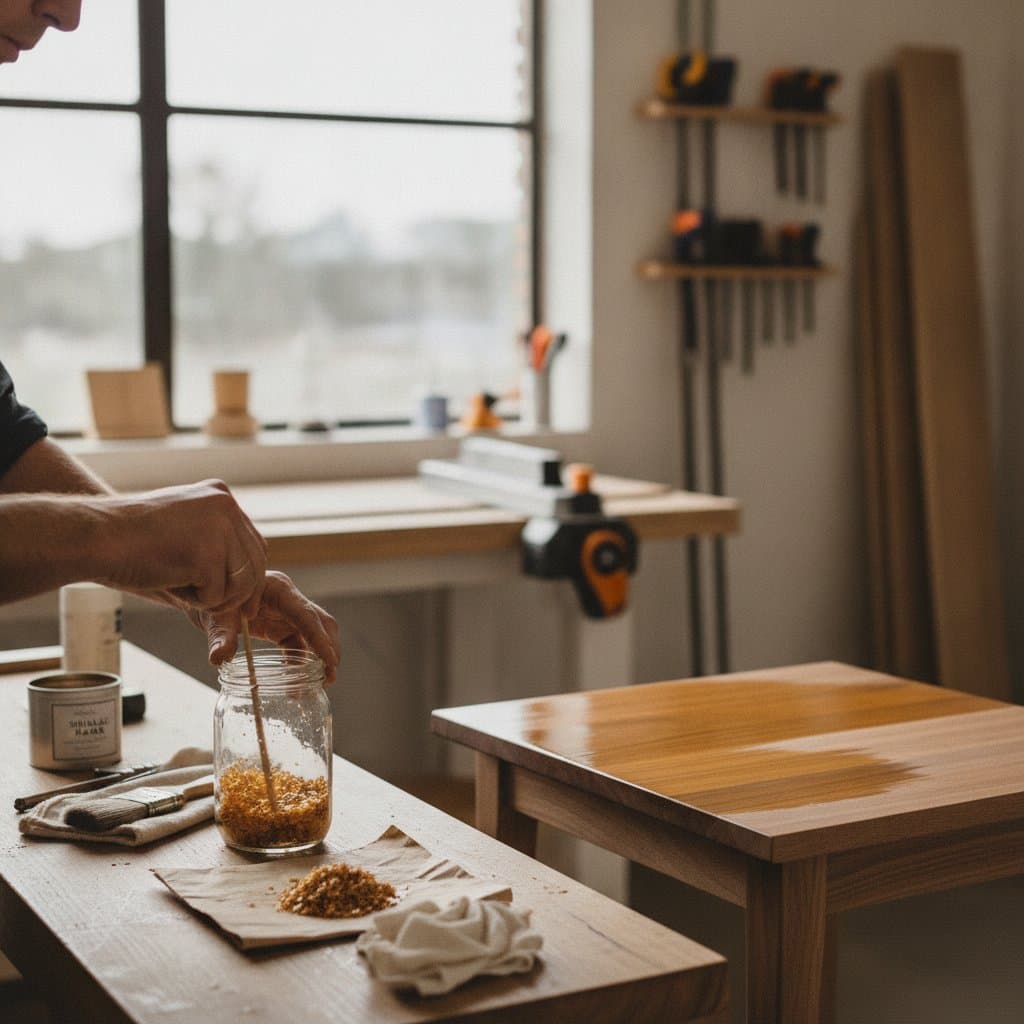
Shellac Flakes Make a Comeback as a Fast-Drying DIY Finish
The quiet return of shellac flakes has caught the attention of both professional woodworkers and home refinishers. Once considered old-fashioned, this natural resin is finding new life as a fast-drying, forgiving, and beautiful finish that fits modern DIY habits. The revival centers on control, sustainability, and the tactile satisfaction of seeing wood glow within minutes.
At a Glance
- Professional furniture makers, restoration specialists, and home DIYers rely on shellac flakes.
- Small workshops, home studios, and restoration sites see the strongest results.
- Shellac flakes dissolve in alcohol to form a quick-drying, repairable finish that highlights wood grain and color.
- The material offers natural resin, non-toxic properties, easy repair, and customizable sheen.
Photography courtesy of craft finisher and photographer Ryan Keller.
Limitations of Modern Finishes
For years many woodworkers turned to polyurethane or lacquer for speed and durability. Those products promised long-lasting protection but often created a plastic-like surface that muted the warmth of the wood. Cleanup required solvents, drying times stretched into days, and small mistakes meant sanding back entire panels.
Home refinisher Laura Jensen said, "I loved the toughness of modern film finishes, but I missed the feel of wood that still looked alive." That sentiment reflects a growing restlessness among woodworkers who want a finish that is easier to control and more connected to the craft.
Benefits of Shellac Flakes
Shellac flakes have reentered the conversation with a mix of old wisdom and new convenience. Sold in dry form, the flakes dissolve in denatured alcohol to create a brushable or sprayable solution. Because it dries in minutes, multiple coats can be applied in a single afternoon. The result is a luminous surface that retains the texture of the grain while sealing it against moisture and wear.
In workshops across the country, makers are returning to this finish for both small decorative boxes and major refinishing projects. Users can tint it, adjust the cut for thinner or thicker application, and repair it easily with alcohol if a surface gets scratched. When rubbed out with fine wool or polishing pads, the finish turns silky and deep, catching light in the pores and growth lines of the wood.
Furniture builder Daniel Ortiz said, "Shellac gives you feedback instantly. You can see the wood come alive as the alcohol flashes off. It is as close as finishing gets to painting with light."
Why Shellac Works for Modern Woodshops
The appeal of shellac flakes lies in their flexibility. Users control the strength of the mix, the drying speed, and the final look. Once dissolved, the solution can be brushed, wiped, or sprayed. It adheres to nearly any wood type and even bonds well to itself, which means layers can be added without sanding through previous coats.
Unlike most synthetic finishes, shellac contains no heavy solvents. The alcohol evaporates cleanly, leaving behind a natural resin film. This makes it a favorite for refinishing vintage furniture or restoring heirloom pieces where authenticity matters.
Because shellac is food-safe once cured, it also works well for cutting boards, serving trays, and children furniture. The finish can be renewed with a simple wipe of alcohol without stripping the entire surface.
Design Details
- Material: Natural shellac resin secreted by the lac insect.
- Mixing ratio: Commonly a two-pound cut, or two pounds of flakes per gallon of alcohol.
- Drying time: Roughly 20 to 30 minutes between coats.
- Application tools: Natural bristle brush, pad, or HVLP sprayer.
- Sheen control: Buff with 0000 steel wool for satin, polish with pumice and oil for gloss.
- Cleanup: Denatured alcohol only, no harsh solvents required.
- Repairability: Alcohol reactivates the surface for seamless patching.
Each of these details supports a smoother workflow for small shops and home users. The short drying window keeps projects moving, while the reversible nature of the finish gives confidence to beginners.
Renewed Interest in Traditional Methods
The renewed popularity of shellac flakes also speaks to a broader design movement. Many woodworkers now aim for finishes that emphasize authenticity, texture, and craft rather than uniform gloss. Shellac fits that mindset. It highlights the depth of walnut, cherry, and maple while softening knots and sap streaks into a warm tonal range.
Refinisher and instructor Marcus Hill said, "People are craving finishes that feel handmade. Shellac is imperfect in the best way. It breathes with the wood." His workshop classes often start with raw flakes and alcohol, letting students experience the transformation firsthand.
Modern shellac also benefits from improved sourcing and packaging. Flakes now come in sealed bags that protect them from moisture and preserve freshness. Some suppliers ship pre-measured kits that dissolve overnight, allowing weekend woodworkers to focus on application rather than chemistry.
How to Mix and Apply Shellac Flakes
A successful shellac finish begins with proper mixing and timing. Start by measuring flakes and denatured alcohol by weight or volume using a kitchen scale or graduated container. Place the flakes in a glass jar with a tight lid, then add the alcohol. Stir occasionally until the mixture turns clear, which can take several hours depending on temperature and flake size.
When ready, strain the liquid through a paint filter or cheesecloth to remove undissolved bits. Store the mixed shellac in a sealed container and label it with the cut strength. Most woodworkers prefer a two-pound cut for general finishing, but the mixture can be thinned to one pound for sealing or touch-ups.
Apply with long, smooth strokes following the grain. Overlap slightly to maintain wet edges. If using a brush, work quickly because the alcohol evaporates fast. After the first coat dries, lightly sand with 400-grit paper to remove raised fibers, then apply two or three more coats. Wipe away dust before each layer.
For a softer look, finish by rubbing the surface with fine steel wool and paste wax. For a high sheen, polish with pumice and oil, then buff with a cotton cloth.
Ideal Applications
Shellac flakes excel in small to medium projects where fast turnaround and visual warmth are priorities. Ideal applications include furniture restoration, cabinet interiors, musical instruments, decorative boxes and small crafts, and trim and molding. Because shellac bonds to most previous finishes, it can serve as a sealer under oil or wax topcoats. Many professionals use it as a barrier coat under polyurethane to prevent blotching on softwoods like pine.
Getting Started at Home
If you are new to shellac flakes, begin with a small test board. Mix a one-pound cut and brush on two coats. Watch how fast it dries and how the grain deepens. Adjust the ratio until the flow and build meet expectations. The learning curve is short, and the payoff is immediate.
For home refinishing, shellac is forgiving. Dust nibs can be removed with fine sandpaper, then another coat brushed right over them. If a run develops, rewet the area with alcohol and smooth it out. The finish melts into itself, avoiding the patchy look common with polyurethane.
Tip from finisher Laura Jensen: "Keep your workspace warm and dust-free. Shellac loves clean air and steady temperature. Once you get the rhythm, it feels effortless."
Key Advantages
- Shellac flakes give total control over mix strength, drying time, and sheen.
- The finish is natural, food-safe, and easy to repair with alcohol.
- It dries in under half an hour, allowing multiple coats per session.
- The product works on furniture, cabinetry, instruments, and small crafts.
- Modern packaging keeps flakes fresh and consistent.
- Users can layer or tint shellac to fine-tune color and depth.
These qualities make shellac a practical choice for both traditionalists and modern makers who value speed and authenticity.
Storage and Care
Proper care extends the life of both the finish and the mixed solution. Store unused flakes in a sealed bag away from humidity. Once mixed, the liquid shellac remains usable for several months if kept cool and airtight. Discard it when it no longer dries hard or begins to smell sour.
Finished pieces can be cleaned with a dry or slightly damp cloth. Avoid ammonia-based cleaners which can dull the surface. If a scratch appears, dab the area with a bit of alcohol on a soft cloth, then buff gently. The scratch will melt away, leaving the finish uniform again.
Re-waxing once a season restores the soft sheen that shellac is known for. Over time, richer color can be built by adding new coats directly over the old finish.