
The Revival of Tung Oil for Plastic-Free Wood Finishes
Tung oil returns to workshops with renewed purpose. Once essential for furniture makers and boat builders, this natural finish gains favor among woodworkers and homeowners who reject plastic-laden varnishes in favor of breathable alternatives. The appeal stems from its sustainability, ease of repair, and the warm visual depth that synthetic coatings rarely achieve.
At a Glance
Primary users: Woodworkers, cabinetmakers, and DIY enthusiasts seeking non-toxic sealers
Ideal applications: Interior furniture, cutting boards, countertops, and trim elements
Composition: Penetrating oil derived from pressed seeds of the tung tree
Core advantage: Forms a flexible, water-resistant barrier without creating a plastic film
Visual documentation: Workshop detail photographs by Evan Marks Studio
The Challenges of Plastic Finishes
Plastic-based polyurethane finishes held market dominance for decades. These products provide rapid application, pronounced gloss, and robust protection. However, they create a sealed layer prone to yellowing, cracking, or peeling with age. Many professionals resent the synthetic appearance and persistent chemical odors during the curing phase.
Cabinetmaker Laura Henderson shared, “I used to dread topcoating because of the fumes and the way plastic finishes muted the grain. It felt like covering the wood instead of revealing it.”
Such dissatisfaction prompts a return to time-honored techniques. Tung oil emerges as a preferred choice due to its plant-based origins and capacity to mature alongside the wood.
Benefits of the Tung Oil Shift
Adopting tung oil transforms workshop practices and end products. Thin applications allow pure tung oil to penetrate deeply into wood fibers, where it polymerizes to yield a matte or satin sheen. Although the method demands time, the outcome delivers a surface that retains a natural vitality to the touch.
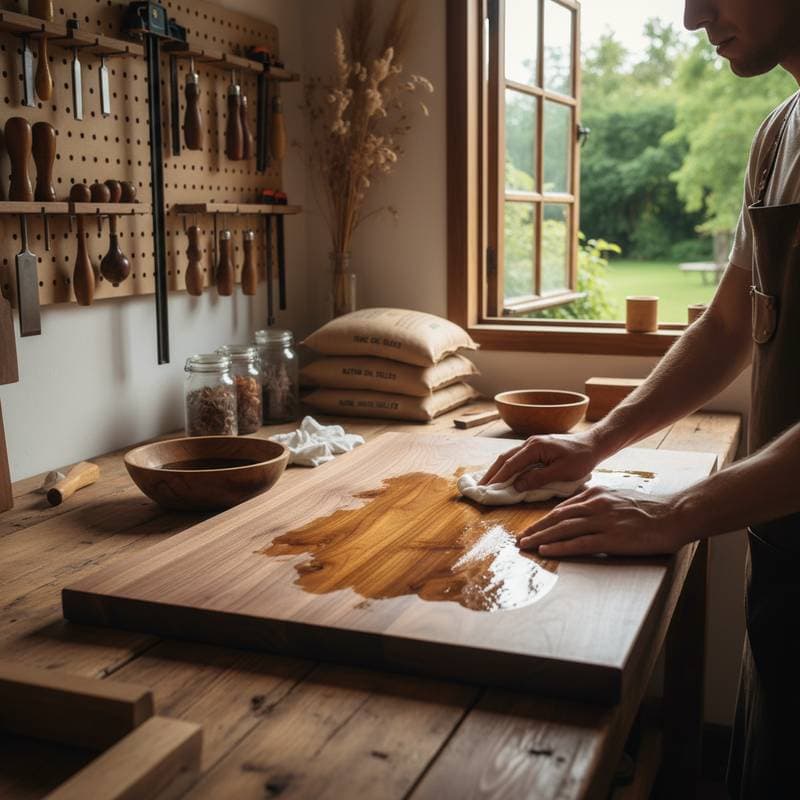
Photographs illustrate the transformation clearly. A walnut tabletop finished with tung oil exhibits a subtle glow, with grain patterns sharp and textured. A maple cutting board displays a mild luster free of harsh reflections. The treatment amplifies inherent colors without concealment, and repairs involve merely a gentle application of additional oil.
Designer Miguel Ortiz noted, “What I like is that it never peels. You maintain it like leather, a bit of oil once or twice a year and it keeps looking better.”
Woodshops benefit from reduced exposure to aggressive solvents, improved air quality, and finishes that clients can rejuvenate independently.
Application Specifications
- Formulation: Pure tung oil at 100 percent or blends modified with citrus solvents
- Method: Apply via wiping or brushing in thin layers, with a minimum 24-hour drying interval between coats
- Coverage rate: Approximately 400 square feet (37 square meters) per gallon, varying by wood porosity
- Resulting aesthetic: Subdued sheen, tactile hand-rubbed feel, and pronounced grain definition
- Upkeep: Reapply lightly every 6 to 12 months on frequently used items
- Tint effect: Introduces a faint amber hue, which intensifies darker woods and imparts warmth to lighter varieties
- Health considerations: Suitable for food contact once fully cured, devoid of synthetic resins or plasticizers
The Broader Significance
Demand for non-toxic finishes rises as individuals establish home workshops and restore furniture in confined areas. Tung oil originates from a renewable agricultural source, requiring far less refinement than petroleum-derived varnishes. This aligns with efforts to eliminate plastics, supplanting film-builders that incorporate microplastics and rigidifiers.
Tung oil also fosters a deliberate pace in woodworking. Hand-applying successive coats invites detailed scrutiny of the grain, absorption patterns, and evolving tones during curing. The ritual integrates seamlessly into the artistry.
Practical Guide for Home Application
Tung oil suits most unfinished wood surfaces. The process demands few tools, emphasizing patience and lint-free cloths.
- Prepare the wood. Sand to 220 grit or finer, eliminate all dust, and confirm the material remains dry.
- Administer the initial layer. Saturate the surface with a clean cloth, allow 20 to 30 minutes of absorption, then remove surplus oil.
- Allow curing. Permit at least 24 hours before subsequent applications; cooler or more humid environments may prolong this period.
- Build layers. Apply three to five coats to establish an embedded protective shield.
- Final polish. Upon full curing of the last coat, buff gently with a fresh cloth to achieve a subtle radiance.
For accelerated drying, professionals often combine tung oil with citrus solvent at a 1:1 proportion. Alternatives include mixing with polymerized tung oil to increase luster. All options preserve breathability and avoid synthetic plastic components.
Essential Advantages
- Inherent safeguarding: Tung oil hardens through polymerization to form a moisture-repellent shield without surface encasement.
- Restorative quality: Minor abrasions vanish upon re-oiling, eliminating the need for sanding or full removal.
- Improved environment: Application involves no potent solvents or lingering scents.
- Eco-friendly option: Derived from plants with low production waste.
- Aesthetic enhancement: Deepens grain visibility and coloration sans synthetic shine.
Sustaining the Finish Over Time
Integrating tung oil into routines makes upkeep a seamless habit. A dining table may require annual renewal, whereas cabinet doors endure multiple seasons without attention. Absent chipping risks, maintenance consists of cleaning, re-oiling, and polishing.
This method promotes preservation over discard. It rekindles a sensory bond with the piece. Fingertips glide over genuine wood texture, unmarred by plastic artifice.
Henderson captured the essence: “It is the difference between coating and caring. Tung oil lets the wood breathe, and you breathe easier too.”
The resurgence of tung oil transcends sentiment. It champions finishes that honor material integrity and enduring performance.
Sources
Insights from cabinetmaker Laura Henderson and designer Miguel Ortiz. Photography by Evan Marks Studio.