
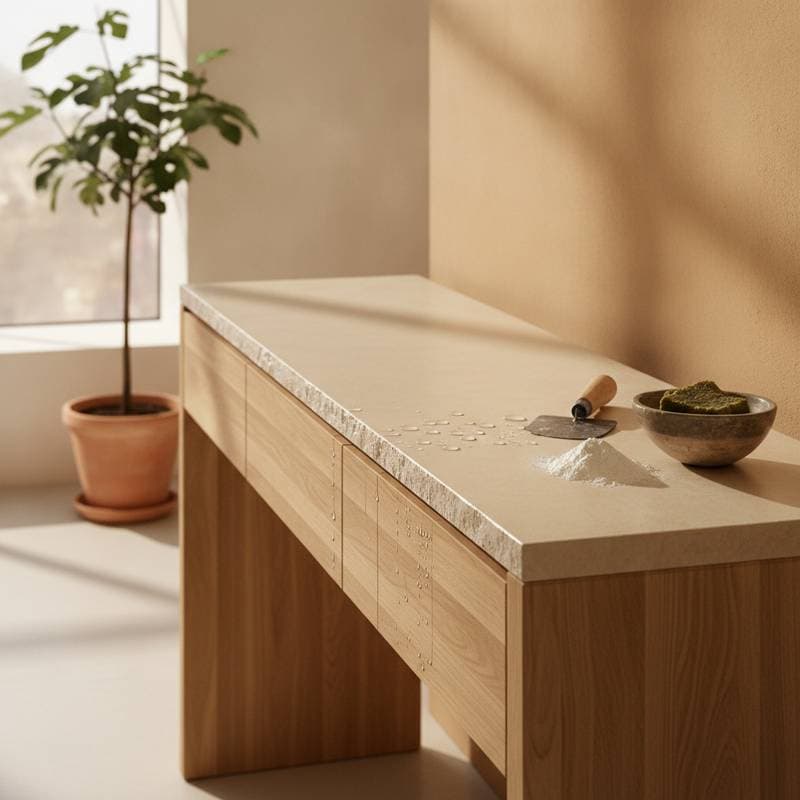
Tadelakt: A Natural Waterproof Finish for Wood
Tadelakt is an ancient Moroccan plaster technique that serves as a modern, eco-friendly finish for woodworkers and designers. It provides a waterproof, organic alternative to polyurethane. The smooth, stone-like surface delivers depth, durability, and tactile warmth that synthetic coatings seldom match.
At a Glance
- Who uses it: Builders, furniture makers, and designers seeking natural waterproof finishes.
- Where it works: Bathrooms, kitchens, furniture panels, and wet-zone millwork.
- Finish type: Lime plaster burnished with olive soap.
- Durability: Waterproof, breathable, and repairable.
- Design credit: Artisans and finish specialists across North America and Morocco.
Traditional Challenges with Synthetic Finishes
Woodworkers have long relied on polyurethane or epoxy to achieve water resistance. These synthetics protect surfaces but often leave a plastic sheen that dulls the natural grain. Over time, that surface can yellow or crack, especially in humid environments. Many shops began looking for a finish that would perform without sealing wood under a non-breathable film.
Cabinetmaker Laura Kent first discovered Tadelakt while restoring a bathroom vanity. She notes that she wanted a finish that kept the wood alive. Polyurethane felt like shrink wrap to her. She sought something that looked hand-touched yet could still handle moisture.
How Tadelakt Performs on Wood
Tadelakt transformed Kent's oak vanity into a matte, stone-like piece that resists splashes and steam. The surface feels soft to the touch but functions as effectively as tile. Light glides across shallow curves, and subtle color variation adds depth that no synthetic gloss can match.
The process involves layering lime plaster directly over a prepared substrate. Workers then compress it with a smooth stone while applying a natural soap solution. The reaction between lime and soap creates calcium stearate. This forms a waterproof barrier that remains breathable. For wood, the plaster goes over a mineral primer or thin cementitious base to ensure adhesion and flexibility.
Designer Marco De Leon, known for his natural material kitchens, highlights the appeal of authenticity. He states that the hand is visible in the finish. Every stroke records movement, and the waterproofing comes from chemistry rather than plastic.
Material and Surface Specifications
- Material composition: Traditional lime plaster mixed with marble powder and natural pigments.
- Waterproofing agent: Olive oil soap solution that chemically bonds with lime.
- Surface feel: Satin to matte, depending on polishing intensity.
- Thickness: Typically 1/8 inch over a prepared substrate.
- Maintenance: Periodic soap polishing restores sheen and the waterproof layer.
- Color range: Earth tones, chalk whites, ochres, and custom mineral tints.
The Chemistry Behind Waterproofing
Tadelakt waterproofing occurs through a reaction within the lime itself rather than a surface film. The soap-lime bond creates a crystalline structure that repels water yet allows vapor to pass. This property makes it ideal for humid areas like baths and backsplashes. It also suits wood components that expand and contract with seasonal changes.
Repairs remain seamless unlike synthetic coatings. A damaged area can be re-burnished and re-soaped rather than stripped and refinished. Over time, patina deepens and surface variation becomes part of the texture story. Woodworkers gain a bridge between plaster and carpentry when applying the technique to casework panels, drawer faces, or countertops.
Step-by-Step Application
Surface Preparation
Start with a stable base. For wood, apply a mineral primer or a thin cement board layer to prevent movement-related cracking. Ensure the surface is smooth but slightly absorbent.
Mixing the Plaster
Combine hydrated lime with marble flour and water to a creamy consistency. Let the mixture rest to mature, then remix before use. Add mineral pigments if color is desired.
Layering Coats
Apply two to three thin coats with a stainless steel trowel. Each coat must partially dry before the next is applied. Compress and smooth the final layer with a river stone or plastic trowel.
Soap Burnishing
Once the surface is slightly set, apply a diluted olive oil soap solution and continue polishing. The lime reacts with fatty acids in the soap to form waterproof calcium stearate. Repeat the process until surface sheen and density are achieved.
Curing and Ongoing Care
Allow the surface to dry naturally. Avoid rapid drying or direct heat. Once cured, maintain the finish by wiping with a mild soap solution. Avoid harsh cleaners that strip the protective layer.
Recommended Applications
- Bathroom vanities and wall panels.
- Kitchen backsplashes and cabinet fronts.
- Furniture tops and accent panels.
- Shower niches and wet-zone walls.
- Decorative art panels and installations.
Each application benefits from Tadelakt's seamless nature. It eliminates grout lines, resists mold, and pairs well with wood, stone, or metal. In mixed-material designs, it connects surfaces with continuous tactile flow.
Core Advantages
- Breathable waterproofing protects wood without trapping moisture.
- Repairable surfaces allow damage to be polished out instead of recoated.
- Natural chemistry creates waterproofing through the lime-soap reaction.
- Sensory quality feels warm and natural while reflecting light softly.
- Longevity supports decades of use with periodic care and rich patina development.
Daily Maintenance Practices
Daily upkeep stays simple. Wipe surfaces with a damp cloth and mild soap to maintain luster. For areas with constant water contact, re-soap once or twice a year to renew protection. Over time, the surface grows more resilient and visually complex.
Homeowners often describe the finish as calming. The absence of glare, the subtle texture, and natural tonal shifts create a grounded feel. Professionals seeking alternatives to polyurethane gain both performance and poetry from Tadelakt. It proves durable yet forgiving, traditional yet relevant. Its handmade quality connects material science with artistry.
Tadelakt demonstrates that waterproofing need not require plastic. Proper preparation and care allow a centuries-old Moroccan technique to deliver a surface that breathes, protects, and quietly enhances modern woodwork.