
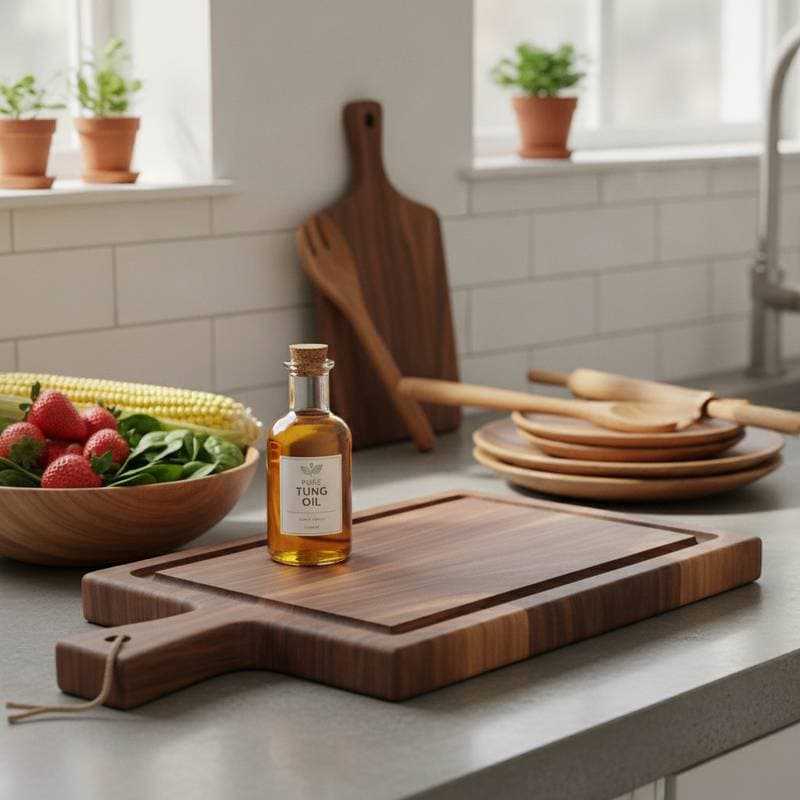
Tung Oil Emerges as the Best Non-Toxic Wood Finish
Your cutting board, dining table, or heirloom rocking chair deserves a finish that protects the wood without adding harsh chemicals. Pure tung oil has become the go-to choice for woodworkers and homeowners who want a natural, food-safe finish that enhances grain while keeping indoor air clean. A single quart, priced between $25 and $40, can cover about 100 to 125 square feet, depending on how thirsty the wood is.
Why Tung Oil Has Returned to the Spotlight
Tung oil popularity faded for a while when fast-drying synthetic finishes dominated the market. Now, as more people look for non-toxic and sustainable materials, this centuries-old finish is back. Pure tung oil is extracted by pressing the seeds of the tung tree, producing a natural oil that polymerizes when exposed to oxygen. Once cured, it forms a flexible, waterproof layer that resists moisture without sealing the wood completely.
The big reason for its return is safety. Unlike many varnishes and polyurethanes that emit volatile organic compounds, pure tung oil contains no chemical dryers or petroleum solvents. It is considered food-safe, making it suitable for butcher blocks, salad bowls, and children toys. For homeowners concerned about indoor air quality, tung oil offers peace of mind with zero off-gassing.
How the Finish Performs
When tung oil penetrates the fibers, it hardens into a stable matrix that repels water yet allows the wood to breathe. That balance prevents cracking and peeling, two common issues with surface film finishes. The result is a finish that looks hand-rubbed, feels natural, and ages gracefully through years of use.
Confirm that the product label reads pure tung oil before application. Avoid blends that list mineral spirits, varnish, or synthetic resins. These additives reduce the natural safety benefits.
Costs and Budget Considerations
A small woodworking project like a cutting board or picture frame may need only 4 ounces, costing about $8 to $10. A dining table or dresser will require one quart, around $25 to $40. Large installations such as flooring can demand a gallon, which ranges from $70 to $100.
Several factors affect cost. Porous woods like ash and oak absorb more oil. More coats mean more product. Warm, dry conditions reduce waste by improving curing efficiency.
Buy pure tung oil in bulk if you plan multiple projects. It stores well in sealed containers away from sunlight. Do not substitute tung oil finishes that include varnish resins or heavy solvents. These blends may dry faster but lose the food-safe advantage and natural look.
Common Mistakes to Avoid
Even experienced woodworkers can misapply tung oil. These are the most frequent missteps. Applying too thickly traps uncured oil underneath and leaves a gummy surface. Always remove excess oil within 20 minutes to prevent uneven gloss. Use a fine abrasive pad instead of synthetic steel wool between coats.
Tung oil needs oxygen to polymerize. Give it time before recoating. Never topcoat tung oil with polyurethane unless it is fully cured, or adhesion will fail. If a coat stays tacky for days, wipe the surface with citrus solvent, let it dry, then reapply a thinner coat.
Starting Your Tung Oil Project
Tung oil delivers both performance and peace of mind. It protects your wood surfaces while keeping your home free from harsh chemicals. If you want a finish that feels like wood, not plastic, tung oil rewards careful application with a warm, touchable surface that invites use and care.