
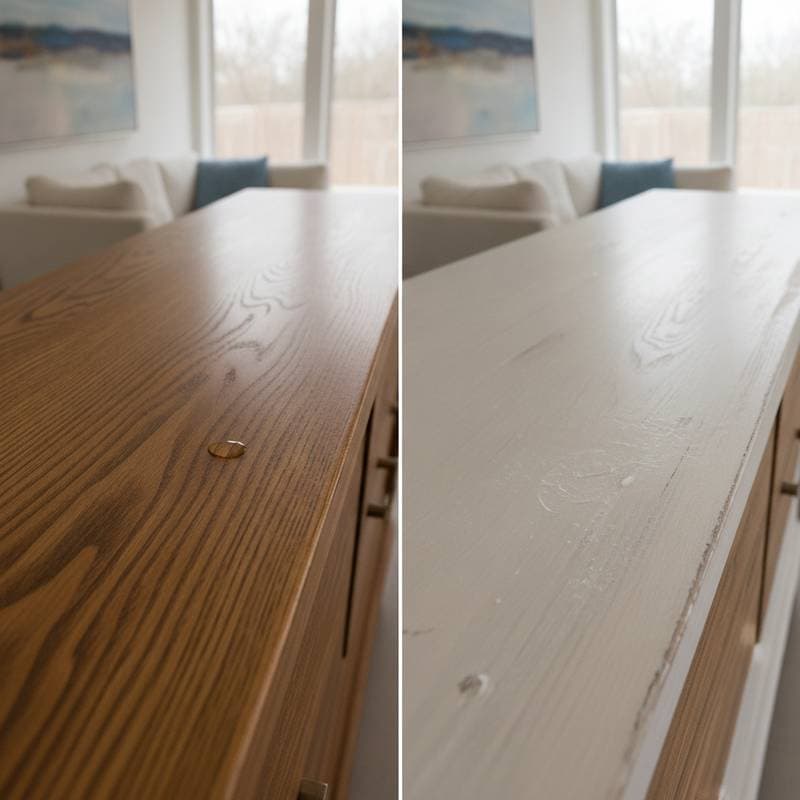
Why Natural Oil Finishes Outperform Chalk Paint Wax
You appreciate the soft matte appearance of chalk paint. Maintaining that surface proves more challenging than expected. Natural oil finishes penetrate the wood and create a longer lasting result.
At a Glance
| Finish Type | Typical Cost per Quart | Average Recoat Time | Durability (Years) | Maintenance |
|---|---|---|---|---|
| Natural Oil (Tung, Linseed, Hemp) | $25 to $45 | 12 to 24 hours | 5 to 10 | Occasional buffing |
| Chalk Paint Wax | $15 to $30 | 1 to 2 hours | 1 to 3 | Frequent rewaxing |
Why Oil Finishes Last Longer
Natural oils soak into the wood fibers instead of remaining on the surface. This penetration forms a flexible bond that accommodates seasonal movement in the material. Chalk paint wax creates a surface layer that wears away quickly on high use areas such as tabletops.
A cured oil finish develops resistance to moisture and minor abrasions. The polymerized surface accepts renewal coats without complete removal of prior layers. Application involves rubbing a small amount of oil into the wood and buffing away the excess after absorption.
Test a small section of your piece with a light coat of tung oil. Observe the deepening color and enhanced grain definition while the texture remains natural.
Appearance and Feel
Oil finishes accentuate the natural figure of the wood and produce a warm tonal quality. Chalk paint wax yields a matte surface that can feel powdery and collect dust over time. Natural oils allow control over sheen through the number of coats applied.
Two coats produce a satin appearance. Additional coats build a soft semi gloss suitable for surfaces that receive regular contact. This range of finishes suits both traditional and contemporary furniture styles.
Mix equal parts tung oil and citrus solvent to create a thinner mixture that penetrates evenly and cures more rapidly.
Costs and Budget
Natural oil typically ranges from $25 to $45 per quart while chalk paint wax falls between $15 and $30. Oil covers 150 to 200 square feet per quart and requires renewal less often. Maintenance expenses for rewaxing can reach $60 to $100 annually when labor and materials are considered.
Oil upkeep averages $10 to $20 per year under similar conditions. Application with a lint free cloth reduces product waste and yields a smoother result.
Application Process
Surface preparation requires removal of all previous coatings so the oil can penetrate properly. Apply thin coats and allow full drying between layers. Light sanding after each coat promotes uniform appearance.
Wax application demands practice to avoid streaks or uneven buildup. Over application often results in a tacky or blotchy surface.
Common Errors to Avoid
- Skipping surface prep. Residual coatings prevent proper absorption of the oil.
- Applying too thickly. Excess product extends cure time and leaves sticky areas.
- Ignoring ventilation. Adequate airflow supports oxidation and shortens drying periods.
- Mixing incompatible finishes. Wax and oil layers fail to adhere when applied over one another.
Maintaining the Finish Over Time
Wipe spills immediately and dust with a soft cloth. Apply a maintenance coat every few years to refresh the surface. The finish develops a natural patina that improves with age.