
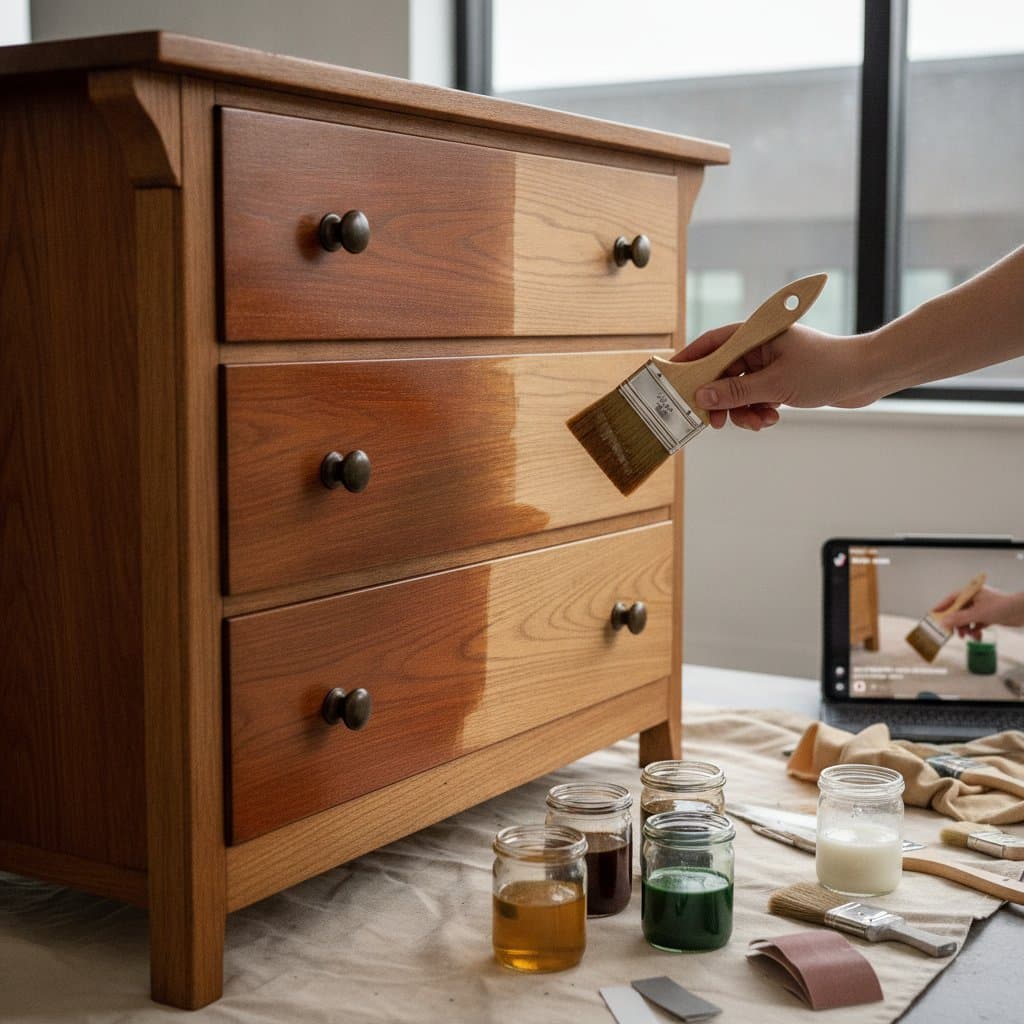
Suitable Projects
This technique suits furniture, trim, small cabinetry, guitars, and decor pieces. It builds translucent color layers that replicate decades of natural aging.
Required Supplies
Select quality materials for consistent results. A quart of dewaxed shellac covers roughly 100 square feet. Plan to spend between 40 and 120 dollars based on project size and existing tools.
- Dewaxed shellac flakes or premixed solution
- Denatured alcohol for thinning and cleanup
- Alcohol soluble dye concentrates in two or three tones
- Fine abrasive pads or 320 grit sandpaper
- Lint free cloths or tack rags
- Natural bristle brush or HVLP spray gun
- Clean glass jars for mixing
- Rubber gloves and N95 mask
Dewaxed shellac works best under later lacquer or polyurethane coats. Work in a ventilated space to manage alcohol vapors.
Budget Considerations
A medium dresser or tabletop of about 30 square feet requires the following outlay.
| Item | Average Cost | Quantity | Notes |
|---|---|---|---|
| Dewaxed shellac (1 qt) | 25 to 35 dollars | 1 | Premixed or flakes |
| Alcohol dye concentrates | 10 to 20 dollars each | 2 to 3 | Amber, brown, red tones |
| Denatured alcohol | 10 dollars | 1 qt | Thinning and cleanup |
| Brushes or pads | 10 to 15 dollars | 2 | Natural bristle preferred |
| Sandpaper and cloths | 5 to 10 dollars | Assorted | Reusable pads last longer |
Total investment runs 60 to 90 dollars. Mix shellac from flakes for longer storage life. Purchase small dye samples instead of full sets. Store brushes in alcohol between coats to extend usability. Invest in quality dyes because cheaper versions fade under sunlight.
Step by Step Application
Begin with a clean, sanded surface. Mix each tint to a one pound cut for smooth flow. Apply thin wash coats in succession, allowing each to dry fully. Alternate colors such as amber followed by brown to build depth. Sand lightly between layers with fine pads. Seal end grain first because it absorbs more dye.
Test colors under natural light since tones shift between artificial and daylight conditions. Maintain steady shop temperature and humidity to prevent clouding.
Troubleshooting Common Issues
Cloudy finishes often result from excess dye or moisture. Wipe the surface with clean alcohol and reapply a thinner tint. Sticky surfaces arise in high humidity. Increase airflow and wait before further coats.
Uneven bands come from inconsistent overlaps. Sand lightly and apply a clear wash coat to unify tone. Overly dark results require buffing with alcohol soaked steel wool to lift pigment. Use only dewaxed shellac under polyurethane to avoid adhesion failure.
Refinements for Professional Results
Pair warm tints such as burnt umber with cherry or walnut. Cooler gray brown tones suit maple and ash. Keep every coat thin to release trapped alcohol quickly. Refresh the surface every year or two with a clear shellac layer.
Surface Care Over Time
Clean with a soft cloth and mild soap. Avoid ammonia based products and direct heat. Scratches can be repaired by gentle rubbing with an alcohol dampened cloth that melts the finish back together.