
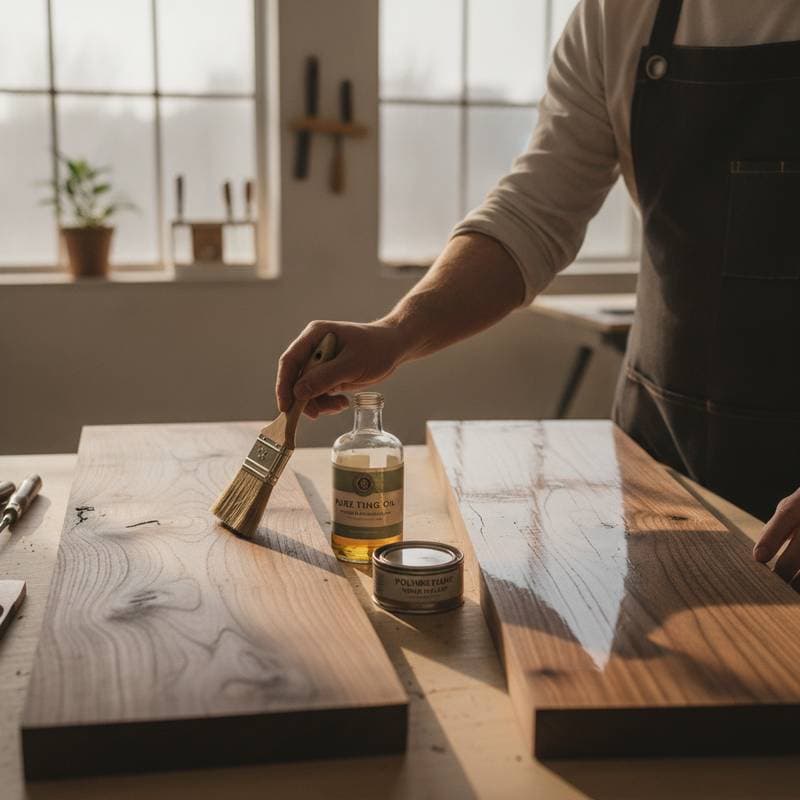
Tung Oil Surpasses Polyurethane for Natural Wood Finishes
Tung oil is reclaiming its place among woodworkers who seek a finish that protects without concealing the material. This natural oil penetrates the wood surface and cures to form a flexible barrier. The result preserves texture and allows the material to respond to humidity changes over time.
Polyurethane creates a hard film that excels in abrasion resistance. Many professionals now favor tung oil when projects require breathability, easy spot repairs, and a softer appearance that improves with age.
Project Applications and Coverage
Furniture makers, cabinet builders, and homeowners restoring older pieces apply tung oil to tables, cutting boards, and millwork. One quart typically covers 100 to 125 square feet when three or more coats are applied. The finish ranges from matte to a low sheen depending on the number of coats and buffing technique.
Limitations of Surface Film Finishes
Polyurethane seals wood beneath a uniform plastic layer. This approach can mask grain depth and complicate future repairs because damage often requires complete removal of the coating. Users frequently report that the surface feels cool and artificial to the touch.
Performance Characteristics of Tung Oil
Tung oil soaks into wood fibers and hardens internally. The cured surface resists moisture while remaining soft enough to invite touch. Light reflects softly across the grain rather than creating harsh glare. Scratches are corrected by light sanding followed by a fresh coat, avoiding full refinishing.
Finisher Marco Diaz notes that clients prefer a surface that moves with seasonal changes. Pure tung oil supports this movement without cracking and introduces no heavy metals or synthetic resins.
Application Steps
- Sand the wood to 220 grit and remove all dust.
- Apply a thin coat by brush or cloth and allow absorption for 15 to 30 minutes.
- Wipe away excess oil before it skins over.
- Permit each coat to cure fully, then sand lightly with 320 grit between coats.
- Apply three to five coats total for adequate build.
- Buff the final surface with a soft cloth to develop a gentle luster.
Maintenance involves reapplication every one to three years depending on wear. Citrus solvent or mineral spirits may be added to the first coat to improve penetration on dense species.
Visual and Environmental Advantages
Tung oil produces a slight amber tone that deepens figure and contrast on walnut, cherry, and oak. The finish contains no volatile organic compounds once cured, supporting better indoor air quality during and after application.
Side by Side Comparison
| Feature | Tung Oil | Polyurethane |
|---|---|---|
| Finish feel | Natural, warm, tactile | Hard, slick, sealed |
| Repairability | Spot repairable | Requires full sanding |
| Toxicity during use | Low when pure | Moderate to high VOCs |
| Appearance | Matte to soft sheen | Gloss to semi gloss |
| Longevity | Ages gracefully, easy to refresh | Long lasting but hard to renew |
Practical Considerations for Shops
Small workshops benefit from the reduced waste and simpler cleanup associated with oil finishes. Commercial users sometimes blend a small amount of polymerized linseed oil with tung oil to accelerate drying while retaining clarity. Proper ventilation remains essential during the multi day cure period.
Tung oil returns woodworkers to a method that protects the material while revealing its character. The approach aligns with current priorities for sustainable, maintainable surfaces that gain character through daily use.