
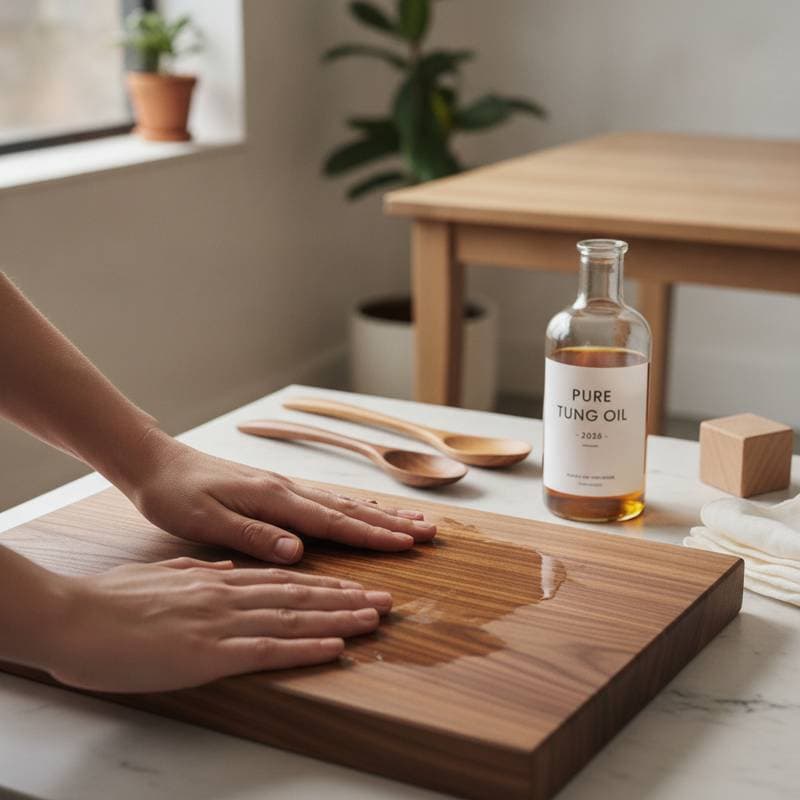
Why Tung Oil Outperforms Linseed for Food-Safe Finishes
A growing number of woodworkers and homeowners seek finishes that deliver strong visual appeal along with reliable safety. Pure tung oil stands out as a natural option that protects wood without introducing harmful chemicals. This finish suits cutting boards, furniture, and toys while producing professional results.
Key Characteristics
- Type: Natural drying oil
- Coverage: Roughly 400 square feet per gallon on the first coat
- Cure time: 48 to 72 hours between coats
- Cost: 25 to 40 dollars per quart for pure oil
- Sheen: Matte to low gloss based on application method
Application Process
Tung oil requires steady pacing because each coat must penetrate and harden fully before the next layer begins. Begin with clean, sanded wood that is free of dust.
- Thin the first coat with citrus solvent or odorless mineral spirits at a one to one ratio to improve absorption.
- Spread the mixture using a lint-free cloth or soft brush while working the oil into the grain.
- Allow the surface to absorb the oil for 30 minutes, then remove any remaining excess with a fresh cloth.
- Wait 48 to 72 hours before applying the next coat. Subsequent coats typically cure more quickly.
- After three to five coats, buff the surface lightly with 0000 steel wool or a white pad to develop a soft sheen.
Full hardening occurs over two to three weeks. The cured surface then accepts food contact and routine cleaning with mild soap and water.
Slow curing promotes deeper penetration and a stronger internal bond. Unlike surface films, tung oil strengthens the wood from within rather than forming an external layer.
Maintain workspace temperatures above 60 degrees Fahrenheit with good ventilation. Cooler or humid conditions extend cure times and may leave residual tackiness.
Choosing Between DIY and Professional Help
Application remains accessible to careful DIY users who have basic supplies and adequate time. Success depends on recognizing when each coat has fully absorbed.
DIY projects work well for surfaces under 20 square feet such as boards, stools, and tabletops. The approach also fits schedules that accommodate multiple coats and curing intervals. Proper disposal of oily rags is essential to avoid combustion risks.
Professional assistance becomes preferable for floors, staircases, or antique restorations. It is also useful when color tinting or layered systems with shellac or wax are desired. Projects that must meet food service or childcare regulations benefit from expert execution.
Professionals typically charge 3 to 5 dollars per square foot for hand-rubbed tung oil work that includes sanding and polishing. Heated curing environments often shorten total project time from weeks to days.
When hiring, request proof of insurance, sample boards, and a written materials list. Confirm that no varnish or polyurethane has been added unless that combination was specifically requested.
Ongoing Care
A properly applied tung oil finish maintains its performance for three to five years before a maintenance coat is needed. Regular cleaning with a damp cloth and mild soap preserves the surface. Avoid ammonia or bleach based products. High-use areas such as countertops receive an annual maintenance coat.
Long-Term Benefits
Tung oil provides water resistance and grain enhancement while remaining safe for direct food contact. Its internal protection reduces the need for frequent reapplication compared with many other natural oils. Consistent maintenance extends service life and keeps surfaces looking fresh.