
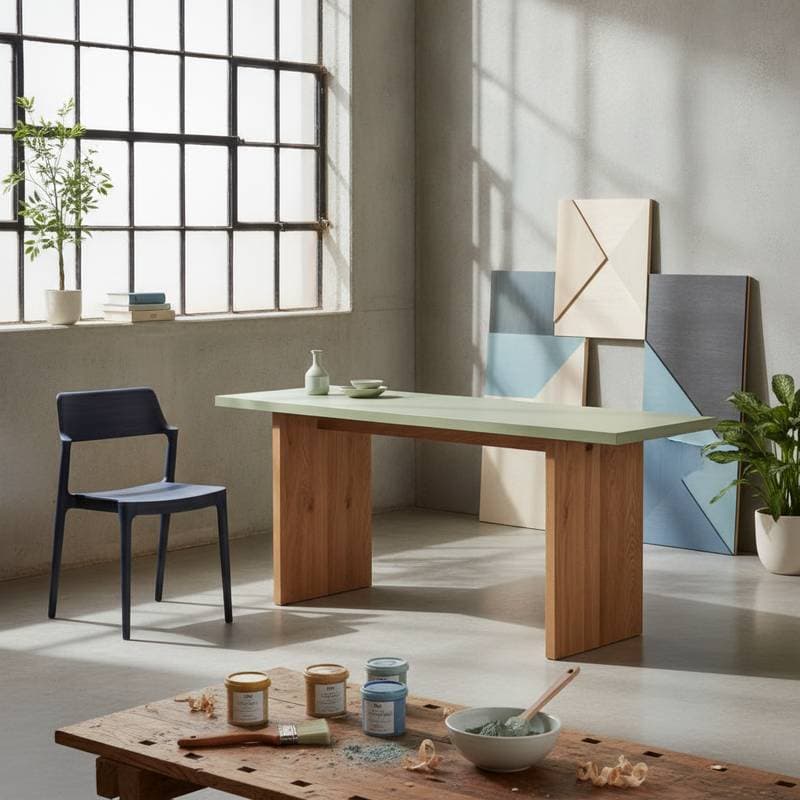
Milk Paint's Matte Finish Revival Taking Over 2026
Milk paint once served as the standard for traditional cabinetry and Shaker furniture. Its chalky surface and natural ingredients now attract woodworkers who seek warmth without gloss. The revival meets current demand for low-VOC finishes that reveal wood character rather than conceal it.
At a Glance
- Who: Homeowners, custom cabinetmakers, and small furniture studios
- Where: Across North America and Europe
- Size: Projects range from compact 300 square foot workshops to large-scale production studios
- Design Teams: Independent makers, finish specialists, and eco-minded designers
- Photographers: Various contributors documenting the matte revival trend
Before
For years woodworkers chose polyurethane or high-gloss lacquer for protection. Those finishes sealed wood completely and often disguised the grain. Many shops relied on solvent-heavy formulas that demanded strong ventilation and long cure times. The surfaces proved durable yet frequently sterile.
Clients wanted surfaces that looked new forever, said furniture restorer Celia Hart of Vermont Wood Studio. That kind of perfection felt disconnected from the natural texture of the material. Sustainability concerns grew at the same time. Artisans looked for alternatives that offered protection with fewer environmental compromises.
After
Milk paint returned first in small studios that mixed pigments by hand. Its soft matte sheen now comes in pre-mixed and powdered forms. The finish creates furniture that feels aged without appearing antique. Applied to maple, oak, or birch it produces a velvety surface that absorbs light and invites touch.
Designers apply it to modern cabinetry, wall panels, and retail fixtures. The finish can be layered, distressed, or sealed with oil or wax for added protection. This flexibility has restored its popularity in studios.
Milk paint lets the wood breathe, said finish specialist Daniel Ruiz of Atelier North. It accentuates grain pattern instead of hiding it. The honesty appeals to people who want natural materials in their homes.
Photos show airy kitchens where pale sage or bone-colored milk paint softens inset cabinets. Tables finished in deep indigo wash reveal pine knots beneath. The matte surface diffuses sunlight and reduces glare.
Design Details
- Composition: Non-toxic blend of milk protein (casein), lime, and natural earth pigments
- Finish Type: Powder mixed with water that dries to a flat matte surface
- Protection Options: Sealed with hemp oil, linseed oil, or beeswax for higher durability
- Application: Brush, sponge, or spray, typically two to three coats
- Coverage: About 100 square feet per quart of mixed paint
- Repair: Easily sanded and touched up without visible patch marks
- Color Range: Expanding palette from neutral limestone tones to deep mineral blues and greens
Milk paint penetrates wood fibers instead of forming a plastic layer. It therefore resists peeling or cracking. The finish develops a subtle patina over time that many homeowners prefer to uniform modern coatings.
Key Projects
Urban Studio Kitchen, Toronto
Maple & Grain Workshop designed the space and Evan Liu photographed it. The team applied milk paint in soft mineral gray over rift-cut oak cabinetry. The matte surface absorbs light from clerestory windows and creates a tranquil workspace. Drawer interiors received clear-sealed birch while oil-rubbed bronze pulls provide contrast.
The matte finish gave us the depth we wanted without reflection, said lead designer Fiona Marks. In a small kitchen glare can make surfaces feel busy. This finish keeps everything calm.
Farmhouse Table Series, Portland
Red Cedar Design Co. built the tables and Olivia Kent photographed them. Each table uses reclaimed fir boards brushed with milk paint in a custom ochre tone. Light sanding reveals wood beneath for a sun-worn effect. Hemp oil seal provides a low-luster glow that resists water rings.
The finish uses biodegradable ingredients and leftover paint can be composted once dried. Small studios therefore produce less waste and lower disposal costs.
Gallery Bench Collection, Copenhagen
Studio Norr created the benches and Lea Rasmussen photographed them. Layered milk paint tones of charcoal under bone white produce subtle color variation along edges and joints. The visual softness balances the angular geometry of the pieces.
People respond to how the benches feel, said founder Henrik Olsen. They look like they belong to the space already. The matte texture avoids the coldness of lacquer.
Why It Matters
Interest in milk paint reflects a shift toward finishes that express material honesty. Matte surfaces keep wood grain, joinery, and craftsmanship visible. In an era of synthetic coatings milk paint supplies a tactile connection between maker, material, and user.
The finish also meets tighter environmental standards. Milk paint contains no formaldehyde or petrochemical binders. Shops pursuing eco-certifications gain a clear advantage when marketing to health-conscious clients.
How to Try It at Home
You can use milk paint on new builds or refinishing projects. Begin with small pieces such as a stool or cabinet door before moving to larger surfaces.
- Sand the wood lightly to open pores and remove any wax or oil residue.
- Mix powder and water in a 1:1 ratio. Stir until smooth and let the mixture rest for ten minutes.
- Apply with a natural bristle brush moving with the grain. Allow each coat to dry before the next.
- Seal tabletops or kitchen surfaces with a thin coat of hemp oil or wax buffed to a soft luster.
A quart of mixed paint covers a small dresser or four cabinet doors. The paint dries quickly and can be recoated within an hour. It bonds chemically with the wood so no thick film forms between coats.
Practical Benefits
Matte finishes soften light and reveal texture. Scuffs blend in rather than stand out and therefore reduce upkeep. The product is fully biodegradable and free from synthetic binders. It works on furniture, cabinetry, and wall paneling. Damaged areas can be sanded and repainted seamlessly.
Professional shops can include milk paint in a tiered finishing strategy. Use it where tactile depth matters most. Pair it with clear oil for protection. Market the eco-friendly story as part of the product identity.
Living with Your Finish
Homeowners who switch to milk paint often notice that rooms feel quieter. Light diffuses evenly without reflective surfaces. Colors appear richer and wood details stand out. Small scratches or variations add depth rather than detract from the finish.
This approach centers on connection to materials, process, and the slower rhythm of hand finishing.