
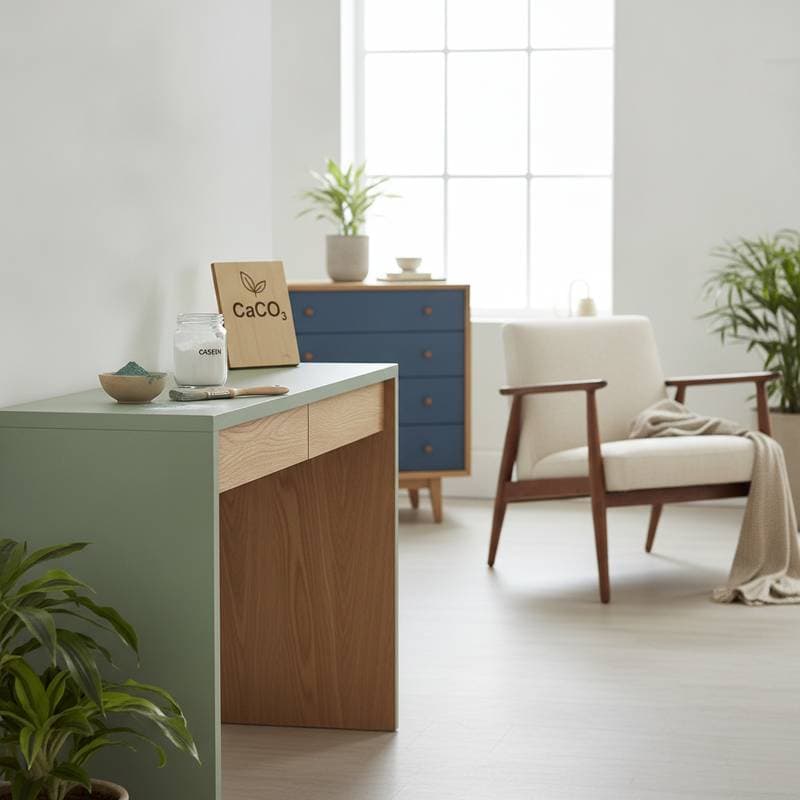
Milk Paint Returns as a Zero-VOC Finish for Modern Wood
A growing number of furniture makers are turning back to a finish your great-grandparents probably used. Milk paint, once considered a relic of farmhouse restoration, is now the leading eco-friendly alternative for modern wood finishes. You can buy it as a simple powder, mix it with water, and brush it on furniture with almost no odor or volatile chemicals. That simplicity is driving a quiet revolution in workshops and studios.
The Eco Credentials That Matter
Many finish options claim to be green, yet few match the life-cycle performance of milk paint. It contains no petrochemical binders, solvents, or synthetic pigments. The leftover rinse water is biodegradable, and the dry powder can be composted. Compared with oil-based stains that emit volatile organic compounds, milk paint produces nearly zero VOCs.
A materials testing lab found that milk paint releases less than 0.1 grams of VOCs per liter, compared to 250 to 450 grams for conventional alkyd paints. For small studios or home shops without elaborate ventilation, that difference means safer air and easier cleanup.
Key eco advantages include low emissions with no synthetic resins or solvents, water-based cleanup where brushes rinse clean with warm water, long shelf life where the powder stores indefinitely if kept dry, and minimal waste where users mix only what they need.
Keep your milk paint powder sealed in an airtight jar. Label each color and note your preferred mix ratio. This small habit prevents waste and keeps pigments consistent from project to project.
Costs and Budget Planning
While milk paint costs more per quart than basic latex, it often covers more area and requires fewer coats. Expect to spend 20 to 40 dollars per quart, depending on brand and pigment. Powdered pigments are usually sold in one-pint bags that make two quarts when mixed.
Typical project costs include 15 to 25 dollars in materials for a small side table, 60 to 100 dollars total for a dining chair set, and 40 to 80 dollars for a full dresser depending on color depth. Price factors involve pigment intensity, whether a bonding agent is used for slick surfaces, and an optional topcoat such as wax or oil.
Money-saving tips include mixing only as much as can be applied in one day, using leftover pigment water for touch-ups, skipping commercial bonding agents on raw or sanded wood, and buying neutral base colors to tint with artist pigments. Surface prep should not be cut. Smooth, clean wood ensures the paint bonds evenly.
Calculate square footage before buying. Multiply height by width for each surface, add 10 percent for waste, and divide by 75 to estimate quarts. This quick math keeps the budget tight and prevents leftover paint from spoiling.
Common Mistakes and How to Avoid Them
Even experienced woodworkers can stumble on their first milk paint project. The formula behaves differently from latex or oil finishes, and small errors can affect the final look.
Frequent problems include uneven color caused by poor mixing or inconsistent water ratios, flaking on sealed wood when applied over varnish, chalky residue from heavy lime content or over-sanding, a too shiny or blotchy topcoat from uneven oil application, and short working time where mixed paint thickens fast. Fixes involve weighing powder and water for repeatable results, sanding to bare wood or using a bonding agent, wiping with a damp cloth before sealing, applying oil with a lint-free cloth then waiting 30 minutes before buffing gently, and keeping a misting bottle of water nearby to thin as needed.
Keep a notebook for each project. Record mix ratios, sanding grits, and topcoat combinations. The next time a similar piece is tackled, the same tone can be reproduced without guesswork.
Integrating Milk Paint Into Daily Practice
Milk paint connects craft with conscience. Users receive a finish that celebrates the natural texture of wood while keeping indoor air cleaner. Each piece develops patina as it is used, revealing layers of color and subtle wear that synthetic coatings cannot replicate.