
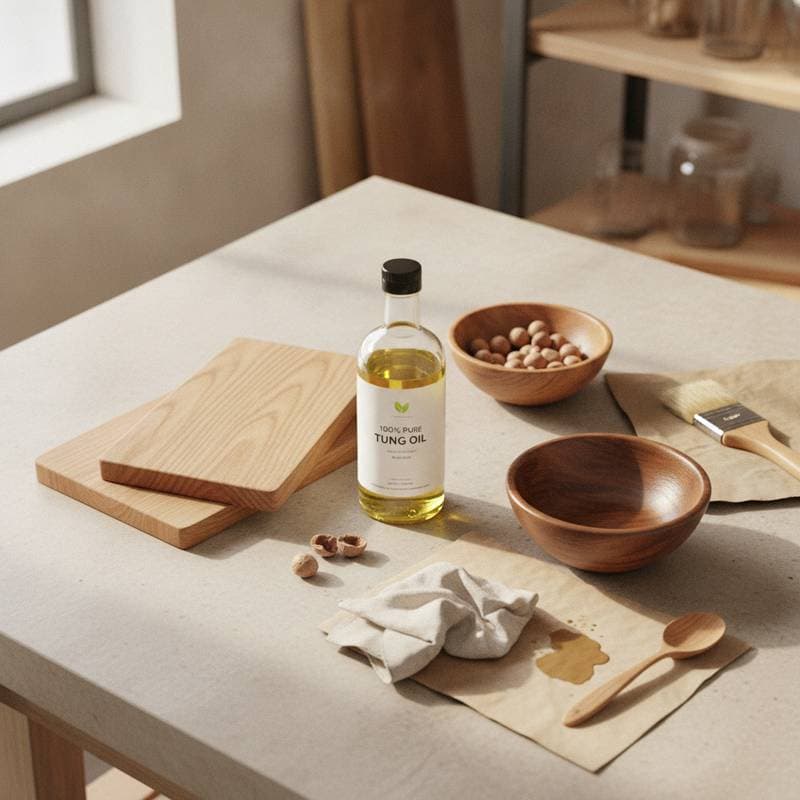
Why Tung Oil Protects Wood Without the Plastic Shell
Natural wood finishes attract renewed interest as woodworkers and homeowners seek low-toxin options that preserve wood character. Tung oil stands out because it protects, deepens tone, and enhances grain without plastics or strong chemical odors. Its balance of durability and natural composition makes it a practical choice for safer, more tactile results.
Understanding Tung Oil
Tung oil comes from pressed seeds of the tung tree. It forms a pure drying oil that polymerizes upon exposure to oxygen. Once cured, the oil creates a flexible, water-resistant layer that bonds directly with wood fibers instead of forming a surface coating. The finished surface feels warm, accentuates grain depth, and accommodates seasonal wood movement.
This integration produces an organic appearance unlike the rigid film . Craftspeople often select tung oil to retain the wood original tone while introducing subtle amber warmth.
Furniture maker Dana Lewis noted, "Tung oil lets the wood speak. You see depth, not just gloss. It protects without covering up what you built."
Performance Advantages
Polyurethane offers high resilience yet can trap moisture beneath its film and release strong vapors during application. Tung oil provides a breathable alternative that cures through oxidation and forms a natural polymer inside the wood pores. This process repels water while permitting air exchange, which lowers the chance of peeling or cracking.
Small shops and home projects benefit from reduced requirements for protective equipment and ventilation. After curing, pure tung oil meets food-safe standards and suits cutting boards, countertops, and children furniture.
Plant-derived and biodegradable, tung oil aligns with interest in renewable materials and supports sustainable craftsmanship.
Application Steps
Successful application demands patience yet yields clarity and depth rarely matched by pre-mixed coatings. Begin with a sanded surface free of dust. Apply the first coat using a lint-free cloth or natural-bristle brush, allow the oil to soak for roughly twenty minutes, then wipe away excess. Apply subsequent coats after one day of curing and build three to five thin layers.
Each coat penetrates further and produces resistance to water rings and minor scratches. The final surface feels dry rather than glossy. Buffing with a soft cloth produces a gentle luster that resembles hand-rubbed wax more than high-gloss varnish.
Woodworker James Tran observed, "It is slower to build, but every coat adds richness. You control the sheen with your hands, not with a spray gun."
Tung Oil Versus Polyurethane
Both finishes protect wood, yet their chemistry and performance differ in several respects.
- Tung oil penetrates wood and polymerizes internally, remains low in odor when pure, stays flexible and breathable, resists water naturally, and requires multiple coats with longer cure times.
- Polyurethane forms a hard synthetic film, delivers high gloss with strong odor during application, resists abrasion well yet may crack when wood shifts, and demands complete sanding for repairs.
Tung oil fits heirloom furniture, butcher blocks, and interior woodwork where touch and tone receive priority. Polyurethane suits floors and high-traffic areas that require heavy impact protection.
Maintenance Practices
Tung oil offers straightforward renewal. When the surface appears dry, apply a light coat and buff quickly without sanding or stripping. This approach extends finish life and reduces material waste.
For best results, dust and wipe surfaces with a damp cloth as needed, apply a thin coat to high-use areas every few months, and avoid silicone-based cleaners that hinder absorption. The oil continues to harden over time, so each renewal strengthens the existing layer and maintains a natural matte appearance that improves with age.
Selecting the Right Approach for Your Project
Apply tung oil to hardwood floors, tables, trim, and cabinetry. Thin the first coat with citrus solvent or mineral spirits on dense species such as maple or oak to improve penetration. Use thinner coats and longer drying intervals on softwoods such as pine to avoid tackiness.
Test tone on scrap wood first. Tung oil darkens the surface slightly and highlights figure and grain contrast. Layering produces soft depth that synthetic finishes often mute. Small shops sometimes blend tung oil with beeswax or resin to adjust sheen and cure speed while preserving the natural profile.