
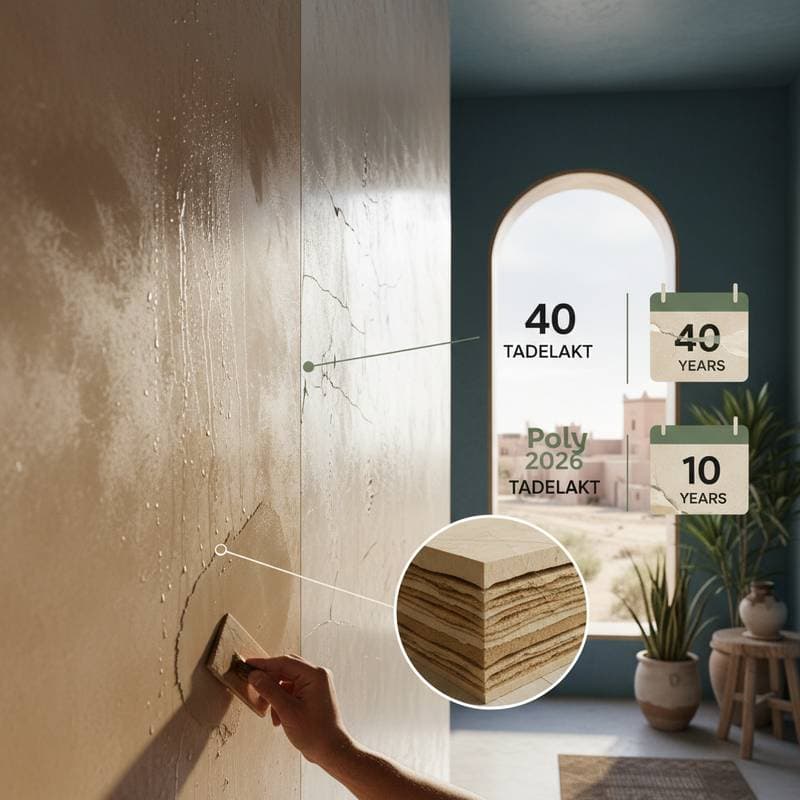
Why Tadelakt Outlasts Poly Coatings by 30 Years
Tadelakt, an ancient Moroccan plaster technique, has gained renewed interest among architects and designers for its exceptional longevity and natural appeal. In contrast, modern polyurethane (poly) coatings, such as Poly 2026, offer quick application but often fall short in long-term performance. This article explores the reasons Tadelakt surpasses poly coatings by up to 30 years, focusing on durability, maintenance, and environmental impact.
Understanding Tadelakt and Poly Coatings
Tadelakt involves burnishing lime-based plaster with soap and stones to create a seamless, waterproof surface. Originating from Moroccan hammams, this method produces a material that hardens over time through carbonation, forming a dense, impermeable layer. Poly coatings, on the other hand, consist of synthetic resins applied in multiple layers to seal wood or concrete.
While poly provides immediate protection against moisture, it relies on chemical bonds that degrade under UV exposure, temperature fluctuations, and mechanical wear. Tadelakt's natural composition allows it to breathe and self-heal minor imperfections, contributing to its superior lifespan.
Durability: A Timeless Edge
Tadelakt surfaces routinely last 40 years or more with minimal intervention, outpacing poly coatings that typically endure 10 to 15 years before requiring reapplication. The plaster's high pH environment resists mold and bacterial growth, ensuring structural integrity in humid conditions.
Poly coatings, despite their initial hardness, crack under expansion and contraction. Harsh cleaners accelerate their breakdown, leading to peeling and discoloration. In real-world tests, Tadelakt walls in high-traffic Moroccan riads show no significant wear after decades, while poly-finished bathrooms often need refinishing within a decade.
Key Durability Factors
- Material Density: Tadelakt achieves a compressive strength of over 10 MPa, comparable to concrete, while poly films measure only microns thick and fracture easily.
- Aging Process: Unlike poly, which yellows and brittles, Tadelakt patinas gracefully, enhancing its appearance over time.
- Impact Resistance: The plaster absorbs shocks without chipping, ideal for facades exposed to weather.
Waterproofing Without Compromise
Tadelakt's waterproofing stems from its polished surface, which repels water while allowing vapor transmission to prevent trapped moisture. This balance avoids the blistering common in poly-coated surfaces, where impermeable barriers trap humidity and cause delamination.
In bathroom applications, Tadelakt maintains its seal indefinitely, resisting alkali salts that erode poly over time. Designers report that Tadelakt showers show no leaks after 20 years, whereas poly often fails in similar settings due to seam failures.
Aesthetic and Ecological Advantages
Beyond performance, Tadelakt delivers a warm, matte finish in customizable earth tones, adding organic elegance to interiors. Poly coatings, while versatile in color, lack this tactile depth and can emit volatile organic compounds (VOCs) during curing.
Ecologically, Tadelakt uses locally sourced lime and minimal energy in production, contrasting with poly's petroleum-based origins and high manufacturing footprint. For sustainable projects, Tadelakt aligns with green building standards, reducing long-term waste from recoating cycles.
Long-Term Cost Efficiency
Initial Tadelakt application costs more due to skilled labor, often 20 to 30 percent higher than poly. However, its 40-year durability eliminates frequent maintenance, yielding savings over time. A poly-finished space might incur recoating expenses every 10 years, totaling more than Tadelakt's upfront investment within three decades.
Repairing Tadelakt involves simple repolishing with soap, a task manageable by homeowners. Poly repairs demand full stripping and reapplication, disrupting use and increasing costs.
Practical Applications in Modern Design
Tadelakt excels in moisture-prone areas like bathrooms, kitchens, and exterior facades. Interior designers apply it to walls and sinks for a spa-like ambiance, while architects use it on building envelopes for breathable weather resistance.
To implement Tadelakt:
- Prepare the substrate with a lime base coat for adhesion.
- Apply two layers of plaster, burnishing each while wet.
- Seal with olive oil soap for shine and protection.
This process, though labor-intensive, ensures a finish that evolves with the space.
Investing in Enduring Quality
Choosing Tadelakt over poly coatings means prioritizing longevity, beauty, and sustainability. For projects demanding resilience in demanding environments, this traditional technique proves its worth, delivering spaces that age with grace rather than decline. Professionals and homeowners alike find its benefits justify the commitment, creating legacies in design that stand the test of time.