
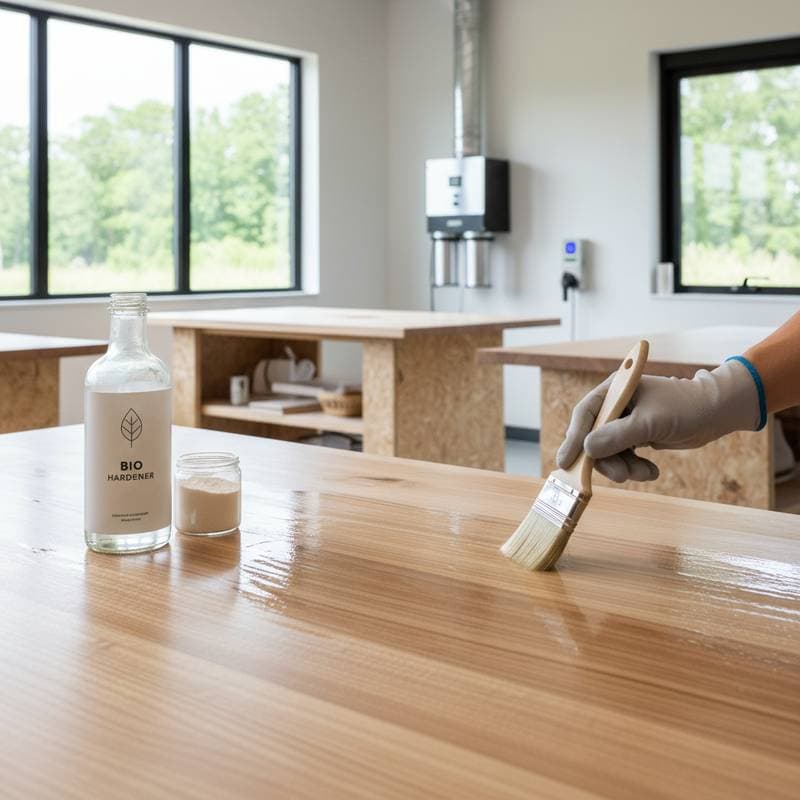
Toxic Finishes Fade: Bio Hardeners Take Over by 2026
Woodworkers have long navigated the tension between showcasing natural grain and managing the health and environmental drawbacks of conventional finishes. A clear transition is occurring. Toxic hardeners and solvent-laden coatings are giving way to bio-based alternatives that deliver comparable durability and sheen without harmful fumes or complex disposal requirements.
What Changed and Why It Matters
The adoption of bio hardeners began in small workshops seeking improved air quality and simpler cleanup processes. Larger manufacturers and suppliers now invest in plant-derived formulations that strengthen wood fibers using natural oils, resins, and mineral binders. Regulations on indoor air quality, combined with a new cohort of builders prioritizing health alongside craftsmanship, drive this evolution.
"Once you spend a day sanding or sealing with zero odor, you never go back," said finish developer Carla Nguyen of GreenBond Coatings. "The surface feels the same, but the air feels right."
These bio hardeners absorb into wood like traditional oil finishes but utilize renewable materials such as linseed, soy, and cashew nut shell resin. Upon curing, they create a thin protective layer resistant to water, ultraviolet light, and wear. Unlike legacy formulas that release volatile organic compounds, these options cure via oxygen crosslinking, resulting in a subtle natural aroma.
The Chemistry Behind the Shift
Conventional polyurethane and epoxy hardeners depend on synthetic isocyanates and solvents, which provide rapid results but pose risks to respiratory and skin health. Bio-based finishes employ reactive plant oils and mineral catalysts to attain equivalent hardness through a controlled, safer polymerization process.
Manufacturers blend natural wax esters, lignin derivatives, and calcium carbonate powders to ensure film stability. This approach yields finishes that satisfy industrial hardness standards while remaining straightforward to repair or renew.
A standard bio hardener incorporates 60 to 90 percent renewable solids, far exceeding the less than 20 percent in traditional solvent systems. Such composition substantially lowers emissions and diminishes the reliance on extensive ventilation in compact workshops.
What the Photos Show
Photographs from recent projects illustrate the transformation. Wide-plank white oak floors exhibit a matte sheen with defined grain patterns. Maple cabinet doors display a gentle honey hue, their edges protected yet allowing breathability. Workshop benches reveal no yellowing or edge degradation after prolonged use.
Close-up images highlight the seamless integration, where the finish merges with the wood substrate. Bio hardeners penetrate fibers rather than forming a surface film, preserving a tactile, warm feel devoid of artificial gloss.
Layout and Workflow Benefits for Shops
Adopting bio hardeners extends beyond chemical composition to reshape workshop configurations. Shops eliminate the necessity for bulky ventilation ducts or isolated finishing areas, freeing up space. Portable filtration units supplant permanent exhaust setups, and cleanup requires only a basic sink and rag station.
This efficiency proves vital for small-scale operations constrained by space. A facility previously allocating 200 square feet for finishing can now function effectively in 100 square feet. The lack of pervasive odors enables concurrent finishing and assembly activities.
Cost and Performance Benchmarks
Pioneering users indicate that bio hardeners achieve cost equivalence with mid-tier polyurethane products. One gallon covers approximately 400 square feet with two applications. The cured finish attains a pencil hardness of 2H to 3H, suitable for furniture, flooring, and cabinetry.
Testing demonstrates resilience against water exposure for 24 hours and superficial scratches that restore easily with a soft cloth. Recoating involves direct application over existing layers without sanding to bare wood, accelerating production cycles and reducing waste.
Practical Bridge: Trying It at Home
Home woodworkers or small studio operators should begin with sample kits to evaluate performance before purchasing larger quantities. Apply the hardener using a lint-free cloth or short-nap roller, allow absorption, and buff gently. Multiple thin coats yield superior outcomes compared to a single heavy application.
For tabletops or floors, employ a soft pad sander to smooth between layers. Ensure twelve hours of ventilation prior to loading the surface. Open-grained species like oak or ash may require additional product for full penetration.
Design Details
- Primary Ingredients: Plant oils, natural resins, mineral hardeners, and non-toxic catalysts
- Application Tools: Cloth, roller, or low-pressure sprayer
- Coverage Rate: 350 to 450 square feet per gallon
- Finish Options: Matte, satin, and low-gloss
- Cure Time: Touch dry in two hours, full cure in twenty-four hours
- Storage Life: Up to one year if sealed and stored in a cool environment
These specifications enable precise planning for inventory and schedules.
Industry Adoption and Case Studies
Commercial flooring providers now offer pre-finished planks using bio hardeners in place of ultraviolet-cured urethanes. In a Midwest showroom, visitors traverse maple floors treated with soy-based compounds that withstand heel impressions and spills. Maintenance involves routine sweeping and damp mopping to sustain appearance.
Furniture producers are adapting similarly. An Oregon cabinetry workshop discarded its lacquer enclosure for a mobile rack system. Owner Miguel Torres noted, "We get the same clarity, but our crew no longer wears respirators all day." The operation eliminated monthly solvent disposal expenses.
Environmental and Health Gains
The ecological impact is significant. Substituting one gallon of solvent finish with a bio hardener prevents the release of about five pounds of volatile organic compounds. In medium-scale production, this avoidance scales to hundreds of pounds annually.
Workers experience prompt advantages, requiring only basic eye protection instead of respirators or chemical gloves. The workspace carries hints of citrus or linseed rather than harsh solvents. Air monitors maintain consistent levels throughout application periods.
Market and Innovation Outlook
Finish manufacturers compete to develop accelerated-curing bio formulations compatible with high-volume production. Hybrid variants merging bio oils with waterborne acrylics promise enhanced resilience. Ongoing research incorporates algae polymers and biomass byproducts as innovative binders.
Retail data reveals a threefold surge in sustainable finish demand over recent quarters. Consumers increasingly specify eco hardeners as the norm rather than an alternative.
Key Takeaways
- Bio hardeners match synthetic options in hardness and visual appeal
- Workshops reduce ventilation expenses and spatial demands
- Health protections enhance without sacrificing functionality
- Renewable components lower emissions and disposal costs
- Natural wood texture persists authentically
These developments reshape professional finishing practices, harmonizing advanced chemistry with respect for artisans and resources.
Extending Finish Longevity
To preserve bio hardener applications, avoid prolonged exposure to direct sunlight or extreme moisture during curing. Refresh surfaces annually with a light reapplied coat for high-traffic areas. Clean routinely with mild soap and water, steering clear of abrasive cleaners that could dull the protective layer.