
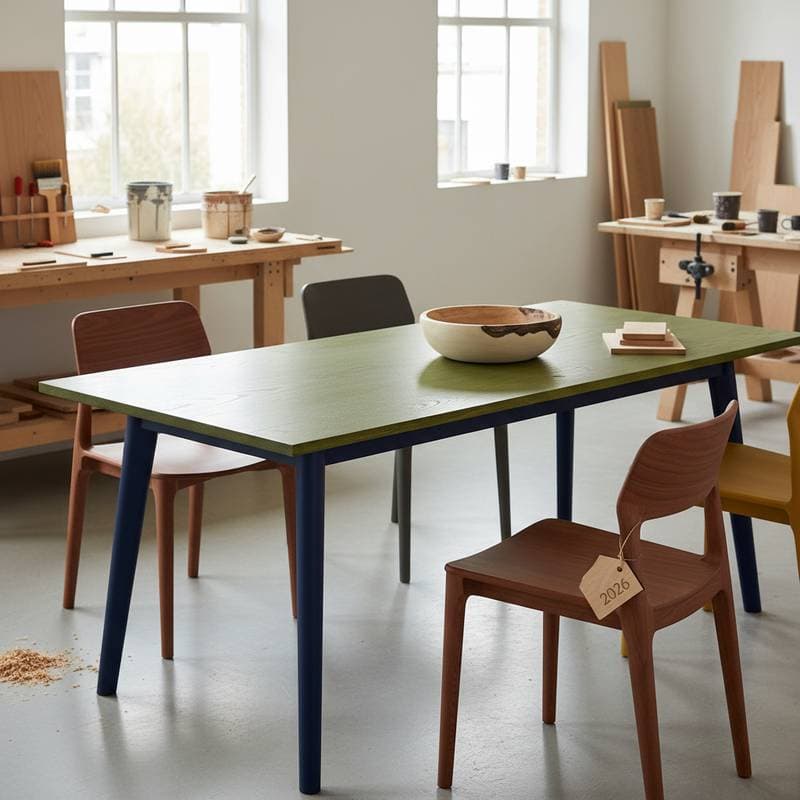
Tung Oil-Milk Paint Hybrid: Revolutionizing Wood Finishes for 2026
A innovative blend of tung oil and milk paint transforms the approach woodworkers take to finishing natural surfaces. This hybrid merges the penetrating clarity and protective qualities of traditional tung oil with the subtle matte tones of milk paint. The outcome provides a breathable barrier that shields wood from moisture while preserving the visibility and tactile appeal of the grain.
At a Glance
Adoption Scope: Nationwide in workshops
Finish Category: Hybrid of tung oil and milk paint
Best Applications: Furniture construction, cabinetry production, and small-scale studio work
Evaluation Sources: Independent wood finishers and specialized product laboratories
Visual Documentation: Studio Woodline photography
Challenges in Traditional Finishes
Woodworkers previously faced difficult choices between depth and coloration. Pure tung oil delivers a warm, penetrating sheen, yet it restricts options for pigmentation. Milk paint imparts attractive tones and textures, but it tends to form a surface layer that conceals the underlying grain. Attempts to combine these materials often resulted in poor adhesion or inconsistent curing.
Finisher Jordan Hale observed, “You could achieve character or coverage, but rarely both. The chemistry simply did not align.”
Advantages of the Hybrid Formula
This new hybrid resolves those longstanding issues. It integrates polymerized tung oil with casein-based milk paint within a stable emulsion. Applied in thin layers, the mixture seeps into wood fibers and deposits a gentle mineral color on the surface. The appearance evokes velvet with low sheen, reminiscent of natural clay or sunlit plaster, combined with the water resistance of a sealed oil finish.
Testing in workshops revealed that the hybrid enhances the depth of walnut, sharpens the clarity of ash, and imparts a serene, aged quality to pine without unwanted yellowing. The surface develops a dry, inviting texture rather than a glossy coat. Light glides along the grain patterns instead of reflecting harshly, a feature that appeals to photographers capturing completed works.
Finisher and designer Emiko Tran noted, “It feels like the wood can breathe once more. You obtain color without the artificial plastic appearance.”
Application and Technical Specifications
- Ingredients: Polymerized tung oil combined with casein and lime binder
- Method: Apply by brushing or wiping in two to three coats, diluted with water or citrus solvent
- Curing Process: Touch-dry within four hours, fully cured over several days
- Sheen Variation: Ranges from matte to satin based on post-application buffing
- Available Colors: Twelve standard shades, with possibilities for custom tints using natural pigments
- Upkeep: Repair spots without sanding by applying a thin renewal coat
Prepare wood by sanding to 220 grit (P800) and removing all dust and residual oils. For open-grained species such as oak, apply an initial coat of pure tung oil to promote uniform absorption prior to the hybrid layers. Use cotton rags or soft brushes for even distribution. After drying, buff with a white pad to reveal a subtle luster.
Essential Benefits
Longevity and Renewal: The hybrid withstands water rings and light scratches, allowing targeted restoration without full removal. Such properties suit tabletops, cabinet doors, and lathe-turned items.
Permeable Defense: The formulation permits vapor transmission, accommodating wood expansion and contraction across seasons without surface disruption.
Precise Coloration: Pigments from milk paint ensure uniform tones across wood pieces, while tung oil maintains the visibility of natural figuring.
Sustainability Features: Absent synthetic resins or potent solvents, the product supports straightforward cleanup and minimal odor during use.
Practical Maintenance and Long-Term Appeal
Maintain the finish by wiping with a damp cloth and steering clear of abrasive cleaners. Renew with a fresh coat every few years after light preparation to revive depth. Over time, the surface develops a gentle patina that reflects the piece's history. In an era dominated by glossy synthetics, this hybrid restores genuine warmth and authenticity to woodworking projects.