
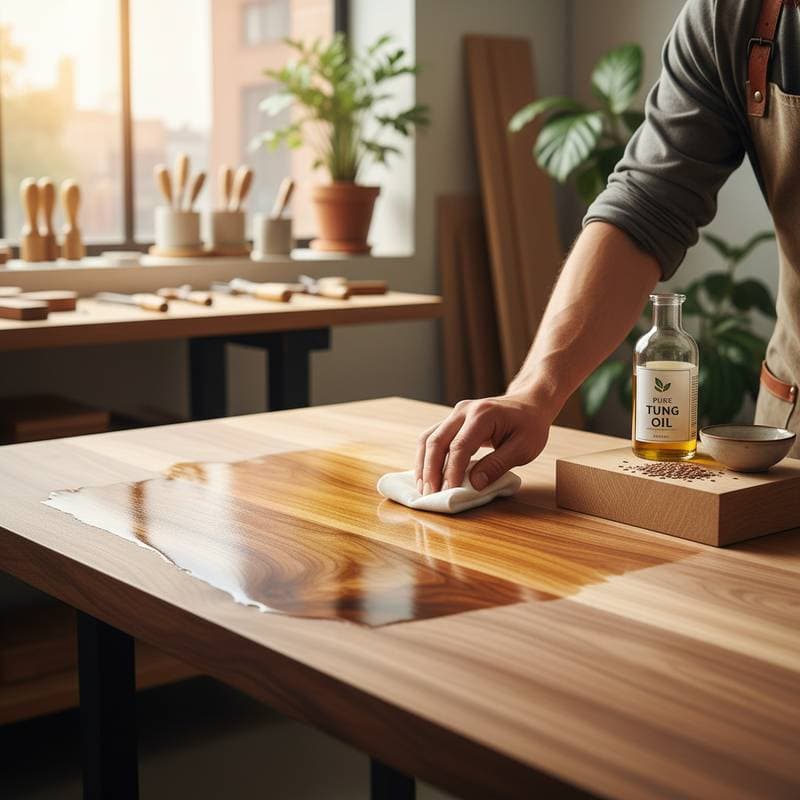
Why Tung Oil Makes a Sustainable Return in Woodworking
Woodworkers increasingly select tung oil, a traditional finish now recognized for its eco-friendly and non-toxic qualities compared to synthetic alternatives. Heightened concern for indoor air quality and chemical exposure positions tung oil, sourced from tree nuts, as a blend of heritage methods and progressive ideals. Many associate tung oil with its inviting, hand-applied luster. Professionals note its alignment with demands for longevity, safety, and minimal environmental footprint.
Reasons Woodworkers Choose Tung Oil
Ten years prior, workshops relied on polyurethane or lacquer for efficiency and rapid completion. These options create a rigid layer yet emit volatile organic compounds, or VOCs, which compromise air quality and pose disposal challenges. Tung oil seeps into wood fibers and hardens through natural processes, avoiding formaldehyde emissions or petroleum-based thinners.
Individuals in compact or communal workspaces report fewer headaches, reduced skin reactions, and minimal persistent scents after adopting tung oil. A quart of pure tung oil includes no heavy metals, synthetic accelerators, or plastic additives. Proper application yields a supple, moisture-repellent barrier that renews without full resurfacing.
Health benefits extend to aesthetic preferences. Tung oil accentuates wood grain with profound clarity that surface coatings often diminish. The outcome presents a vibrant, uncoated appearance.
Action step: For indoor projects or those near vulnerable people, apply tung oil to a test scrap. Observe the rapid fade of its aroma relative to conventional varnishes.
Step-by-Step Tung Oil Application
Tung oil application proves simple yet benefits from deliberate timing. A modest tabletop requires a weekend for basic coats, with complete hardening extending further. Follow this established method suitable for amateurs and experts alike.
- Prepare the surface: Sand to 320 grit or finer, then clear dust using a tack cloth.
- Apply the initial coat: Spread generously with a lint-free rag. Allow absorption for 15 to 20 minutes before removing surplus.
- Add the second coat: Wait 24 hours, then use a lighter application.
- Optional third coat: Proceed for enhanced luster if desired.
- Allow curing: Position in a clean, ventilated space. Refrain from stacking or enclosing for a minimum of seven days.
Successive layers infuse progressively rather than accumulate atop the surface. Polish the last application with fine steel wool or a white abrasive pad to achieve a matte sheen.
Explanation of effectiveness: Inter-coat exposure to air facilitates uniform polymerization. Excessive, enclosed buildup risks uneven texture or prolonged stickiness.
Action step: Store used rags outdoors in a water-filled metal bin. Tung oil produces heat during curing, and discarded fabrics risk spontaneous combustion.
Application for DIY Enthusiasts and Professionals
Tung oil accommodates home projects and expert executions, with variations in approach.
DIY overview:
- Required skill: Entry-level to moderate
- Essential tools: Gentle cloths, fine abrasives, optional foam applicator
- Effort: Two to three hours of hands-on time over multiple days
Professional techniques:
Specialized ateliers dilute tung oil with citrus thinner for accelerated drying and refined application. Artisans formulate a tung oil varnish by combining equal parts tung oil, natural resin, and solvent. This mixture hardens more firmly while preserving the manual polish.
Scenarios for professional services:
- Expansive flooring or stair systems demanding uniform penetration
- Preservation of antique pieces featuring premium timbers
- Business environments requiring uniform gloss on assemblies
Verify the professional employs genuine tung oil, avoiding disguised mixtures. Products marketed as tung oil finish may contain negligible amounts of the pure substance. Review the material safety data sheet for composition. Authentic tung oil specifies 100 percent pure tung oil as its sole ingredient.
Action step: For expedited processes, select pre-polymerized tung oil. This variant increases cost by approximately 20 percent but halves drying duration.
Maintaining a Tung Oil Finish
After full curing, tung oil develops patina elegantly. Unlike brittle coatings, it adapts to wear, revealing patterns of interaction. Minor abrasions restore with minimal oil and gentle rubbing.
High-traffic areas receive a fresh layer every two to three years. Exterior applications demand annual renewal, particularly in moist regions. Over time, the finish acquires a subtle golden hue, enhancing the allure of quality furnishings.
Essential insight: Tung oil fosters an ongoing bond with the wood. The surface matures through contact, accumulating distinctive marks.
Enhancing Wood Projects with Tung Oil
Tung oil elevates woodworking by merging safety, aesthetics, and practicality. Its non-toxic nature safeguards indoor environments, while the penetrating formula ensures enduring protection without compromising wood's inherent charm. Woodworkers gain confidence in finishes that support both personal health and planetary well-being, making every project a step toward responsible craftsmanship.
Supporting Materials
Recommended visuals:
- Chart comparing oil-based finishes, emphasizing VOC emissions and hardening periods.
- Infographic detailing tung oil application sequence with precise timelines.
Alt text purpose: Illustrate procedural stages and comparative advantages for those pursuing environmentally sound finishing solutions.