
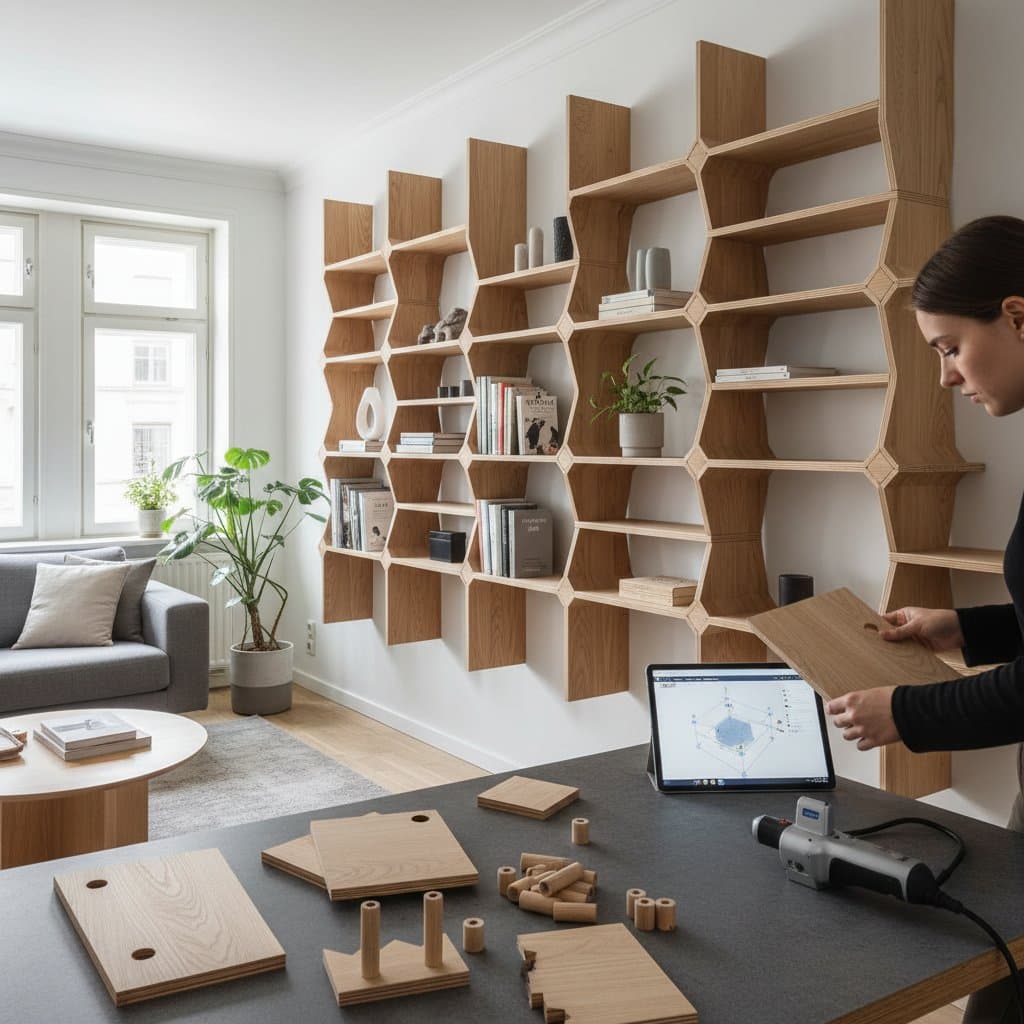
Parametric Shelf Systems Revolutionizing DIY in 2026
A single weekend and one sheet of plywood suffice to create storage solutions that adapt to changing needs. Parametric shelf systems transform the approach home woodworkers take to building, modifying, and integrating furniture. Builders no longer require rigid plans or costly equipment to achieve professional results. Digital templates and basic materials allow the creation of shelving that expands, reconfigures, and evolves alongside living spaces.
The term parametric design might initially seem suited to architects or engineers. In reality, it integrates seamlessly into home workshops. These systems employ editable digital models where users define parameters like height, width, and spacing. Software then automatically generates each component. The outcome includes furniture that aligns precisely, minimizes material waste, and supports reconstruction or replication at any point.
Why Parametric Shelving Matters
Conventional furniture commits users to a single dimension and configuration. Residents of apartments or compact homes frequently discover that a shelf suits one wall yet fails in another. Parametric systems address this issue by enabling instant regeneration of components. A single file yields a low-profile media console or a towering bookcase through simple numerical adjustments.
Flexibility emerges without compromising precision. Components interlock based on established rules, eliminating concealed gaps or irregular intervals. The digital modeling process also curtails waste, as it optimizes cuts to match the material sheet. Builders note reductions in plywood usage by as much as 15 percent through efficient nesting of parts.
Both professionals and enthusiasts value the repeatability of these designs. After finalizing a model, users share or commercialize the file. Others adapt it to their environments without starting from scratch. Woodworking evolves from isolated endeavors into scalable practices.
Action step: Select a modest project, like a record shelf or shoe organizer, and obtain a free parametric template. Modify dimensions experimentally prior to any cutting. This approach reveals system responses and tool tolerances.
Materials and Joinery Options
Parametric designs pair effectively with sheet materials that yield clean cuts and maintain form. Baltic birch plywood stands out for its uniform density and superior edge finish. MDF offers economy and suits painted surfaces, whereas bamboo panels attract environmentally aware creators. Composite panels from recycled fibers carry a higher price but provide enhanced moisture resistance for kitchen or bathroom applications.
Joinery typically involves slot and tab connections. These prove straightforward for CNC or laser cutting and ensure flawless alignment in assembly. Friction-fit arrangements demand tight tolerances, generally 0.1 to 0.2 millimeters of clearance. Hand-cutting requires expansion to 0.5 millimeters to accommodate blade variance.
Alternative methods encompass:
- Knock-down fittings with cam locks or barrel nuts
- Hidden dowels for refined aesthetics
- Screw-free wedges that secure via gravity and tension
Each option balances strength, visual appeal, and disassembly potential. Tab-and-slot joints permit tool-free reconfiguration, whereas dowel setups offer more permanence.
Action step: Evaluate joinery on scrap pieces before processing a full sheet. Assess fit post-sanding and finishing, as applications may alter clearances.
DIY or Professional Fabrication
Parametric shelf systems support full home construction, though certain elements might necessitate advanced tools or skills.
When DIY Works Best
- Access to CNC or laser cutters exists via community facilities.
- Designs incorporate friction-fit joints with limited hardware.
- Builders favor sanding, finishing, and fine-tuning.
When to Hire a Pro
- Projects demand industrial strength or units exceeding 8 feet in height.
- Incorporations include metal supports or embedded lighting.
- Immaculate sprayed finishes require controlled settings.
Professional services range from $400 to $700 for cutting and edging. Benefits include exactitude and efficiency. Submit the digital file to receive labeled, assembly-ready components. Confirm shop compatibility with file types and tolerances under 0.1 millimeter for snug fits.
Action step: For outsourced work, order a preliminary sample cut. Verify kerf and alignment against expectations before proceeding to production.
Living with Parametric Furniture
Assembled parametric shelves differ markedly from mass-produced alternatives. Modules interconnect like puzzle elements while supporting substantial loads. Open frameworks promote ventilation, and the lack of exposed fasteners yields a sleek, contemporary appearance. Digital specifications facilitate exact replacement of worn parts years after initial construction.
Users frequently innovate expansions. Introduce additional shelf tiers, repurpose side panels as desks, or fabricate add-ons like hooks or cable organizers. Consistent design parameters ensure harmonious integrations.
Maintenance tip: Organize digital files with version identifiers and material specifications. Such practices simplify future repairs or enhancements amid tool or software shifts.
Next Steps for Your Project
Parametric shelf systems democratize manufacturing-level control. A single digital model supports scaling, reshaping, and reconstruction to suit diverse environments. Essential figures include $150 to $300 in materials, 6 to 10 hours of effort, and tolerances below 0.2 millimeters for secure joints.
Commence with a basic module. Examine slot alignments and surface textures. With familiarity, develop comprehensive wall installations. Parametric methodology ensures no design labor proves futile; each iteration builds toward expansive applications.
Mastery transcends shelf construction. It equips builders with a framework linking computational modeling to physical creation. This framework fosters assured adaptation of surroundings through ingenuity. From garage benches to communal workshops or urban dwellings, resources await. The subsequent project hinges on parameter adjustments alone.
Resources and Visual Aids
Suggested visuals:
- Diagram showing parameter relationships for shelf height and spacing (alt text: diagram illustrating variable-based shelf layout).
- Example nesting layout on a 4 by 8 plywood sheet (alt text: plywood sheet plan with efficiently nested parts).
- Photo of assembled modular system in a living room (alt text: finished parametric shelf system with adjustable panels).
These visuals help readers understand the logic behind digital customization and efficient cutting.