
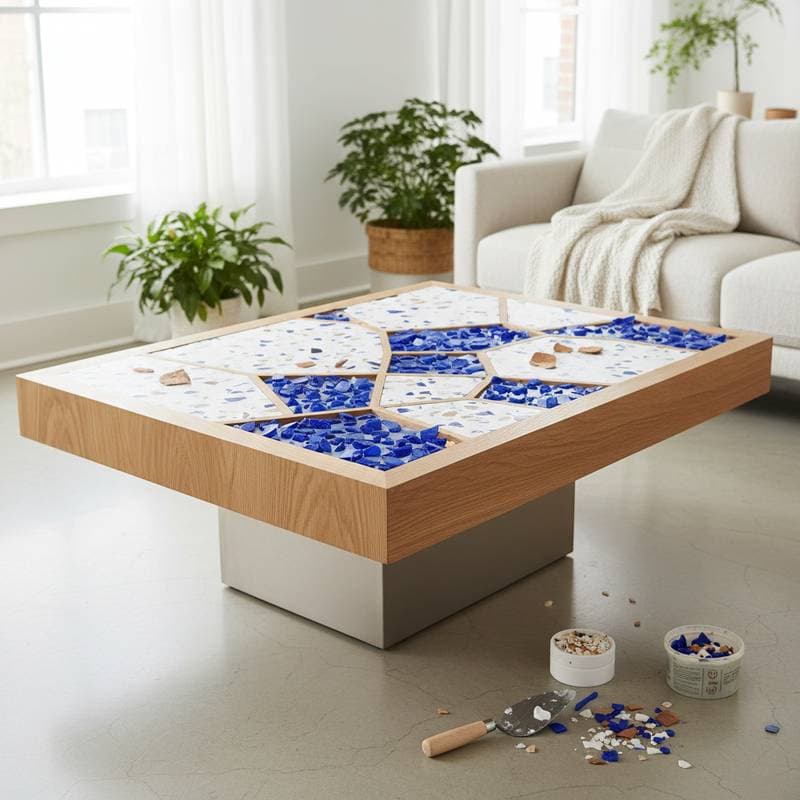
2026's Terrazzo Inlays: Bold DIY Furniture Revolution
Terrazzo furniture experiences a confident resurgence. Previously prominent in flooring applications, terrazzo now infuses color and texture into tables, cabinets, and shelving units. DIY woodworkers spearhead this movement by integrating recycled chips of marble, quartz, and glass with warm hardwoods. The outcome yields furniture that appears modern, personal, and remarkably affordable. Individuals can produce terrazzo inlays comparable to high-end studio creations through patience, meticulous planning, and appropriate materials.
Why Terrazzo Inlays Capture DIY Furniture Enthusiasts
Terrazzo inlays impart a sculptural aesthetic to furniture pieces. Pour the terrazzo mixture directly into recesses routed within wood, then polish the surface level for a seamless integration. The material's versatility suits customization of accent items, tabletops, and drawer fronts. Its composition from recycled elements aligns with the rising emphasis on sustainable craftsmanship.
Most DIY practitioners employ epoxy-based terrazzo formulations that harden within one day. These mixtures incorporate chips of marble, recycled glass, or stone aggregates. Upon polishing, the surface captures light and accentuates the inherent grain of adjacent wood. The interplay between terrazzo's mottled pattern and wood's organic warmth generates a harmonious visual depth.
The appeal of terrazzo lies in the degree of customization available. Select chip sizes, color schemes, and arrangements to suit preferences. Match the inlay to cabinet hardware or employ it to enliven a subdued walnut tabletop. Every creation emerges as one-of-a-kind, rendering the process profoundly rewarding.
Action step: Initiate with modest projects. Fabricate a terrazzo coaster or tray prior to addressing expansive furniture panels. This approach familiarizes one with the curing process, even sanding techniques, and compatibility with specific wood varieties.
Materials and Sourcing Strategies
Assemble essential components for terrazzo inlays: epoxy resin as the binder, aggregates such as marble or glass chips for texture, and a wood substrate for the base. Source epoxy from suppliers offering UV-resistant formulas to prevent discoloration over time. Aggregates prove accessible through demolition yards, tile remnants, or online craft outlets, often at reduced rates for recycled options.
Prepare the wood base by routing precise cavities with a router bit matched to the desired inlay depth, typically one-eighth to one-quarter inch. Seal the cavity edges with shellac to inhibit resin absorption and ensure uniform curing. Select hardwoods like maple or oak for their stability and ability to contrast effectively with colorful aggregates.
For enhanced sustainability, incorporate bio-based epoxies derived from plant sources. These options maintain durability while minimizing environmental impact. Experiment with aggregate blends, such as mixing earth-toned stone with vibrant glass for dynamic patterns.
Action step: Test aggregate adhesion by creating a sample pour on scrap wood. Observe how chips settle and bond during curing to refine ratios for future projects.
Costs and Budget Management
Expenses fluctuate based on project dimensions and aggregate selections. A compact inlay endeavor might total less than $150, whereas a full dining tabletop could surpass $600. Consider the following typical allocations:
- Epoxy resin: $40 to $80 per gallon, influenced by clarity and UV protection qualities
- Aggregate chips: $20 to $50 for ten pounds of marble or glass varieties
- Wood base: $60 to $300, contingent on wood type and dimensions
- Finishing supplies: $25 to $60, encompassing sealers, abrasives, and polishing compounds
Reduce expenditures by utilizing scrap hardwood segments and procuring aggregates from neighborhood stone fabricators. These establishments frequently offer remnants at discounted prices. Repurpose chips from discarded tiles or countertop offcuts to curtail waste further.
Prioritize resin quality to avert long-term issues. Inferior resins prone to yellowing or bubble entrapment compromise appearance. Opt for transparent, UV-stabilized epoxy to preserve vibrancy across years of use.
Action step: Calculate pour volume with precision. Determine the cavity's cubic inches, then multiply by 0.0043 to ascertain gallons required. Prepare a marginal excess to accommodate minor discrepancies without excess material.
Techniques for Successful Terrazzo Inlays
Rout the wood cavity cleanly, ensuring straight edges and a level base to promote even filling. Mix epoxy according to manufacturer guidelines, incorporating aggregates gradually to avoid air pockets. Pour in thin layers if depth exceeds one-quarter inch, allowing partial curing between applications for bubble release.
After initial setting, sand progressively from coarse 80-grit to fine 400-grit abrasives, working wet to minimize dust. Buff the surface with a polishing compound on a soft wheel for a glossy finish. Apply a clear topcoat sealant to protect against moisture and enhance longevity.
Incorporate design elements like embedding metallic flecks or coordinating colors with room decor. For tabletops, reinforce the wood underside with braces to support the added weight of the inlay. Practice on prototypes to master timing and achieve professional results.
Action step: Employ a vacuum chamber during mixing to extract bubbles, ensuring a flawless, streak-free surface.
Common Mistakes and Prevention Strategies
Experienced woodworkers encounter pitfalls in terrazzo inlay work. Address these prevalent challenges proactively.
- Excessive pour thickness: Thick layers capture air bubbles, manifesting as white streaks post-polish. Restrict depth to one-quarter inch maximum or apply in successive thin layers.
- Neglecting wood edge sealant: Unprotected wood soaks resin inconsistently, leading to uneven coloration. Coat edges thinly with shellac beforehand.
- Premature aggressive sanding: Sanding prior to complete curing creates vulnerable areas. Allow a minimum of 24 hours following the last pour.
- Imbalanced chip proportion: Insufficient chips yield a monotonous, resin-dominant appearance. Target 70 percent chip volume for optimal speckled effect.
- Inadequate temperature management: Resin sets irregularly outside 65 to 80 degrees Fahrenheit. Maintain a controlled workshop environment for reliable outcomes.
Action step: Maintain a detailed project journal noting mix proportions, chip dimensions, and environmental conditions. This record facilitates replication of triumphs and diagnosis of anomalies in subsequent efforts.
Maintenance and Long-Term Care
Sealed terrazzo inlay furniture demands minimal upkeep. Wipe surfaces with a soft cloth dampened in mild soap solution. Steer clear of abrasive cleaners that diminish sheen. Address minor scratches by lightly buffing with 600-grit sandpaper followed by resealing.
Account for differential expansion between wood and terrazzo due to humidity fluctuations. Position pieces distant from heat sources and direct sunlight to mitigate cracking risks. Should minor gaps emerge, inject clear resin, sand flush, and polish anew.
For eco-conscious creators, terrazzo inlays provide enduring, waste-minimizing solutions. Select epoxies with bio-derived hardeners from renewable oils. Prioritize recycled aggregates to sustain material cycles and divert waste from disposal sites.
Action step: Schedule annual inspections to reseal surfaces, preserving both aesthetic appeal and structural integrity over time.