
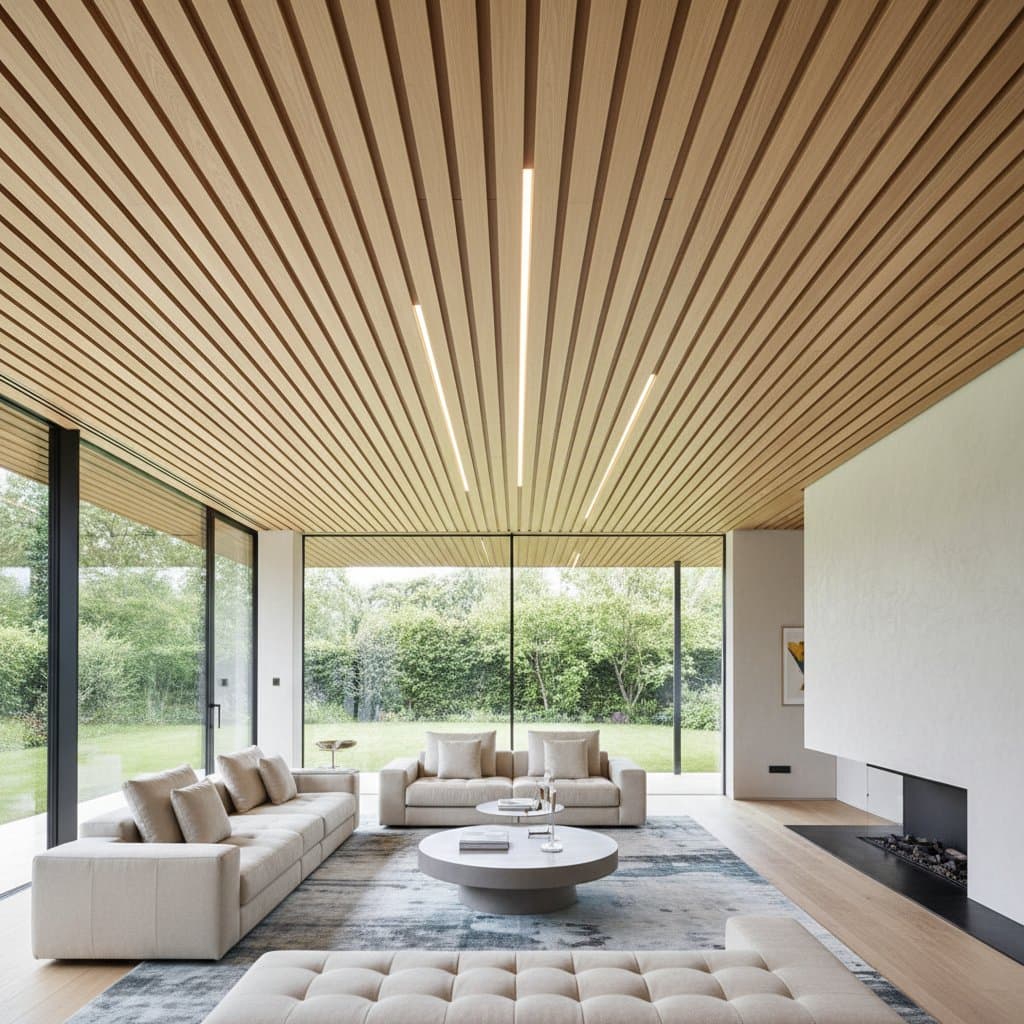
Introduction to Ribbed Wood Ceilings
Ribbed wood ceilings represent a sophisticated evolution in interior design, particularly for 2025 homes where acoustic performance meets visual elegance. These slatted panels, often crafted from sustainable hardwoods, introduce linear patterns that soften harsh light and absorb sound waves effectively. Designers praise their ability to transform ordinary spaces into serene environments, making them ideal for living rooms, bedrooms, and open-plan areas.
The appeal lies in their dual functionality: they serve as decorative elements while addressing common issues like echo in high-ceilinged rooms. With advancements in prefabricated systems, installation has become more accessible, yet the craftsmanship required ensures a premium finish. Homeowners appreciate how these ceilings add perceived height and depth without overwhelming the room's palette.
Key Benefits and Why They Matter in 2025
In an era of hybrid living, ribbed wood ceilings offer practical advantages beyond aesthetics. They reduce reverberation by up to 50 percent in standard installations, creating quieter spaces for work or relaxation. The natural wood grains provide a tactile warmth that contrasts with cold, modern materials like concrete or metal.
Light plays through the slats, diffusing glare and highlighting architectural details. This trend aligns with sustainability goals, as many panels utilize FSC-certified woods that minimize environmental impact. For 2025, experts predict widespread adoption in urban renovations, where noise control proves essential.
Materials and Cost Considerations
Selecting the right material influences both durability and style. Oak delivers a classic, durable option with pronounced grain patterns, suitable for traditional settings. Walnut provides richer tones and smoother textures, ideal for contemporary spaces, while bamboo offers an eco-friendly alternative with lightweight properties.
Costs vary based on quality and scale. Basic prefabricated kits start at $8 to $12 per square foot, including materials but excluding labor. Custom milled options range from $15 to $25 per square foot, factoring in premium finishes like UV-resistant sealants. Add 20 to 40 percent for acoustic underlayment, which enhances soundproofing.
Budget for additional expenses such as furring strips ($1 to $2 per linear foot) and fasteners. Larger rooms over 200 square feet may qualify for bulk discounts from suppliers. Always calculate total square footage, including waste allowance of 10 percent for cuts and errors.
Installation Overview
Proper installation ensures the ceiling performs as intended, both acoustically and visually. Begin by assessing the space: ribbed systems work best on flat, drywall ceilings under 10 feet high. For vaulted or textured surfaces, consult structural engineers to confirm load-bearing capacity.
Preparation involves clearing the area and protecting floors with drop cloths. Measure the room precisely, accounting for fixtures like lights and vents. A detailed layout prevents costly rework.
DIY Installation Steps
Homeowners with carpentry experience can tackle this project, potentially saving 30 percent on labor costs. Essential tools include a drill, level, miter saw, safety goggles, and a sturdy ladder.
Start by acclimating wood panels to the room's humidity for 48 hours. Install furring strips perpendicular to the slats at 16-inch intervals, securing them to joists with screws. Attach slats sequentially, using spacers for consistent gaps of 0.5 to 1.5 inches.
Each slat requires precise alignment; even minor deviations amplify across the surface. Test for level at every third row. Finish by trimming edges and caulking seams for a seamless look.
When to Hire a Professional
Opt for a certified carpenter or interior contractor when dealing with complex elements like integrated lighting, HVAC integration, or irregular shapes. Professionals employ laser levels for flawless alignment and expertise in concealed mounting hardware.
They also manage acoustic insulation installation, preventing edge damage during the process. Expect professional rates of $4 to $8 per square foot, depending on location and intricacy.
Vetting and Scheduling Contractors
Verify credentials by confirming liability insurance and workers' compensation coverage. Review portfolios featuring similar slatted or ribbed installations. Obtain itemized quotes specifying materials, grid configuration, and compliance with standards like ASTM E1264 for acoustic rating.
Schedule after completing major mechanical work but prior to painting. This sequence avoids dust issues and facilitates precise fixture placement.
Common Installation Mistakes and Prevention
Incorrect setup can undermine the ceiling's beauty and function. Homeowners frequently encounter issues that compromise the outcome.
- Overlooking Humidity Acclimation. Wood shifts with moisture changes; failure to acclimate panels for 48 hours leads to gaps or buckling.
- Omitting Acoustic Underlayment. Without this layer, the design prioritizes looks over sound control, potentially worsening echoes.
- Inaccurate Alignment. Uneven slat spacing disrupts visual harmony; employ a laser level and pre-mark the grid on the ceiling.
- Incompatible Lighting. Bulky fixtures interrupt the slat rhythm; select slim recessed cans or flush linear LEDs positioned between ribs.
- Inadequate Upkeep Planning. Accumulated dust in grooves fades the finish; establish a routine from the start.
Inspect the installation from various angles under different lighting conditions before final approval. Address minor fixes promptly to achieve professional results.
Design Integration Across Home Styles
Versatility defines ribbed wood ceilings, allowing adaptation to diverse aesthetics through wood selection and configuration.
- Mid-Century Modern Homes. Pair with walnut or teak slats to complement original built-ins, using narrow spacing for a sleek profile.
- Farmhouse Settings. Whitewashed oak with broader gaps adds rustic texture, enhancing beamed or vaulted elements.
- Contemporary Apartments. Extend vertical ribs onto walls for a soaring canopy effect, increasing perceived space in compact units.
- Coastal Homes. Light ash or bamboo slats reflect sunlight and withstand humidity, often backed with neutral felt for subtle contrast.
Slat spacing influences mood: closer intervals (0.5 inches) convey precision, while wider ones (1.5 inches) promote openness. Orient slats parallel to focal points like windows to guide the eye and amplify natural light.
Visualize the design via sketches or software before procurement. This step aligns the pattern with furniture and traffic flow for optimal impact.
Maintenance Strategies for Lasting Appeal
With diligent care, ribbed wood ceilings endure for decades, retaining their acoustic benefits and visual charm. Grooves trap particles, so proactive cleaning maintains hygiene and prevents dulling.
Daily and Monthly Routines
Vacuum gently with a soft brush attachment monthly to remove dust. For residue, use a slightly damp microfiber cloth with mild soap, followed by immediate drying. Natural woods benefit from annual oil applications to nourish the surface and resist drying.
Seasonal checks reveal loose screws or expanding seams; tighten or fill as needed.
Handling Repairs
Most modular systems permit individual slat replacement without full disassembly. Store extras from the initial install for seamless matching. Light scratches respond well to sanding and re-oiling.
Long-Term Preservation
Regular maintenance wards off warping from humidity fluctuations and UV-induced fading. A protective finish shields against daily wear, ensuring the ceiling remains a focal point. Expect 20 years or more of service with consistent attention.
Program reminders for inspections and treatments. These habits safeguard the investment and keep spaces inviting for years ahead.