
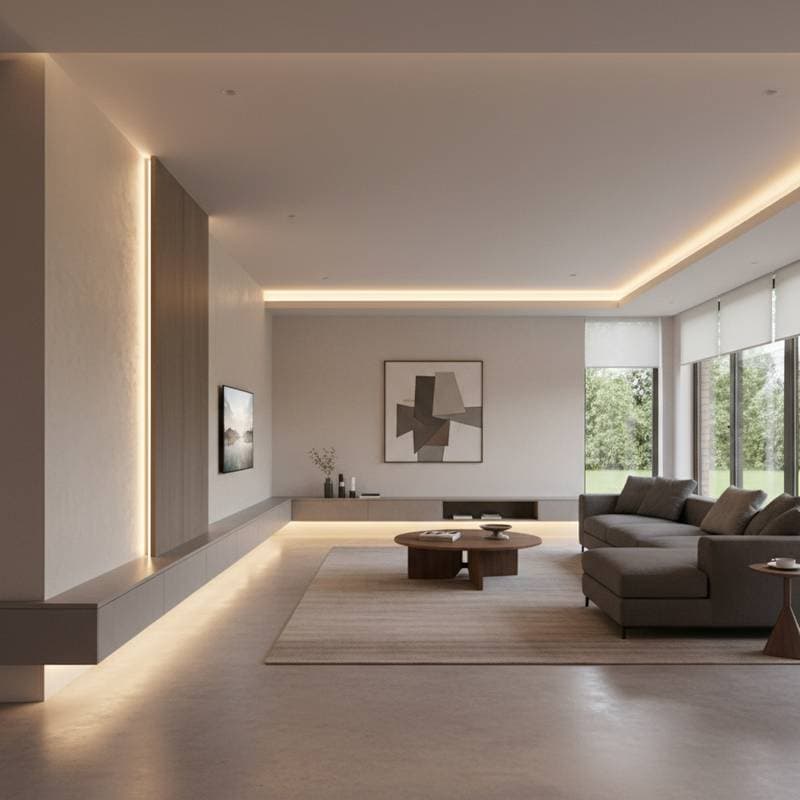
LED Baseboards: Illuminating the Homes of 2026
LED baseboards transition from custom concepts to mainstream finishes. Previously confined to high-end show homes, illuminated trim now serves as a practical upgrade for everyday interiors. The appeal lies in low-level lighting that enhances safety, softens transitions, and transforms ordinary circulation zones into design features. This integration of continuous LED strips into baseboards and crown moldings combines carpentry precision with smart technology.
At a Glance
Who lives here: Urban and suburban homeowners updating mid-century and new-build spaces.
Location: Across North America, from compact condos to family houses.
Size: Typical installation covers 500 to 1,800 square feet (46 to 167 square meters).
Design teams: Studio Luxline, Formed Light Interiors, and a growing number of millwork shops.
Photography: Light & Grain Studio.
Before
Traditional baseboards performed their roles quietly, concealing floor gaps and protecting walls. They seldom contributed to atmosphere or function. In dim halls or windowless bathrooms, homeowners relied on night-lights or motion sensors that cluttered outlets and corners. As designer Mia Torres noted, “Clients wanted subtle guidance at night without turning on overheads. Standard solutions looked temporary or out of place.”
The core issue stemmed from disconnection. Lighting, trim, and smart controls evolved in separate domains. Installers encountered mismatched profiles, bulky drivers, or uneven brightness along extended runs.
After
The latest LED baseboards address these disconnects via integrated design. Continuous channels integrate into MDF, oak, or polymer profiles. Low-voltage strips position behind diffusers that conceal diodes while distributing a soft, even wash of light. Smart drivers conceal in closets or behind access panels, connecting to home systems through Bluetooth or Wi-Fi.
Photographs of recent projects illustrate the transformation. In one hallway, a three-inch (7.6 centimeter) satin-white baseboard floats above the floor on a narrow shadow line. The light grazes the wood planks, indicating safe passage without glare. In a bathroom, warm white LEDs encircle the room perimeter, reflecting off matte porcelain tile to create a spa-like glow.
Designer Colin Reeves stated, “We treat illumination as part of the millwork package. It reads as architecture, not accessory.” Homeowners share this view, reporting calmer evenings and smoother movement between rooms.
Design Details
- Profiles: Common depths range from 3 to 6 inches (7.6 to 15.2 centimeters). Taller profiles accommodate hidden channels and wiring.
- Materials: MDF suits painted finishes, white oak or walnut provides natural tones, and lightweight polymer handles moisture-prone areas.
- Light temperature: 2700K fits bedrooms and living areas, while up to 4000K works for kitchens and baths.
- Control options: Motion sensors, voice commands, or preset scenes operate through smart home hubs.
- Power: 24V low-voltage systems support runs up to 60 feet (18.2 meters) before requiring another driver.
- Installation: Channels route before finishing. LED tape applies after paint or stain to ensure clean lines.
- Maintenance: Diffusers snap out for tape replacement. No visible screws or seams appear.
These specifications render LED trim suitable for new construction and renovation alike. Carpenters retrofit by removing existing baseboards, cutting shallow chase lines for wiring, and reinstalling updated profiles.
Key Benefits
1. Safety and comfort
Low-level illumination minimizes tripping hazards on stairs or at thresholds. It also guides navigation in open-plan homes with uneven ambient light. Parents activate it in children’s rooms, and older residents value the clarity for late-night movement.
2. Design unity
Unlike plug-in fixtures, integrated lighting appears intentional. It links walls, floors, and ceilings via a consistent line of light. Paired with illuminated crown molding, it frames rooms like a soft halo.
3. Energy efficiency
LED strips use minimal power, typically less than 5 watts per meter (0.3 watts per inch). Occupancy sensors limit usage, activating only upon movement detection.
4. Custom mood control
Smart dimmers and color tuning enable shifts from bright task light to evening calm. Some homeowners synchronize baseboard lighting with circadian rhythms to support better sleep cycles.
Why It Matters Now
Multiple trends align in this development. Smart lighting adoption increases, and homeowners seek cleaner, more integrated finishes. Woodworkers and trim specialists extend beyond static profiles. As Reeves explained, “We used to stop at paint grade trim. Now we deliver a full lighting system that is part of the carpentry.”
LED baseboards align with modern living patterns. Open layouts reduce opportunities for sconces and lamps. Subtle perimeter light addresses this while preserving clear sightlines. It complements minimalist interiors that prioritize clutter-free surfaces.
How to Bring It Home
Plan early. Align electrical rough-ins with finish carpentry. Each run requires a hidden power source and return path.
Choose consistent temperatures. Match baseboard lighting to other ambient sources for visual harmony.
Mind clearances. Maintain at least one inch (2.5 centimeters) between the floor and diffuser edge to avoid glare.
Test brightness. Designers suggest 150 to 200 lumens per linear foot (492 to 656 lumens per meter) for hallways and stairways.
Seal joints. Apply light-blocking tape at corners to prevent stray light leaks.
For DIY renovators, pre-finished LED baseboard kits emerge on the market. They assemble with hidden connectors and include plug-in drivers. Professional installations yield cleaner results, yet kits provide an accessible entry point.
Key Takeaways
- LED baseboards combine trim carpentry with smart lighting for seamless architectural effects.
- They enhance safety, comfort, and energy use while improving visual flow.
- Installation demands early coordination between electricians and finish carpenters.
- Materials, temperatures, and control systems adapt to any interior style.
- The outcome delivers quiet luxury through a continuous line of light that supports daily life.
Maintaining Your Investment
Wipe diffusers with a soft cloth to remove dust. Inspect connections annually to ensure adhesive-backed LED strips remain secure. Replace dimmed sections simply and affordably. Low-voltage wiring allows homeowners to manage basic maintenance safely.
LED baseboards mark the next evolution in architectural lighting. Traditional craftsmanship adapts to technology while retaining tactile appeal. The glow along a hallway baseboard or beneath a floating vanity infuses rhythm into movement and serenity into evenings. Homeowners gain more than a visual upgrade; they acquire a functional enhancement that elevates everyday living.