
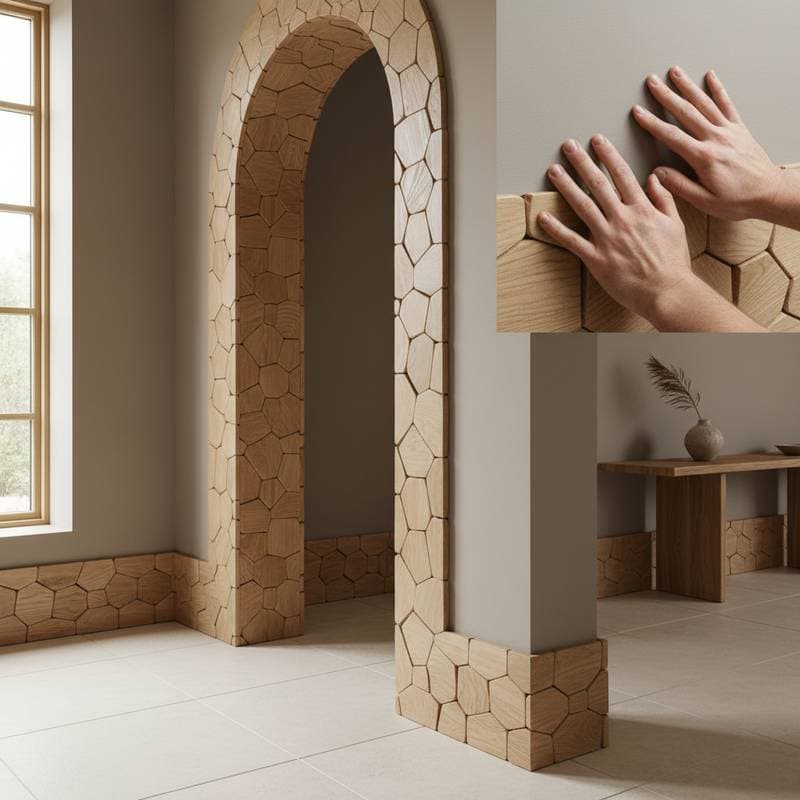
Elevate Trim with Zellige-Inspired Wood Edges
Handmade Zellige tiles captivate with their uneven glazes, gentle color variations, and inviting tactile qualities. When designers translate this essence into wood trim, the result introduces warmth and fluidity that surpass the rigidity of machine-milled profiles. If current millwork appears overly uniform, Zellige-inspired edges offer a transformative solution to infuse spaces with personality.
Consider the origins of Zellige, a Moroccan tile tradition where artisans shape clay by hand, firing pieces that emerge with unique contours. Woodworkers can replicate this by introducing deliberate irregularities into trim, creating surfaces that interact dynamically with light and shadow. This approach not only enhances visual interest but also connects modern interiors to timeless craftsmanship.
Why Zellige Texture Excels in Wood Trim
Zellige craftsmanship thrives on imperfection, with each tile displaying minor differences in tone and texture that build rhythm and dimension across surfaces. Applying this principle to wood trim yields edges with gentle undulations, randomized highlights, and subtle tooling traces that refract light in varied ways.
In contrast, traditional molding undergoes precise milling to ensure identical dimensions, which guarantees seamless fits but often results in installations that appear static and lifeless. Zellige-inspired techniques introduce movement through irregular bevels, manually sculpted transitions, and faint surface marks, echoing the organic variability of handmade tiles where reflections differ on every plane.
This style shines in environments that prioritize character over uniformity, such as rustic living rooms, artisan-inspired kitchens, or contemporary spaces featuring natural wood elements. It complements limewashed walls, textured plasters, and low-luster finishes, fostering a cohesive narrative of authenticity.
To integrate this effectively, select trim locations where edges will draw the eye, like baseboards in open-plan areas or crown molding in dining spaces. Experiment with wood grains that enhance texture, such as quarter-sawn oak for its ray flecks or walnut for deeper shadows.
Action step: Assess areas where uniform trim lacks vitality. Prepare scrap boards and apply varied edge treatments to observe interactions with ambient lighting, noting how shadows accentuate the handmade quality.
Costs and Budget Considerations
Producing textured trim demands greater investment than standard machined profiles, yet the premium remains manageable with strategic planning. Factors like material selection and labor intensity influence the final expense, but thoughtful choices keep projects accessible.
Break down the costs as follows:
- DIY materials: Expect $3 to $7 per linear foot for premium hardwood stock, including blanks suitable for handwork.
- Professional fabrication: Rates range from $8 to $22 per linear foot, varying by wood species, complexity of shaping, and artisan expertise.
- Finishing materials: Allocate $1 to $3 per foot for stains, oils, or protective sealers that preserve the tactile surface.
For a medium-sized room requiring 150 linear feet, professional installation might total $1,400 to $2,600. Home-based efforts can reduce this to $600 or below by sourcing materials efficiently and handling shaping personally.
Key influences on pricing include the density and market value of the wood species per board foot, the intricacy of edge designs requiring extended hand-tooling, and the finish application, such as multiple coats for durability.
Implement these budget strategies:
- Apply textured detailing selectively to feature walls, pairing with straightforward profiles in less prominent areas.
- Utilize remnants from larger stock for initial trials, minimizing waste during experimentation.
- Focus hand-shaping on exposed edges only, retaining machined precision for concealed backs to save time.
Prioritize quality in essential areas. Always seal end grains thoroughly, as untreated sections absorb moisture readily, leading to warping in humid zones like kitchens or bathrooms. Invest in humidity-stable woods like maple to further safeguard against environmental shifts.
Common Mistakes to Avoid
Zellige-inspired trim demands careful execution to maintain its nuanced appeal. Hasty or inconsistent methods can undermine the organic effect, so address these frequent errors proactively.
- Uniform shaping across pieces. Identical edges eliminate the artisanal illusion; introduce deliberate variations in tool pressure and depth for authenticity.
- Excessive sanding. Aggressive smoothing removes vital texture; cease once the surface offers a pleasing, non-splintery tactility under fingertips.
- High-gloss finishes. Sheen-heavy coatings diminish light play and evoke factory precision; opt for matte or satin sheens to highlight natural contours.
- Neglecting board acclimation. Failure to condition wood in the installation environment for at least two days invites dimensional changes; this step stabilizes against humidity fluctuations.
- Abrupt corner treatments. Rigid miters disrupt the fluid line; craft transitions that flow organically around joints, using subtle coping for seamless integration.
Remedying these issues typically involves reshaping or reapplying finishes, escalating both time and expense. Proceed with measured, intentional techniques to achieve enduring results.
Beyond basics, watch for over-reliance on power tools, which can introduce unintended uniformity. Balance with hand rasps or chisels for finer control, and test finishes on samples to ensure they enhance rather than obscure texture.
Implementing Your Zellige-Inspired Trim Project
Begin by identifying high-impact zones for hand-shaped trim, such as entryways, window surrounds, or kitchen islands where edges frame focal points. Source boards in your preferred species, allowing ample material for practice pieces.
Dedicate time to sketching profiles and testing shapes, using simple tools like spokeshaves or carving gouges. Document variations in a dedicated journal, capturing photographs of test sections under diverse lighting conditions to evaluate shadow patterns and overall harmony.
As you progress, consider scale: finer irregularities suit delicate moldings, while bolder undulations enhance substantial trim. Collaborate with a local woodworker if needed, sharing references to Zellige tiles for precise inspiration.
Zellige-inspired wood edges demonstrate that beauty emerges from embracing subtle differences, not enforcing uniformity. This method infuses trim with the soul of craftsmanship, creating interiors that resonate with warmth and individuality.