
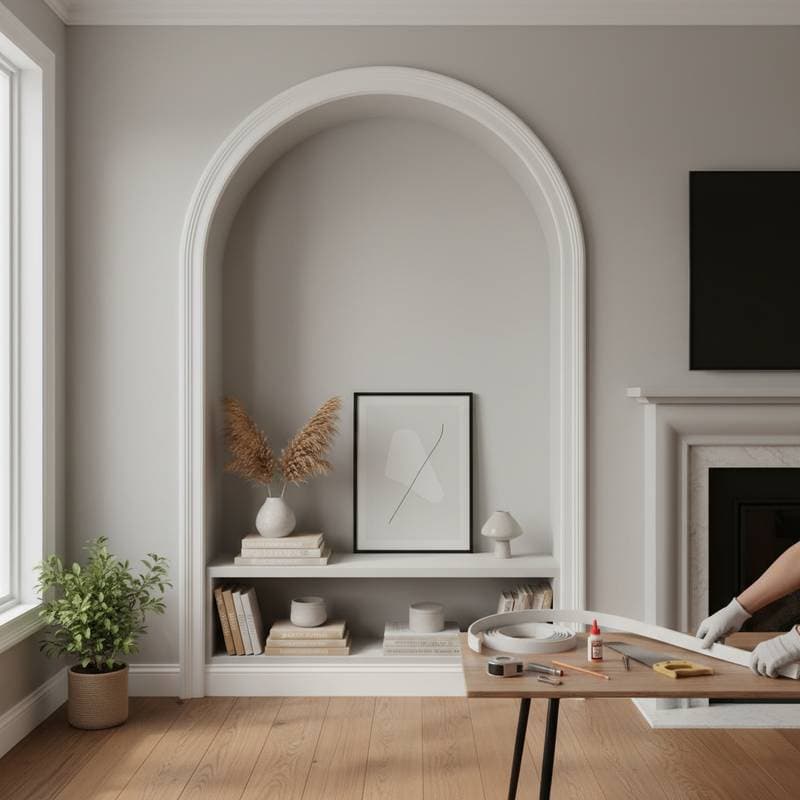
Arched Trim: The 2026 DIY Detail Everyone Craves
Arched trim projects appear in workshops and design feeds across the country. Homeowners grow weary of sharp lines and square openings. A soft curve around a doorway or window imparts instant character. Once individuals learn to bend trim properly, the result appears custom-built at a fraction of professional expenses.
Individuals with basic carpentry skills and appropriate tools create curved molding that elevates any room. This guide outlines expectations, costs, and steps for confident execution. Readers gain practical knowledge to transform interiors with elegance.
Understanding the Appeal of Arched Trim
Arched trim introduces gentle curves that soften architectural transitions. This element draws from historical designs, such as those in Craftsman or Victorian homes, yet adapts seamlessly to modern spaces. The curve creates visual interest, drawing the eye upward and adding depth to flat walls.
In 2026, designers predict arched details will dominate DIY trends due to their versatility. Homeowners apply them to doorways, windows, or even furniture edges. The result fosters a sense of warmth and continuity, making rooms feel larger and more inviting.
Professionals note that arched trim enhances resale value by up to five percent in mid-range homes. Simple installations yield high-impact changes without major renovations. This approach suits budgets from modest to moderate.
Essential Tools and Materials
Success in arched trim projects hinges on quality tools and materials. Beginners assemble a kit including a jigsaw for cutting templates, a miter saw for precise angles, and an assortment of clamps to secure bends. Additional items encompass sandpaper in various grits, wood filler, and construction adhesive.
Material choices range from flexible polyurethane molding, which bends easily without heat, to traditional wood species like poplar or pine. Polyurethane resists moisture and weighs less, ideal for humid areas like bathrooms. Wood offers a natural grain but requires more preparation.
For bending, steam boxes or kerfing tools prove invaluable. A trammel point attaches to a drill for accurate curve marking. Invest in brad nails and a pneumatic nailer for secure, clean installations.
Action step: Inventory tools before starting. Borrow or rent specialized items like a steam bender if occasional use justifies the cost.
Step-by-Step Process for Creating Arched Trim
Building arched trim demands patience over physical strength. The process divides into three stages: forming, shaping, and fitting. Each stage builds on the previous for a seamless result.
Forming the Arch Template
Begin by measuring the opening's width and height precisely. Use a trammel point or string compass to mark the curve on a sheet of plywood. The radius depends on the opening size; for a standard 36-inch door, aim for a 24-inch radius to avoid overly tight bends.
Cut the shape with a jigsaw, following the line slowly to prevent splintering. Sand the edges smooth. This plywood serves as the bending template, reusable for multiple projects.
Test the template against the actual opening. Adjust if necessary to ensure the curve aligns with the structure. Precision here prevents rework later.
Shaping the Trim Material
Select trim width based on the opening; two-inch casing suits most doors. For polyurethane, warm the material slightly with a heat gun, then bend it along the template by hand. Secure with clamps every four inches and allow it to set for 24 hours.
Wood requires kerf cuts: score the back side every half-inch with a table saw, stopping short of the face. These relief cuts allow flexibility without cracking. For thicker pieces, steam the wood for 30 minutes until pliable, then clamp to the form until dry.
Avoid forcing tight radii on stiff materials, as splits occur easily. Practice on scraps to gauge the wood's response. This step typically takes one to two hours per arch.
Action step: Wear gloves during steaming to protect hands from heat. Monitor moisture levels to prevent warping.
Fitting and Finishing the Installation
Once the curve holds, attach it to straight vertical legs cut from matching trim. Miter the joints at 45 degrees for clean connections. Apply construction adhesive along edges, then secure with brad nails every six inches.
Fill gaps with wood filler, sand to a smooth contour, and apply primer. Paint or stain matches the room's palette; use semi-gloss for durability in high-traffic areas. Caulk edges for a professional seal.
A single arched casing requires four to six hours total, excluding drying time. Most DIYers complete a doorway over one weekend. Multiple arches demand planning to maintain consistency.
Action step: Use painter's tape to mask adjacent surfaces during finishing. This prevents drips and simplifies cleanup.
Budgeting for Your Arched Trim Project
Costs for arched trim range from $250 to $600 per opening, depending on materials and scope. Polyurethane trim costs $1 to $2 per linear foot, while wood ranges from $2 to $5. A standard doorway uses about 20 linear feet, plus $50 for adhesive, nails, and filler.
Tools add $100 to $300 if purchasing basics like a jigsaw. Plywood templates cost under $20. Professional installation doubles the price, often $500 to $1,200 including labor.
Factor in paint or stain at $30 per quart. Savings come from DIY execution, but allocate 10 percent extra for mistakes. Track expenses with a simple spreadsheet for accuracy.
Action step: Shop at lumber yards for bulk discounts on trim. Compare synthetic versus wood prices based on longevity needs.
Deciding Between DIY and Professional Installation
Arched trim suits intermediate DIYers comfortable with power tools. Requirements include steady hands for measuring and patience for sanding irregular curves. Access to a well-ventilated workspace aids finishing tasks.
Pursue DIY if:
- The arch spans at least 24 inches for a gentle curve.
- Flexible synthetic materials simplify bending.
- The opening remains non-load-bearing and accessible.
Opt for professionals if:
- Matching existing millwork demands expertise.
- Tight curves or hardwoods like oak require advanced techniques.
- The project involves multiple arches for uniformity.
When hiring, review portfolios of curved work. Verify liability insurance and request references. Insist on moisture-resistant adhesives to ensure durability.
Action step: For DIY, practice compound miter cuts on scrap until joints fit flush. For pros, obtain a detailed quote separating labor from materials.
Common Pitfalls and Pro Tips
Many beginners rush measurements, leading to ill-fitting arches. Double-check dimensions at each stage. Another issue involves inadequate clamping, causing springs back in the curve; use multiple clamps and check after 12 hours.
Pro tip: Incorporate LED lighting behind the trim for subtle glow, enhancing evening ambiance. Select trim profiles with deeper reveals for shadow lines that add dimension. In humid climates, prime both sides of wood to prevent cupping.
Test finishes on scraps to match colors accurately. Sand between coats for a flawless surface. These details elevate the project from good to exceptional.
Action step: Document the process with photos for future reference. Share progress in online forums for feedback.
Embracing the Lasting Impact of Arched Trim
Completed arched trim alters a room's flow profoundly. Curves guide movement naturally, softening harsh angles and inviting exploration. The design withstands trends, offering timeless appeal.
Maintenance involves dusting monthly and touch-up paint every few years. Inspect joints annually for loosening. With care, the installation endures decades.
Homeowners report increased satisfaction with spaces that feel personalized. This DIY endeavor builds skills for future projects. The investment yields daily enjoyment and potential home value growth.
Helpful Resources for Arched Trim Enthusiasts
Explore woodworking books on bending techniques for deeper insights. Online tutorials demonstrate steam methods visually. Local workshops offer hands-on classes in millwork.
Join communities dedicated to home improvement for shared experiences. Stock up on supplies from reputable suppliers emphasizing quality. These aids accelerate learning and inspire creativity.