
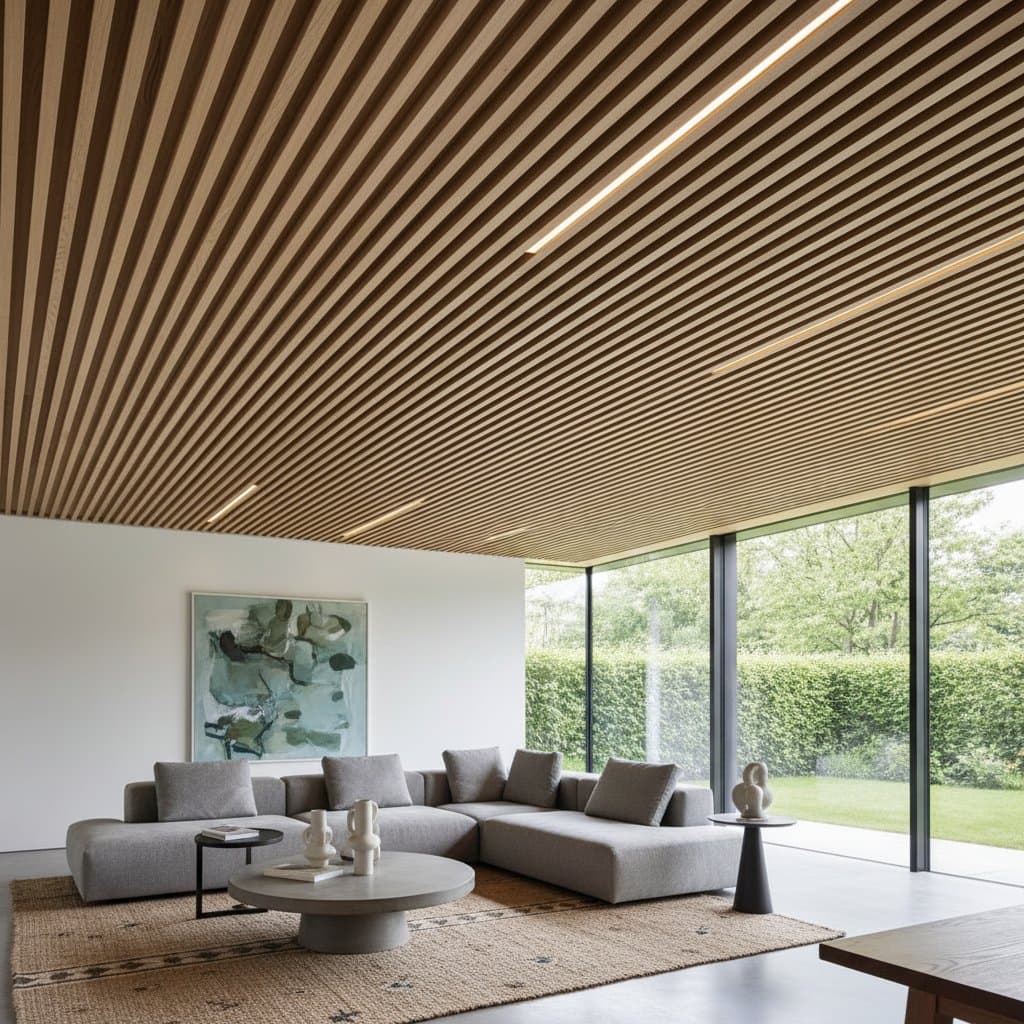
Why Ribbed Oak Ceilings Capture Luxury in DIY Projects
Ribbed oak ceilings transform ordinary interiors into refined environments. Materials typically cost between $14 and $22 per square foot, delivering results comparable to professional designs that command higher prices. Proper preparation and methodical execution allow homeowners to install features previously seen only in upscale residences or commercial spaces.
The Distinctive Appeal of Ribbed Oak Ceilings
Ribbed oak ceilings merge organic wood textures with structured geometry. Slats, spaced evenly, introduce visual rhythm and shadow play that diffuses light while enhancing depth. The inherent grain patterns of oak provide subtle variation, evoking craftsmanship alongside contemporary lines.
Several factors draw homeowners to this design:
- Enhanced acoustics. Slatted configurations diffuse sound waves, reducing reverberation by 25 to 35 percent based on gap width and underlying insulation.
- Illusion of expanded space. Upward-oriented ribs guide the gaze vertically, creating a sense of greater height and openness in compact areas.
- Property enhancement. Experts in real estate note that wood-accented ceilings in primary rooms can increase perceived home value by 5 to 8 percent.
This combination yields a surface that harmonizes natural elements with intentional design, suitable for living rooms, kitchens, or entryways.
Oak stands out for its durability and moderate density, resisting warping better than softer woods like pine. Select quarter-sawn boards for straighter grains and enhanced stability, especially in humid climates. Finishes such as clear polyurethane preserve the wood's golden undertones, while stains in medium tones amplify depth without overwhelming the room's palette.
Detailed Installation Process
Although ribbed ceilings appear complex, a systematic approach simplifies the task. Gather tools including a chalk line, level, miter saw, brad nailer, and spacers before starting.
- Establish layout guidelines. Snap chalk lines across the ceiling to mark the centerline and desired slat intervals, typically 1 to 2 inches apart for optimal effect.
- Secure furring strips. Position these perpendicular to the slat direction, spacing them 16 inches on center to align with standard joist placements. Fasten with 3-inch screws into joists for robust support.
- Mount oak slats. Begin at one edge, securing each piece with 2-inch brad nails driven into the furring strips every 12 inches, or apply construction adhesive for a seamless appearance.
- Maintain uniformity. Insert a custom spacer block between slats after every third row to verify consistent gaps; adjust as needed with a level.
- Complete perimeter details. Install oak trim molding to cap edges, or opt for a recessed shadow line using 1/4-inch reveals for a minimalist finish.
For a 200-square-foot area, allocate 12 to 16 hours of hands-on work, divided across multiple sessions. Overhead labor demands ergonomic positioning; use adjustable scaffolds and take frequent rests to sustain accuracy and prevent fatigue-related errors.
Pre-cut slats to length on the ground for efficiency, accounting for 1/8-inch expansion gaps at walls. If integrating recessed lighting, map fixture locations during layout to avoid post-installation disruptions.
Deciding Between DIY and Professional Installation
Intermediate builders familiar with power tools and precise measurements can tackle ribbed oak ceilings independently. Proficiency with ladders, scaffolds, and basic framing proves essential.
DIY suits projects where:
- Total surface area remains below 250 square feet.
- Geometry involves straightforward rectangles without angles or vaults.
- Assistance is available for handling and positioning extended slats.
Professional involvement benefits scenarios such as:
- Intricate architectures with curves, soffits, or integrated fixtures.
- Requirements for specialized elements like soundproofing backers or concealed wiring.
- Compliance with building codes for fire resistance or noise control in multi-unit dwellings.
When selecting contractors, verify general liability coverage and review portfolios of slatted woodwork. Prioritize those experienced in tongue-and-groove systems, as skills transfer effectively. Obtain at least three quotes, emphasizing material sourcing and timeline commitments.
Budget for professional labor at $8 to $15 per square foot, plus materials, to reach total costs of $22 to $37 per square foot for complex jobs.
Pitfalls to Sidestep During Installation
Precision defines successful outcomes, yet oversights occur. Address these proactively to ensure longevity.
- Variable spacing. Fabricate a wooden spacer from scrap oak at the outset and reference it consistently to avoid widening or narrowing gaps.
- Neglecting material adjustment. Acclimate slats indoors for 48 to 72 hours to match ambient humidity, minimizing post-installation contraction.
- Overlooking illumination plans. Determine light placements upfront; retrofitting demands careful drilling to preserve slat integrity and pattern balance.
- Inadequate securing methods. Employ nails or screws rated for vertical shear, testing initial fastenings for hold before full commitment.
- Exposed raw edges. Apply end-grain sealer to all cuts immediately, preventing moisture ingress that leads to swelling or discoloration.
Routine checks after each section installation catch discrepancies early, reducing the need for disassembly.
Maintaining and Enjoying Ribbed Oak Ceilings
Post-installation, ribbed oak ceilings serve as enduring room focal points. Acoustic improvements manifest in clearer dialogue and tempered ambient noise, fostering comfortable gatherings.
Upkeep requires minimal effort. Dust surfaces monthly using a soft brush attachment on a vacuum, followed by gentle wiping with a slightly damp microfiber cloth. For deeper cleaning, avoid chemical agents; instead, use a mild wood soap diluted in water, applied sparingly.
Periodic revitalization involves light sanding with 220-grit paper to smooth minor scuffs, then applying a single layer of tung oil or beeswax for renewed luster. In high-traffic areas, inspect annually for loose fasteners and retighten as necessary. These steps preserve the wood's patina, ensuring the ceiling remains a vibrant asset for years.
Homeowners often pair ribbed oak with neutral walls and textured rugs to amplify warmth, creating cohesive spaces that invite relaxation.